June 24, 2026
Amazon DSP Targeting Strategy: How Brands Can Win Back Shoppers and Scale Beyond Search
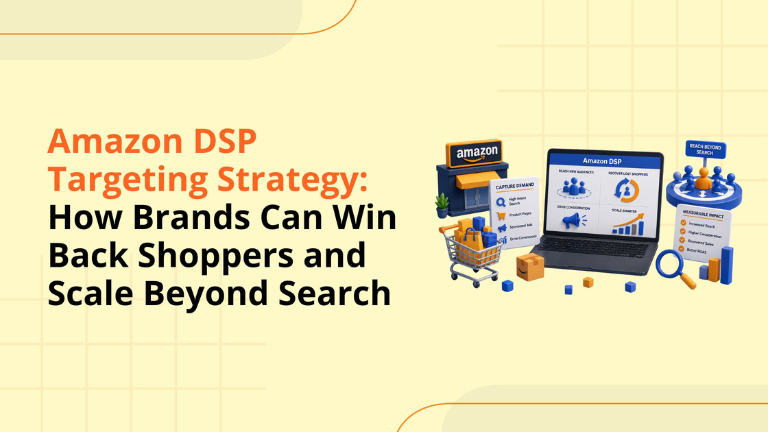
Amazon advertising is no longer limited to shoppers who are already searching for your product. As competition increases and Sponsored Ads become more expensive, brands need a smarter way to reach high-intent audiences before they search, while they compare options, and after they leave without buying.
That is where Amazon DSP becomes valuable.
Amazon DSP allows brands to reach shoppers based on real browsing, purchase, and engagement behavior across Amazon-owned properties and the open web. But the platform only works when it is supported by the right targeting structure, creative sequencing, and performance measurement.
Without a clear strategy, DSP can quickly turn into wasted impressions and inflated ROAS reports. With the right approach, it can help brands recover lost conversions, build demand beyond search, and scale profitable growth.
We will break down how Amazon DSP targeting works, which audience types matter most, how DSP differs from Sponsored Ads, and how sellers can use it as part of a full-funnel Amazon growth strategy.
Sponsored Ads help sellers capture shoppers who are already searching.
Amazon DSP helps brands reach shoppers before they search, while they compare options, and after they leave without buying.
That is why a strong Amazon DSP targeting strategy can become powerful for brands that already have solid listings, stable PPC campaigns, and a clear growth plan.
Sponsored Ads are driven by search terms.
DSP is driven by audience behavior.
This means brands can target shoppers based on product views, category interest, competitor browsing, past purchases, lifestyle signals, and in-market behavior.
A full advertising review through Amazon Advertising PPC Services can help sellers decide whether their account is ready for DSP or still needs PPC improvement first.
Not every DSP audience should be treated the same.
Behavioral targeting helps reach shoppers based on recent product or category actions.
In-market targeting focuses on shoppers closer to purchase.
Retargeting helps recover users who viewed your product but did not buy.
Past-purchase audiences can support repeat purchase and cross-sell campaigns.
Competitor-viewer audiences can help shift consideration when your price, reviews, and offer are strong.
The mistake many sellers make is mixing all of these audiences together. A better approach is to separate awareness, consideration, and conversion campaigns.
Display ads are useful for retargeting and mid-funnel reinforcement.
Video and streaming ads can build awareness and recall.
Responsive ecommerce creatives can support lower-funnel shoppers by showing product details, price, and availability.
Static creatives give brands more control over messaging and positioning.
Strong Amazon Image Optimization and Amazon Content Optimization also matter because DSP traffic still needs a listing that can convert.
DSP reporting can be misleading when attribution overlap exists.
A shopper may discover your product through Sponsored Ads, return through DSP, and then convert. DSP may look like the final driver, even if PPC or organic search created the original demand.
That is why sellers should measure blended performance across DSP, Sponsored Ads, organic ranking, branded search, and contribution margin.
A full account view through Amazon Store Management can help sellers connect advertising data with profit.
Big Internet Ecommerce helps Amazon brands build smarter advertising systems.
Our team reviews PPC performance, DSP readiness, audience structure, creative sequencing, attribution risks, listing quality, and SKU-level profitability.
The goal is simple: help sellers scale beyond search without losing control of budget.
Amazon DSP targeting allows advertisers to reach shoppers based on audience behavior, shopping activity, product interest, and purchase signals.
DSP makes sense when Sponsored Ads are stable, listings convert well, and the brand is ready to scale beyond keyword search.
The biggest mistake is judging DSP only by reported ROAS instead of blended business impact.
Need help building a smarter Amazon advertising system?
Schedule a strategy call with our team.
Follow Big Internet Ecommerce (BIE) on Instagram & LinkedIn to stay updated with the latest trends in Amazon selling.
Fill out the form and our experts will get back
to you within 24 hours.
.webp)
.webp)
.webp)
We respect your privacy. Your information is safe with us.