Shopify Website Development Services for Products, Brands, and Customer Journeys
Your Shopify website should do more than display products. It should help customers understand your offer, navigate your store, evaluate products, and move toward the appropriate next step.
Big Internet Ecommerce develops Shopify storefronts around your products, brand identity, customer journey, and ecommerce requirements—from theme structure and product presentation to responsive layouts, navigation, and supporting functionality.
The exact scope may include design, theme customization, custom sections, product and collection templates, content structure, app or integration coordination, or broader development work depending on the project.
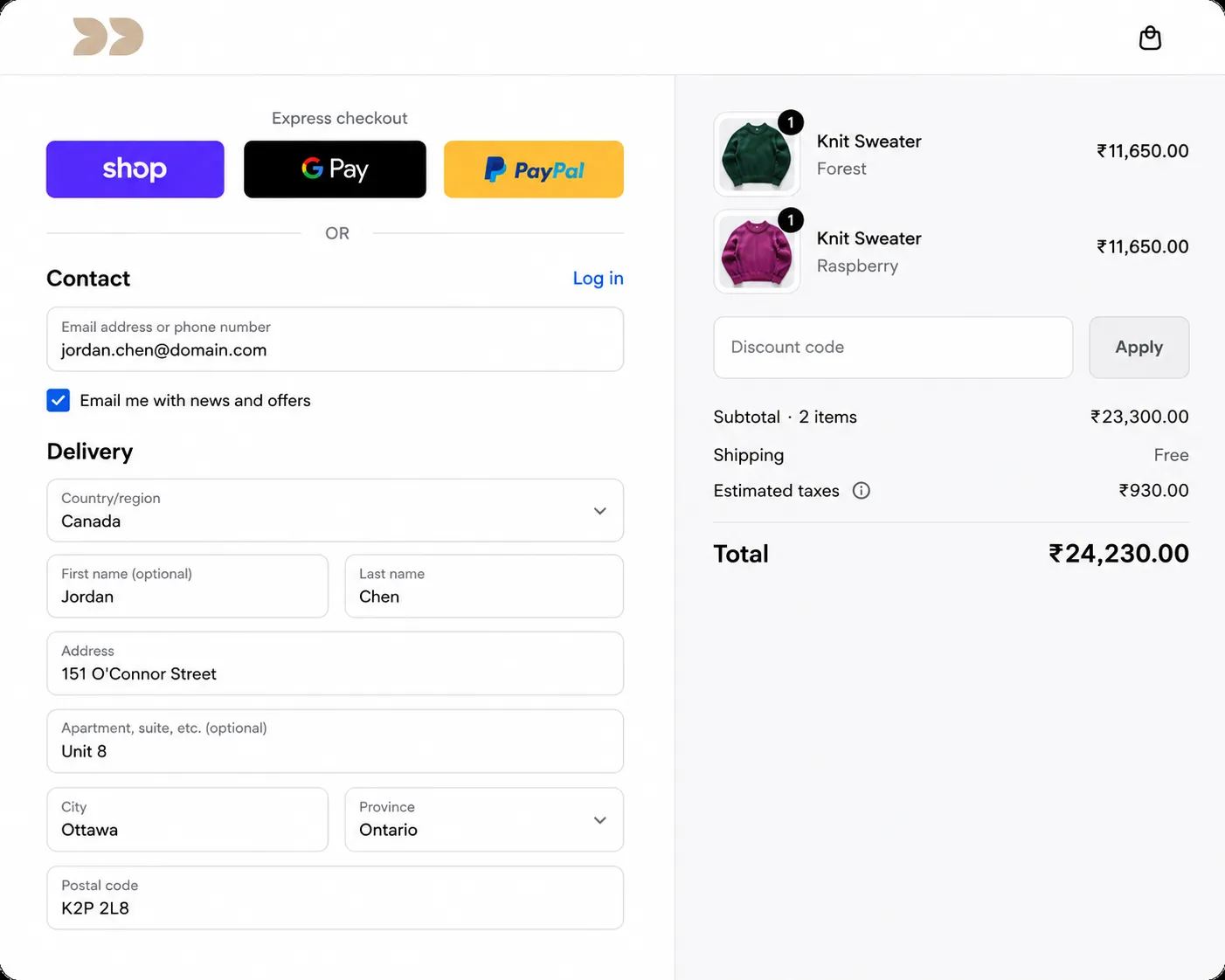
BIE ecommerce interface illustration. Not a client website.
Shopify Development Connected to Broader Ecommerce Experience
A Shopify website is one part of the customer journey. Product presentation, search visibility, creative, advertising, and marketplace activity can all influence how customers discover and evaluate a brand.
BIE approaches Shopify development within the broader context of ecommerce rather than treating the website as an isolated project.
Broader BIE Ecommerce Experience
A featured BIE client engagement combining integrated marketing and development with broader ecommerce and marketplace optimization.
A featured result from the same engagement, reflecting the impact of coordinated ecommerce growth work.
A featured improvement from the same engagement.
BIE has worked with more than 200 Amazon brands across different stages of marketplace growth.
These results represent specific BIE client engagements and are not guarantees of future Shopify or ecommerce performance. Results can vary based on products, pricing, traffic, competition, customer experience, website quality, offer, and overall ecommerce strategy.
These figures represent broader BIE ecommerce engagements and should not be interpreted as Shopify-specific performance guarantees. Shopify results depend on the store’s products, offer, pricing, traffic, customer experience, technical setup, and broader marketing strategy.
Where case studies are presented, they detail the store type, theme or development challenge, pages or functionality changed, technical work completed, timeframe, verified outcome, and other commercial factors involved.
Shopify Websites Designed Around the Customer Journey
Your website needs to work for both your business and your customers. That starts with a clear structure, useful product information, intuitive navigation, and a consistent brand experience.
Shopify projects may involve Online Store 2.0 theme customization, custom sections and blocks, product templates, collection templates, navigation, responsive layouts, content structure, apps, integrations, and quality assurance. The appropriate scope depends on the existing theme and business requirements.
BIE’s Shopify website development work can support:
The goal is to create a Shopify store that presents products clearly and gives customers a straightforward path from discovery through product evaluation and purchase.
From Storefront Discovery to Purchase
Every section should have a purpose within the customer’s journey rather than simply filling space.
Homepage
Your homepage introduces your brand and gives customers a starting point for exploring your store.
See Shopify homepage developmentNavigation
That starts with a clear structure, useful product information, intuitive navigation, and a consistent brand experience.
See Shopify ecommerce developmentCollections
Collection pages help customers browse your product range and find relevant products more easily.
See collection and category pagesProduct Pages
Product pages need to answer the questions customers have before they purchase.
See product page developmentPurchasing Actions
We review how customers move through the website, from the homepage and collections to product pages and purchasing actions.
See our development approachShopify Website Development Services
BIE’s Shopify development services cover the core elements needed to create a professional ecommerce storefront. Each part of the website should support a clear purpose within the overall shopping experience.
Shopify Store Design & Development
Your storefront is often the first major interaction customers have with your brand.
We can develop Shopify storefront experiences around your brand identity, product range, customer journey, and ecommerce goals.
Shopify store development can include:
- Homepage design
- Header and navigation
- Collection pages
- Product pages
- Promotional sections
- Brand storytelling
- Customer-focused page structures
- Responsive layouts
- Ecommerce-focused visual presentation
The project may use an existing Shopify theme or include more extensive custom theme work, depending on the desired design, functionality, and technical requirements.
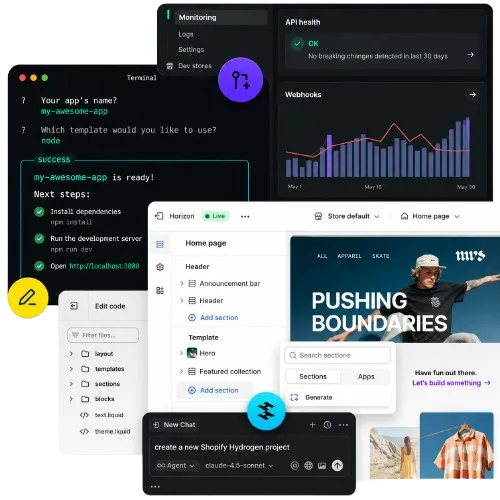
Custom Shopify Website Design
Your Shopify website should look and feel like your brand rather than relying on a generic presentation.
Custom Shopify website design can help create a consistent visual experience across your homepage, product pages, collections, and supporting content.
Design work should be translated into Shopify-compatible sections, templates, responsive layouts, and content structures rather than treated as a separate visual exercise.
Our work can include:
Shopify Theme Development & Customization
Your Shopify theme provides the foundation for your storefront experience.
BIE can work with Shopify themes to create layouts and sections that better reflect your brand and product requirements.
Theme-related work can include:
-
01
Theme Foundation
Theme customization
-
02
Sections
Section development
Brand-focused visual elements
-
03
Templates
Homepage layouts
Product page layouts
Collection page structures
-
04
Product / Collection Experiences
Navigation improvements
Responsive presentation
Theme work may include Liquid, JSON templates, sections, blocks, CSS, JavaScript, theme settings, and responsive behavior, depending on the project scope and existing theme architecture.
The objective is to create a storefront that feels consistent while keeping product information easy to access.
Shopify Product Page Development
Product pages need to answer the questions customers have before they purchase.
A well-structured product page can bring together product information, imagery, benefits, specifications, options, and purchasing information in a clear format.
Shopify product page work can include:
- Product information structure
- Product image presentation
- Product benefits
- Feature sections
- Product specifications
- Variant presentation
- Product comparison content
- Supporting visual content
- Customer-focused information hierarchy
Product templates should support product titles, descriptions, media, prices, variants, purchase actions, related products, and other applicable product information.
The focus is simple: help shoppers understand the product and make an informed purchase decision.
Shopify Collection & Category Pages
Collection pages help customers browse your product range and find relevant products more easily.
Our Shopify development work can support:
Collection templates should support product grids, collection introductions, sorting, filtering, pagination or lazy loading, and clear navigation where applicable.
A clear collection structure can make a growing product catalog easier to explore.
Shopify Homepage Development
Your homepage introduces your brand and gives customers a starting point for exploring your store.
Shopify homepage development can include:
Homepage sections should be connected to navigation, collections, product discovery, brand messaging, and the next action you want customers to take.
Every section should have a purpose within the customer’s journey rather than simply filling space.
Responsive Shopify Website Development
Customers can access ecommerce websites across different devices and screen sizes.
Shopify development should account for how storefront content, navigation, product information, imagery, variants, buttons, and purchasing actions appear across supported desktop and mobile browsers.
Responsive development can cover:
- Mobile layouts
- Desktop layouts
- Product page responsiveness
- Navigation
- Images and media
- Buttons and calls to action
- Content spacing
- Page sections
The goal is a consistent shopping experience across supported screen sizes.
Shopify themes are expected to support mobile-responsive layouts and the applicable supported browser experiences.
Conceptual layouts only. Not a client website.
Shopify Ecommerce Development
A Shopify website needs to support more than visual presentation. Its structure should work with the way customers browse, evaluate, and purchase products.
Shopify ecommerce development can support:
Depending on the project, ecommerce development may also involve apps, integrations, analytics, subscriptions, search, filtering, customer accounts, checkout-related requirements, or external systems.
BIE can connect website development with broader ecommerce requirements where appropriate.
Shopify Website Review and Optimization
A website can be visually polished and still create friction for shoppers. A structured review can identify opportunities across navigation, product templates, collection pages, mobile presentation, content hierarchy, speed, and the customer journey.

Shopify website optimization focuses on identifying areas where product information, navigation, content structure, mobile presentation, or page experience could be clearer.
Optimization can include reviewing:
Recommendations may involve design, content, theme structure, technical implementation, apps, integrations, or testing. The exact work depends on the findings.
Optimization should be based on the specific needs of the store rather than applying the same changes to every website.
Connect Your Shopify Website With Your Broader Ecommerce Strategy
The website is one part of your direct-to-consumer experience and may need to work alongside paid advertising, SEO, email, social, marketplaces, product content, analytics, and customer-service operations.
Depending on your business model, your website may work alongside paid advertising, SEO, marketplace activity, product content, creative, and other ecommerce channels.
BIE can approach Shopify development alongside broader ecommerce requirements such as:
The website remains the foundation of your direct-to-consumer experience while supporting the wider way customers discover and interact with your brand.
Shopify development, ecommerce SEO, paid advertising, marketplace management, creative, and conversion testing may be separate scopes of work that can be coordinated when appropriate.
How We Build Shopify Websites
Understand Your Business
We start by understanding your products, brand, customers, product catalog, existing website, and ecommerce requirements. We also review the current Shopify plan, theme, apps, integrations, product catalog, content sources, and technical constraints where relevant.
Plan the Website Structure
We identify the pages, navigation, collections, product structures, and content sections needed to create a clear customer journey. We define the required templates, sections, blocks, navigation, product structures, collection structures, and content dependencies.
Design the Experience
The visual direction is developed around your brand and the way customers need to interact with your products. The design should account for responsive behavior, accessibility considerations, content hierarchy, product variants, and the intended customer journey.
Develop the Shopify Store
The planned layouts, templates, sections, blocks, and functionality are developed within Shopify according to the agreed scope and existing theme architecture.
Review the Customer Journey
We review how customers move through the website, from the homepage and collections to product pages and purchasing actions. We review product templates, collection templates, navigation, responsive behavior, forms, variant selection, cart actions, and other agreed user flows.
Connect With Ecommerce Growth
Where appropriate, Shopify development can be considered alongside ecommerce SEO, creative, advertising, product content, analytics, and broader ecommerce strategy.
Test and Handoff
We review the agreed pages and functionality, identify outstanding issues, provide implementation notes where required, and prepare the store for launch or continued internal management.
The result is a Shopify website built around your products and the way your customers shop—not just a collection of individual pages.
Frequently Asked Questions
What does Shopify website development include?
+
Shopify website development can include storefront design, theme customization, homepage development, product pages, collection pages, navigation, responsive layouts, brand-focused sections, and other ecommerce website components.
It may also include product and collection templates, theme sections and blocks, variant presentation, app or integration coordination, responsive QA, and launch support.
Does BIE provide Shopify website design and development?
+
Yes. BIE provides Shopify website development services covering storefront structure, website design, product presentation, theme customization, ecommerce page development, and broader Shopify website requirements.
The exact scope depends on whether the project involves an existing theme, custom sections, new templates, app configuration, integrations, content preparation, or more extensive custom development.
Can BIE customize a Shopify theme?
+
Yes. Shopify theme work can include customization of existing layouts, sections, homepage structures, product pages, collection pages, navigation, and brand-focused visual elements.
Theme work may be limited by the current theme architecture, Shopify plan, app compatibility, existing code, and the agreed project scope.
Can BIE develop Shopify product pages?
+
Yes. Shopify product page development can organize product information, imagery, benefits, specifications, variants, and supporting content into a clearer, customer-focused structure.
Product page work can include product templates, media, variants, pricing, descriptions, related products, purchasing actions, and supporting content.
Can BIE help with Shopify collection pages?
+
Yes. Shopify collection development can support product categorization, collection layouts, product discovery, promotional sections, and navigation structures.
Collection work can include product grids, sorting, filtering, pagination or lazy loading, collection messaging, and navigation where supported by the theme and project scope.
Can Shopify development support ecommerce SEO?
+
Yes. Website structure and product presentation can be considered alongside Ecommerce SEO. However, website development alone does not guarantee higher rankings or organic traffic.
Development can support technical structure, page hierarchy, metadata implementation, internal linking, performance, and content presentation, but it does not guarantee rankings or organic traffic.
Can BIE improve an existing Shopify website?
+
Yes. Existing Shopify websites can be reviewed for areas such as structure, navigation, product pages, content hierarchy, responsive presentation, and customer experience. A review may also examine theme structure, apps, integrations, templates, mobile behavior, page speed, navigation, forms, variant selection, and checkout-related friction where access permits.
Does BIE provide Shopify app and integration development?
+
App and integration support can be scoped when the project requires it. The exact work depends on the platforms involved, API access, data requirements, existing theme architecture, and the functionality needed.
Can you migrate an existing website to Shopify?
+
Migration support can be discussed based on the current platform, product catalog, customer data, content, redirects, integrations, and Shopify requirements. Migration scope and data handling should be defined before work begins.
Build a Shopify Website Around Your Products and Customers
Your Shopify website should give customers a clear way to explore, understand, evaluate, and purchase your products.
BIE can help you approach website structure, theme development, design, product presentation, responsive behavior, and ecommerce strategy as connected parts of the customer experience.