July 6, 2026
Amazon Price History Is Changing Shopper Behavior: How Sellers Can Protect Profit in a More Transparent Marketplace
Amazon shoppers are becoming smarter, more patient, and more price-aware than ever before.
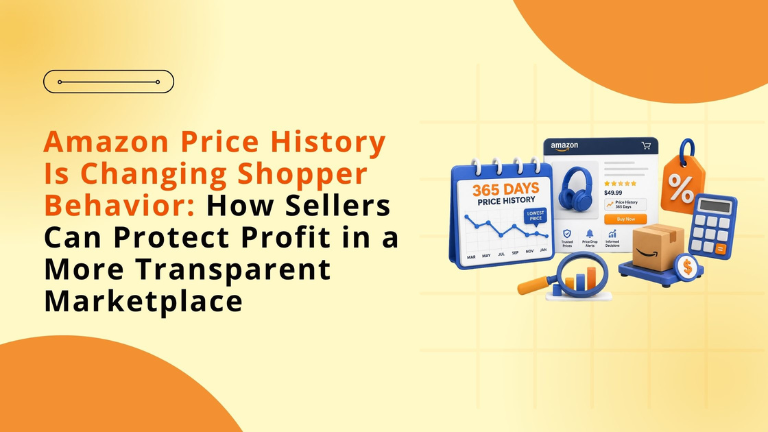
With Amazon now giving customers access to up to 365 days of price history through Alexa for Shopping, buyers can easily check whether a product’s current deal is truly valuable or simply another short-term discount. This gives shoppers more control before they click Buy and makes pricing transparency a bigger part of the purchase decision.
For Amazon sellers, this update is an important reminder that pricing cannot be managed randomly. Every coupon, Prime Day deal, seasonal promotion, and temporary discount now contributes to a longer pricing story that customers may review before making a purchase.
A strong pricing strategy is no longer only about offering the lowest price. It is about balancing competitive positioning, customer trust, profit margins, inventory goals, and promotional timing.
Amazon shoppers are becoming more informed before they make a purchase.
With Amazon’s expanded price history feature, customers can now review up to 365 days of pricing data on eligible products through Alexa for Shopping. This means shoppers are no longer judging a product only by the price they see today. They can compare today’s offer against past pricing and decide whether the deal is truly worth buying now.
For Amazon sellers, this creates a new pricing reality.
Every coupon, discount, Prime Day deal, seasonal offer, and temporary price drop now becomes part of a longer pricing story that shoppers may use before clicking Buy. If pricing is not planned carefully, customers may wait for a lower price, set alerts, or choose a competitor with a stronger value proposition.
That is why sellers need to move away from random discounting and build a smarter pricing strategy that protects conversion, customer trust, and profit margins.
Amazon’s price history feature gives customers more confidence during the decision-making process.
Instead of wondering whether a deal is actually good, shoppers can check how the price has changed across different time periods. They can also use price alerts to wait until the product reaches their preferred price.
This changes how sellers need to think about promotions.
A discount is no longer just a short-term sales tool. It becomes a visible pricing signal. If shoppers see that the product was priced lower recently, the current promotion may feel less attractive. If they notice frequent discounts, they may delay buying because they expect another deal later.
A strong Amazon Store Management strategy helps sellers review pricing, promotions, inventory, and performance together instead of making pricing decisions in isolation.
Not every discount creates urgency.
If a product is promoted as a deal but the historical price shows that the discount is not meaningful, shoppers may lose trust. This is especially important during Prime Day, holiday sales, back-to-school campaigns, seasonal promotions, and coupon events.
Customers want to feel they are getting real value.
If the pricing history tells a different story, the offer may not convert as expected. Sellers should review how current deals compare with the last 30, 90, and 365 days of pricing before launching any major promotion.
The goal is not always to offer the lowest price. The goal is to make the value clear and believable.
Many Amazon sellers reduce prices when sales slow down.
This may create a temporary sales lift, but it can also train shoppers to wait for discounts. If price drops become too frequent, customers may stop buying at the regular price.
Random discounting can also damage profitability.
A promotion may increase revenue but reduce actual profit after Amazon fees, FBA costs, referral fees, coupon costs, storage fees, and PPC spend are included. Sellers should always calculate margin before launching a discount.
A better pricing strategy starts with a clear goal.
Each goal needs a different pricing approach.
When pricing becomes more transparent, listing quality becomes even more important.
If shoppers can see that your product is more expensive than it was in the past, your listing must explain why the product is still worth buying. Strong images, clear bullets, A+ Content, comparison charts, reviews, and product education all help support perceived value.
This is where Amazon Content Optimization becomes critical.
Your listing should clearly explain what the product is, who it is for, what problem it solves, and why it is better than competing options.
Strong Amazon Image Optimization also helps shoppers understand the product’s value quickly, especially when they are comparing similar items.
Pricing changes directly affect advertising performance.
If your price is too high compared with competitors, PPC traffic may not convert efficiently. If your discount is too deep, PPC may drive more orders but reduce profit. This is why sellers should never manage pricing and advertising separately.
Before making a pricing change, review PPC performance.
Look at ACoS, TACoS, conversion rate, click-through rate, CPC, organic ranking, and total sales. A campaign may look successful because sales increased, but the promotion may still be unprofitable after all costs are included.
A smarter Amazon Advertising PPC Services strategy connects ad spend with pricing, margin, inventory, and conversion data.
Amazon price alerts give shoppers the option to wait.
Instead of buying immediately, customers can set a target price and receive a notification when the product reaches that amount. This is useful for shoppers, but it creates a challenge for sellers.
If customers believe a better price is coming, urgency can drop.
Sellers need to make sure promotions are timed, limited, and valuable enough to encourage action. If discounts are always available, shoppers may not feel the need to buy now.
This makes offer planning more important.
Limited-time promotions, clear value messaging, bundles, coupon discipline, and stronger product positioning can help reduce the risk of shoppers waiting too long.
Amazon shoppers rarely compare only one product.
They compare price, reviews, rating, delivery speed, images, content, and brand trust across multiple listings. With stronger pricing visibility, sellers need to monitor competitors more closely.
If your product is priced higher, your listing must communicate a stronger reason to buy.
That reason could be better materials, stronger reviews, larger size, added accessories, better warranty, safer ingredients, premium packaging, or stronger brand credibility.
Without that explanation, shoppers may simply choose the cheaper option.
Many brands sell across Amazon, Shopify, Walmart, and other marketplaces.
When shoppers and AI shopping tools compare prices across channels, inconsistent pricing can create confusion. If your Shopify store shows one price and Amazon shows another, customers may question where they should buy.
A stronger Multi-Channel Integration strategy helps brands keep pricing, promotions, inventory, and product data more consistent across platforms.
This is especially important for brands running seasonal campaigns, influencer promotions, Google ads, Meta ads, or marketplace-wide discounts.
Before launching your next deal, review your pricing history carefully.
Check your regular price, average selling price, lowest recent price, planned discount, coupon amount, competitor pricing, and current margin.
Then review whether the discount supports a real business goal.
Sellers should also check inventory. A promotion that sells too quickly and causes a stockout can damage ranking, ad momentum, and long-term sales.
Before running a coupon, Prime Day deal, or seasonal promotion, ask:
Big Internet Ecommerce helps Amazon sellers build smarter pricing, promotion, and marketplace growth strategies.
Our team reviews pricing history, competitor pricing, SKU-level profitability, PPC performance, inventory position, listing quality, and promotional planning.
We help brands avoid unnecessary discounting, protect margins, and create pricing strategies that support long-term growth.
Amazon price history allows shoppers to view how a product’s price has changed over time on eligible product pages.
It gives shoppers more visibility into past pricing, which can influence how they judge current discounts, coupons, and promotional offers.
No. Sellers should still use discounts, but every promotion should be planned around margin, inventory, ranking, competitor pricing, and conversion goals.
Yes. If shoppers believe the current price is not a strong deal, they may delay the purchase, set a price alert, or choose a competitor.
Sellers should review historical pricing, margins, Amazon fees, PPC performance, competitor pricing, inventory levels, listing quality, and promotional timing.
Schedule a strategy call with our team.
Follow Big Internet Ecommerce (BIE) on Instagram & LinkedIn to stay updated with the latest trends in Amazon selling.
Fill out the form and our experts will get back
to you within 24 hours.
.webp)
.webp)
.webp)
We respect your privacy. Your information is safe with us.