WHAT HAPPENED
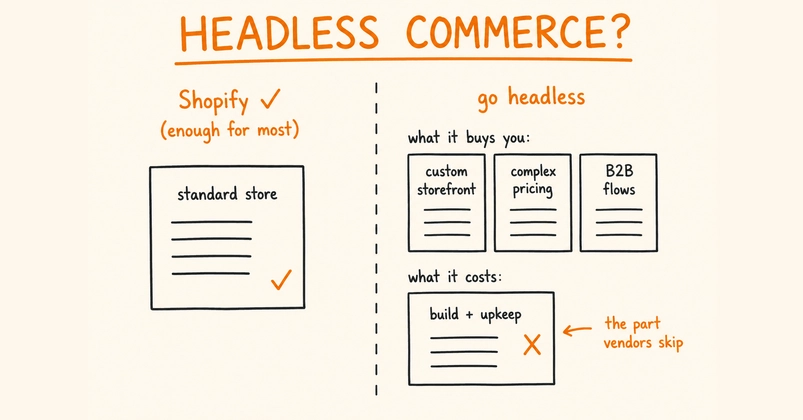
‘Headless’ is one of those words that sounds like a decision you’re supposed to have an opinion about. A developer or an agency mentions it, and suddenly you’re weighing an architecture choice you didn’t ask for, for a store that’s currently doing fine. On a normal Shopify store, the part your customer sees – the storefront – and the part that runs the shop – the cart, checkout, catalogue, orders – come welded together. Going headless means splitting them: you keep a commerce engine for payments and orders, but you build the storefront yourself, from scratch, as a custom website that talks to that engine over an API. It’s whether owning that front half is worth what it costs you to build and keep it running.
Continue reading from the original publisher for the complete report and source context.
READ ORIGINAL STORY