September 29, 2026
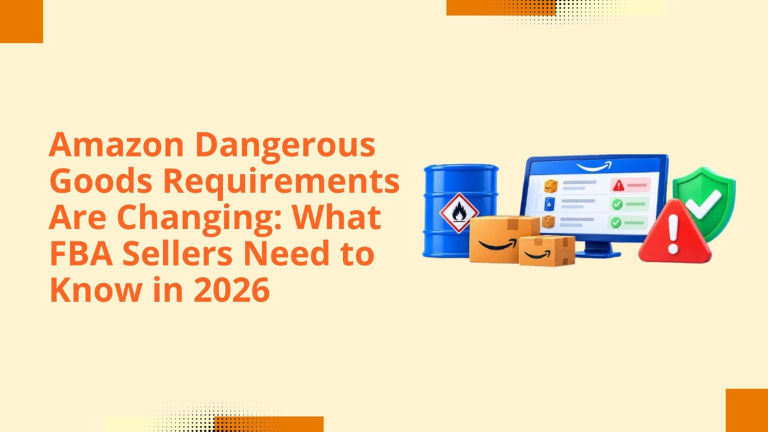
Amazon Dangerous Goods Requirements Are Changing: What FBA Sellers Need to Know in 2026
New Amazon Hazmat Listing Requirements Could Impact Your FBA Products
Selling on Amazon requires more than driving traffic and increasing sales. Behind every successful product launch is accurate catalog information, proper documentation, and compliance with Amazon’s fulfillment requirements.
Starting October 26, 2026, Amazon is introducing new dangerous goods compliance questions for selected product categories. These updates are designed to help Amazon better identify regulated products, improve shipping options, and reduce unnecessary disposal costs.
For sellers using Fulfillment by Amazon (FBA), this update highlights an important area that is often overlooked: product compliance.
A product that sells well can still face delays if Amazon does not have enough information to classify it correctly.
Amazon uses dangerous goods information to determine how products should be stored, transported, and handled within its fulfillment network.
The new compliance questions will apply when sellers:
The affected categories include:
The questions are designed to collect additional product details related to possible hazardous materials, chemicals, batteries, or regulated components.
Amazon manages millions of products across its fulfillment network. Accurate product information helps Amazon determine:
When sellers provide incomplete or conflicting information, products may experience:
For sellers, compliance accuracy directly supports smoother inventory movement.
Battery-powered products are one of the most common areas requiring additional information.
Examples include:
Amazon may require details such as:
Sellers may need to identify:
Amazon may ask:
These details help Amazon understand transportation requirements.
For products containing lithium batteries, sellers may need:
This information is typically available from the manufacturer, product packaging, or technical documents.
A Safety Data Sheet (SDS) is one of the most important documents for products that may contain regulated materials.
An SDS provides information about:
Amazon uses SDS documents to correctly classify products as:
A proper SDS should:
Examples of products that may require SDS documentation include:
Although additional compliance questions may require more preparation, accurate product information can create operational advantages.
Complete information helps Amazon classify products faster.
Knowing compliance requirements before shipping helps sellers avoid unexpected problems.
Missing documentation can result in inventory restrictions or disposal. Proper preparation reduces these risks.
Correct classification supports smoother storage and fulfillment operations.
Review products that contain:
Create a list of ASINs that may require additional documentation.
Ask manufacturers for:
Waiting until shipment creation can create unnecessary delays.
Although existing listings do not require immediate updates before October 26, future edits may trigger the new compliance workflow.
Before making listing changes, confirm that your compliance information is ready.
We support brands with Amazon account management, listing optimization, PPC strategy, catalog improvements, compliance support, and marketplace growth.
Amazon requirements continue evolving, and sellers need systems that protect both sales performance and account health.
Compliance is not only about avoiding problems — it is about creating a stronger operational foundation for long-term Amazon growth.
Amazon will introduce the updated compliance questions starting October 26, 2026.
The update applies to selected categories, including batteries, refrigerating products, markers, pool chemicals, and shock absorbers.
No. Existing listings will show the new questions when sellers create or edit listings.
A Safety Data Sheet explains a product’s chemical properties, hazards, handling requirements, and safety information.
Products may experience listing delays, FBA restrictions, additional documentation requests, or inventory issues.
Schedule a strategy call with our team.
Follow Big Internet Ecommerce (BIE) on Instagram & LinkedIn to stay updated with the latest trends in Amazon selling.
Fill out the form and our experts will get back
to you within 24 hours.
.webp)
.webp)
.webp)
We respect your privacy. Your information is safe with us.