October 7, 2026
Amazon Global Logistics Air SMP and Economy Air: What Sellers Should Know About Faster China-to-US Shipping
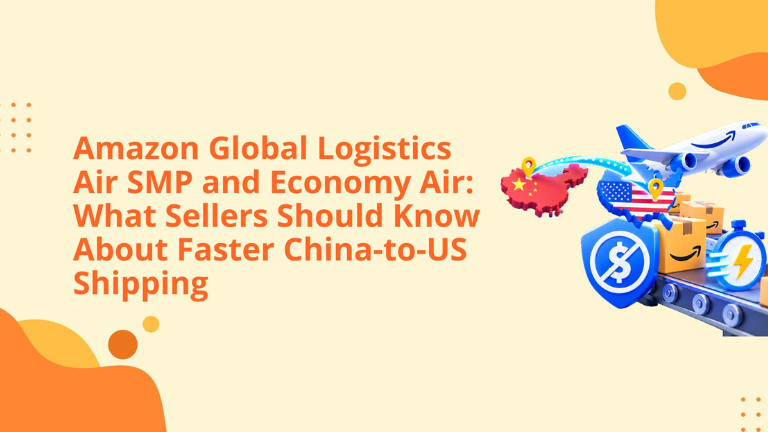
Amazon Global Logistics has expanded its China-to-US Air Freight options with two new services: Air SMP and Economy Air. For Amazon sellers sourcing from China, this update is worth serious attention because freight decisions directly affect inventory availability, FBA placement costs, PPC performance, and launch timing.
Many sellers think of logistics as a backend operation, but on Amazon it is tied to growth. If inventory arrives late, a strong listing may still lose ranking momentum. If a best-selling SKU goes out of stock, PPC performance can suffer. If replenishment is too expensive, margin can shrink even when sales look healthy.
The new AGL Air options give sellers more ways to balance speed, cost, and placement control when moving inventory from China to the US.
Amazon Global Logistics, also known as AGL, is Amazon’s cross-border freight solution that helps sellers move inventory from origin countries into Amazon fulfillment networks.
For sellers shipping from China to the US, AGL can help manage transportation, booking, customs-related steps, and delivery into Amazon’s fulfillment system. Sellers who already use AGL may be familiar with ocean freight and standard air freight options.
The latest update expands AGL’s China-to-US Air Freight service with two options: Air SMP and Economy Air. Both are designed to help sellers move inventory faster than ocean freight, but they serve different operational needs.
Air SMP is a faster air freight option that lets sellers split inventory at origin and ship directly to a locked Fulfillment Center within each of the five US regions.
This matters because inventory placement has become a major operational and cost issue for sellers. If inventory is not positioned correctly, sellers may face additional placement costs, slower delivery coverage, or stock availability problems across regions.
Amazon states that Air SMP shipments arrive in an estimated 7–10 calendar days from origin pickup, with daily flights from Shanghai and Hong Kong. Another important benefit is that Air SMP has no FBA inbound placement service fees.
Amazon also states there are no additional surcharges on apparel, electronics, or lithium battery products under this service. For sellers in these categories, that can make Air SMP especially relevant when speed and placement control are both priorities.
Economy Air is a lower-cost air freight option for sellers who need faster replenishment than ocean freight but want a more cost-conscious alternative to standard AGL Air.
Amazon states that Economy Air offers estimated 11–15 day transit from Shanghai or Shenzhen to Los Angeles. This may not be as fast as Air SMP, but it can still be weeks faster than ocean freight.
For sellers who do not need the fastest possible option but cannot wait for ocean shipping, Economy Air may become a useful middle path.
It can be especially helpful when a seller has enough margin to use air freight but still needs to control logistics cost carefully.
This update matters because inventory speed and inventory placement can directly affect Amazon performance.
If a product runs out of stock, sales momentum can slow. Organic ranking may weaken. PPC campaigns may lose efficiency because ads cannot drive sales on unavailable inventory. Customers may switch to competitors. In seasonal categories, late inventory can miss the demand window completely.
For sellers launching new products, timing can be even more important. A launch may depend on early review growth, ad traffic, coupon strategy, and ranking momentum. If inventory is delayed, the entire launch plan can become weaker.
Air SMP and Economy Air may give sellers more control when ocean freight is too slow and standard air freight is too expensive.
Air SMP may be a better fit when speed, regional placement, and placement fee savings matter most.
For example, if a seller has a fast-moving SKU at risk of stockout across multiple regions, Air SMP may help replenish faster while supporting regional FC placement. The $0 FBA inbound placement fee benefit may also make it more attractive for certain shipments.
Economy Air may be a better fit when the seller wants faster movement than ocean freight but does not need the 7–10 day timeline of Air SMP.
For example, if inventory is low but not critically close to stockout, Economy Air may provide a more balanced freight option. It can help sellers move faster than ocean shipping while still watching landed cost.
The right choice depends on margin, stockout risk, transit timing, category, placement needs, and the expected sales impact if inventory arrives late.
PPC and logistics are more connected than many sellers realize.
If a seller is running Sponsored Products, Sponsored Brands, or other ad campaigns, inventory availability affects the campaign’s ability to convert. When inventory runs low or runs out, ads may slow, campaigns may become inefficient, or the seller may lose keyword momentum.
A stockout can also affect future performance. Once a product loses sales velocity, it may need more PPC spend to regain position. That means the true cost of a stockout is not only lost sales during the out-of-stock period. It may also include lost ranking, wasted launch momentum, and higher recovery costs.
This is why faster AGL Air options can matter beyond logistics. They may help protect the seller’s advertising investment.
Peak season puts extra pressure on inventory planning.
During Q4 and other demand-heavy periods, ocean freight timelines may not match sales urgency. A seller may need to restock quickly, support a promotion, prepare for seasonal demand, or recover from higher-than-expected sales.
Air SMP and Economy Air can help sellers respond faster when timing matters. Air SMP may be useful when the seller needs faster regional placement. Economy Air may be useful when the seller wants a more affordable air freight option.
However, sellers should not wait until they are already in crisis. Air freight can help, but it should be part of a planning process. Sellers should review sales velocity, days of supply, lead times, margins, and campaign calendars before inventory gets dangerously low.
Before using Air SMP or Economy Air, sellers should review the shipment at SKU level.
The first question is urgency. If the product is close to stockout or tied to a launch, faster air freight may be worth the cost. If the product has enough days of supply, ocean freight may still be more economical.
The second question is margin. Air freight can protect sales, but sellers still need to check whether the landed cost supports profitability.
The third question is placement strategy. If regional placement matters, Air SMP may offer advantages because it ships directly to a locked Fulfillment Center within each of the five US regions.
The fourth question is product category. Sellers in apparel, electronics, or lithium battery products should review whether the lack of additional surcharges under Air SMP changes their freight calculation.
The fifth question is sales impact. A product with strong conversion, high velocity, and active PPC may justify faster replenishment more than a slow-moving SKU.
Sellers should begin with an inventory risk audit.
Check which products are at risk of stockout in the next 30–60 days. Review which SKUs are tied to peak season, promotions, launches, or strong PPC campaigns. Then compare the cost and timing of ocean freight, standard AGL Air, Air SMP, and Economy Air.
Sellers should also calculate the cost of being late. If a stockout would damage ranking, interrupt ad momentum, or cause lost seasonal demand, faster freight may make more sense.
Next, review AGL booking options inside the AGL program portal. New sellers can use the portal to review onboarding and booking steps. Existing AGL users can compare service details and rates for relevant shipments.
We help Amazon sellers and D2C brands grow through Amazon PPC management, SEO, listing optimization, A+ Content, catalog health, account support, and marketplace strategy.
From our perspective, AGL Air SMP and Economy Air should not be viewed only as freight options. They should be evaluated as part of the seller’s full Amazon growth plan.
A seller may have a strong listing, optimized content, and well-structured PPC campaigns, but if the product is out of stock, those efforts lose power. On the other hand, a seller may overspend on fast freight if they do not review margins, velocity, and replenishment timing carefully.
The best decision comes from connecting logistics with data: sales velocity, days of supply, campaign spend, margin, placement cost, and category timing.
1. What is Amazon Global Logistics Air Freight?
It is Amazon’s cross-border air freight service that helps sellers move inventory from origin countries such as China into Amazon’s US fulfillment network.
2. What is Air SMP?
Air SMP lets sellers split inventory at origin and ship by air to locked Fulfillment Centers within five US regions, with estimated 7–10 day transit from origin pickup.
3. What is Economy Air?
Economy Air is a lower-cost air freight option with estimated 11–15 day transit from Shanghai or Shenzhen to Los Angeles.
4. Does Air SMP have FBA inbound placement service fees?
Amazon states that Air SMP has no FBA inbound placement service fees.
5. When should sellers consider these options?
Sellers may consider them for peak season preparation, stockout recovery, time-sensitive launches, or SKUs where ocean freight is too slow.
Amazon’s new AGL Air SMP and Economy Air options give sellers more flexibility for China-to-US inventory movement.
Air SMP may help sellers replenish faster, split inventory at origin, ship to locked Fulfillment Centers across five US regions, and avoid FBA inbound placement service fees. Economy Air may help sellers move inventory faster than ocean freight at a lower cost than standard AGL Air.
For Amazon sellers, the opportunity is clear: faster replenishment can help protect sales momentum, reduce stockout risk, and support peak season or launch planning.
But the decision should be made carefully. Sellers should compare freight cost, margin, placement needs, days of supply, PPC activity, and product urgency before choosing the right option.
We can help sellers review inventory risks, PPC readiness, catalog health, SKU-level performance, and marketplace growth strategy before logistics issues affect sales.
Schedule a strategy call with our team.
Follow Big Internet Ecommerce (BIE) on Instagram & LinkedIn to stay updated with the latest trends in Amazon selling.
Fill out the form and our experts will get back
to you within 24 hours.
.webp)
.webp)
.webp)
We respect your privacy. Your information is safe with us.