September 28, 2026
Amazon Global Logistics Expands Eligible Products: What Sellers Should Check Before Shipping
A product can be ready to sell and still be difficult to replenish.
For Amazon sellers importing inventory, the challenge is often the handoff between a supplier, a freight provider, and Amazon’s fulfillment network. That becomes more complicated when one part of the catalog needs a different shipping arrangement because it contains a battery or resembles equipment that previously fell outside a logistics program’s accepted cargo.
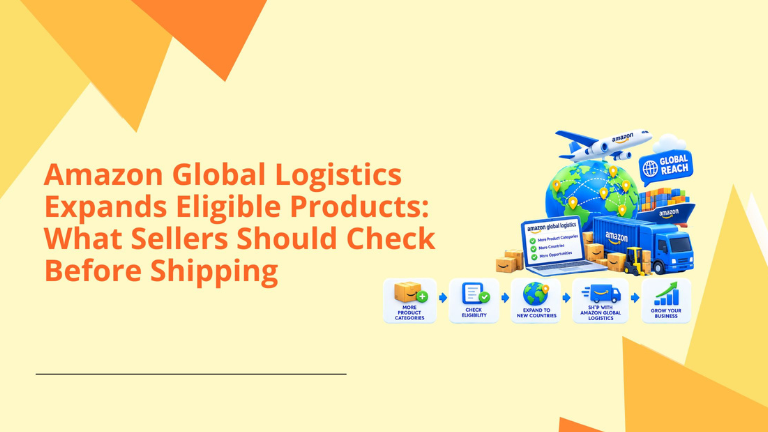
Amazon’s latest Amazon Global Logistics (AGL) eligible products update gives some sellers a reason to revisit those arrangements. AGL has expanded its eligible catalog to include certain battery-containing electronics, small mechanical devices, and products that meet the Non-DG Empty Equipment standard. Amazon says qualifying products can ship as general cargo through air and ocean freight.
For a brand with several product lines, the potential benefit is straightforward: more inventory may be able to move through a coordinated cross-border shipping process. The decision still has to be made at the product and shipment level. Battery chemistry, equipment condition, documentation, route availability, and Amazon’s booking review all matter.
Here is what changed, where the opportunity lies, and how to assess your SKUs before making a replenishment decision.
Amazon Global Logistics is Amazon’s cross-border freight program for sellers sending inventory into its fulfillment network. Through Seller Central, eligible sellers can arrange and track ocean or air shipments as part of their inbound inventory workflow.
AGL can cover multiple steps in the journey, including transportation from origin, export processes, international freight, customs clearance, and delivery into an eligible Amazon destination. The available services depend on the origin, destination, freight mode, and shipment.
That integrated process is appealing to sellers who otherwise coordinate several providers to move inventory from a supplier to Amazon. AGL does not eliminate the need to understand import requirements, product classification, shipment costs, or inventory timing. It gives sellers another logistics option to evaluate against those requirements.
Amazon’s announcement expands AGL coverage in three areas: certain battery-containing products, small mechanical devices, and brand-new equipment that meets its Non-DG Empty Equipment standard.
For batteries, Amazon specifically names products containing nickel-cadmium, alkaline, zinc-based, and silver oxide batteries. It also gives examples of electronics sellers may want to review, including Bluetooth speakers, smartwatches, and portable power banks.
The distinction between an example product and an approved shipment matters. Two devices sold under the same product name can contain different batteries or have different shipping configurations. A portable power bank, for instance, should not be treated as eligible simply because power banks appear in an announcement. Sellers need to confirm the actual specifications and receive the appropriate acceptance during the AGL booking process.
Amazon also says brand-new mechanical equipment shipped without fuel or hazardous residue may qualify under its expanded coverage. That condition deserves particular attention. Sellers should verify what the equipment contains, whether it has been used, and what information Amazon requires to establish its shipping status.
A catalog rarely replenishes in neat, identical batches. A brand may source several products from the same manufacturing region while sending them through different freight arrangements. Each separate process can introduce another booking, handoff, tracking step, or documentation request.
If a previously excluded SKU becomes eligible for AGL, a seller may be able to bring more of that inventory into an existing cross-border workflow. That could make shipment planning easier, particularly for brands that manage many related products or reorder frequently.
The update also offers a planning choice. Amazon says the expanded categories are supported through both air and ocean freight, subject to the product and booking requirements. A seller facing an urgent stock gap can assess whether an available air option makes sense. A seller planning regular replenishment can assess an ocean option against its forecast and cost targets.
Those are possible operational benefits, not promised savings. The right answer depends on the quote, the goods, the shipment size, the destination, and the date inventory is needed. A lower freight charge does little for a business if stock arrives after a critical sales period. An expedited shipment can also erode margin if its cost is out of proportion to the sales it protects.
No. Amazon describes the newly covered products as able to move as general cargo when they meet the applicable criteria. Sellers should avoid interpreting that as blanket approval for all batteries, electronics, or equipment.
Start with the actual product. Obtain its battery chemistry and configuration from the supplier. Check whether the battery is installed in a device, supplied separately, or packaged with other components. For equipment, confirm its condition and whether fuel or hazardous residue is present. Then provide accurate information during booking and follow the documentation guidance from Amazon’s operations team.
This is especially important when marketing names hide technical differences. “Wireless speaker” describes what a product does; it does not identify its battery. “Power bank” describes a use case; it does not establish shipping eligibility. A supplier specification and AGL’s review are more useful than a broad category label.
If the booking raises a classification or documentation issue, resolve it before relying on that shipment for an inventory deadline. Eligibility for a product listing and acceptance for a freight movement are separate questions.
The expanded coverage makes both freight modes available for qualifying products, giving sellers a way to compare speed with cost. The decision should begin with an inventory forecast.
Consider air freight when time has a measurable value. If an ASIN is nearing a stockout, a faster shipment may protect sales continuity or a planned campaign. Calculate the expected benefit against the full cost of moving the units. Do not assume that shipping an entire reorder by air is necessary; the quantity required to bridge a short gap may be smaller than the total purchase order.
Consider ocean freight for planned replenishment. When the reorder can be placed early enough, the ocean may be a better fit for regular inventory flows. Build in time for the steps between dispatch and sellable stock, including the shipping process and Amazon receiving.
For either mode, compare the actual booking options. Review the quote, included services, possible additional charges, expected delivery, and the amount of inventory you need to keep available. The best freight choice is the one that supports both your stock plan and your unit economics.
Amazon says sellers do not need a new interface or a separate booking workflow for these expanded categories.
If you have not used AGL, begin by setting up your profile through the AGL program portal. In Seller Central, create the shipment through the usual inventory workflow and select AGL as the shipping method. Amazon says its operations team will guide sellers through any required shipping documentation after the booking is submitted.
“No workflow changes” should not be read as “no product information needed.” The booking process may look familiar while the shipment still requires details that allow Amazon to assess the cargo. Prepare those details before the reorder is urgent, so a request for clarification does not become a last-minute inventory problem.
If you already use AGL for other SKUs, review the previously excluded products one by one. Existing AGL usage does not automatically establish that a newly added SKU is accepted.
A short catalog review can turn this announcement into a useful shipping decision.
First, identify the SKUs worth checking. Pull products with batteries, electronic components, or small mechanical assemblies that you previously shipped outside AGL. Prioritize bestsellers, frequently reordered SKUs, and products with a history of inbound delays.
Second, collect product facts from the supplier. Record the exact model, battery chemistry, battery configuration, whether the equipment is brand-new, and whether it contains fuel or hazardous residue. Keep the underlying documentation accessible to the people responsible for shipments.
Third, map each product to an inventory need. Note current sellable units, expected sales, the next reorder quantity, and when stock must arrive. This tells you whether you are evaluating a routine ocean shipment or a time-sensitive air shipment.
Fourth, check the live booking options. Review whether AGL accepts the product for the intended route and what documentation the operations team requests. Compare available freight modes and quotes with your existing arrangement.
Finally, update the replenishment plan only after confirmation. Record the decision for each SKU, including any conditions or documents required. That creates a more useful process for the next reorder than relying on a general announcement alone.
An inbound shipment affects more than the logistics budget. If inventory runs out, a seller may lose sales during a period of demand. The brand may also have to reconsider advertising spend, promotion dates, and launch plans while waiting for stock.
That does not mean every eligible SKU should move through AGL, or that faster freight is always justified. It means freight should be considered alongside demand, margin, and the marketing calendar.
For example, a brand planning to promote a newly eligible electronic product should know its expected inventory arrival date before increasing PPC budgets. A seller deciding between air and ocean should understand how many units are needed to cover the next sales window. A business expanding its catalog should know which SKUs require extra shipping information before it commits to a launch date.
The category expansion is valuable when it gives sellers another workable option for those decisions. The strongest outcome comes from using that option with accurate product data and a realistic stock forecast.
We work with Amazon brands across account management, PPC, listing optimization, and marketplace growth strategy. Those activities perform better when inventory planning reflects what is actually arriving and when it will be available to sell.
Our team can help sellers review which ASINs deserve priority, align advertising plans with stock availability, identify catalog or listing issues that could affect a launch, and assess how operational decisions fit the wider growth plan. For technical cargo acceptance and shipping documentation, sellers should follow Amazon’s AGL guidance for their specific booking.
If the expanded AGL coverage could affect your next reorder, start with the products that have the greatest sales or stockout exposure. Connect with us to discuss how your inventory timeline fits your Amazon growth goals.
Amazon announced expanded coverage for certain battery-containing electronics, small mechanical devices, and brand-new items that meet its “Non-DG Empty Equipment” standard. Acceptance depends on the specific shipment.
No. A product example does not establish eligibility for every model. Check its actual battery specifications and confirm acceptance through the AGL booking process.
Amazon says both air and ocean freight support the expanded categories. The available option for an individual shipment still needs to be confirmed during booking.
Amazon says the interface and booking process remain the same. Sellers create a shipment in Seller Central, select AGL, and follow the operations team’s guidance on required documents.
Confirm the exact product specifications, shipment eligibility, required documentation, route, quote, and expected inventory arrival date. Compare the result with your current freight arrangement before changing the replenishment plan.
Amazon’s expanded AGL product coverage may open a shipping option for sellers whose catalogs include certain battery-containing products or qualifying new equipment. Eligible shipments can be considered for air and ocean freight through the existing booking process.
The next step is a SKU-level review, followed by confirmation in the live AGL workflow. Verify the product specifications, prepare documentation, compare the available modes, and commit to a replenishment plan that makes sense for your margins and sales calendar
Schedule a strategy call with our team.
Follow Big Internet Ecommerce (BIE) on Instagram & LinkedIn to stay updated with the latest trends in Amazon selling.
Fill out the form and our experts will get back
to you within 24 hours.
.webp)
.webp)
.webp)
We respect your privacy. Your information is safe with us.