August 26, 2026
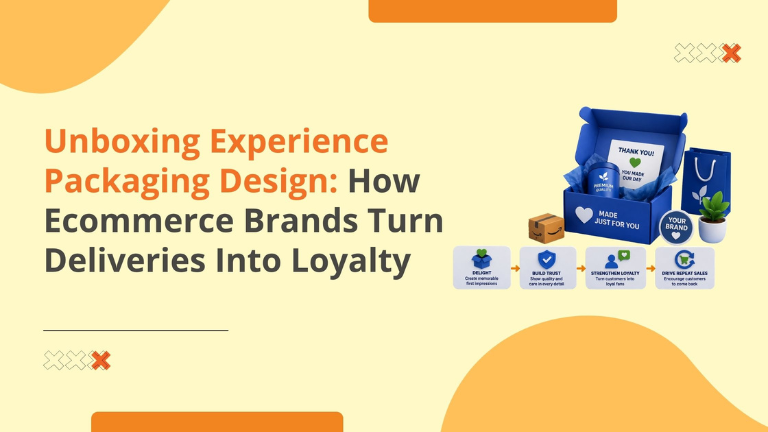
Unboxing Experience Packaging Design: How Ecommerce Brands Turn Deliveries Into Loyalty
Most ecommerce sellers spend heavily before the sale.
They invest in Amazon PPC, listing images, A+ Content, SEO, product photography, Shopify pages, social ads, influencer content, and email campaigns.
Then the order arrives in a plain box with no story, no presentation, and no emotional impact.
That is a missed opportunity.
The delivery is not just a logistics moment. It is the first physical interaction between the customer and your brand.
A strong unboxing experience can make the customer feel confident, excited, and more connected to the purchase. It can also support repeat orders, social sharing, brand recall, and customer loyalty.
The goal is not to make every package expensive.
The goal is to make every package intentional.
Whether you sell on Amazon, Shopify, Walmart, your own DTC website, or multiple channels, your packaging should protect the product, communicate your brand, and make the customer feel that the order was worth it.
An unboxing experience is the complete customer journey from receiving a package to opening it and seeing the product for the first time. It includes the outer box, inner presentation, tissue paper, inserts, product placement, protective materials, branding, and any sensory or visual details that make the delivery feel memorable.
A good unboxing experience does three things:
That feeling can influence repeat purchases, reviews, referrals, and social sharing.
Online selling removes the in-store experience.
Customers cannot touch the shelf display, speak to a store associate, or see the product in a branded retail environment before buying.
That means packaging becomes one of the few physical brand moments ecommerce sellers control.
For Amazon sellers, packaging can help differentiate a product after the marketplace wins the click.
For Shopify and DTC sellers, packaging can strengthen the brand relationship after checkout.
For premium brands, packaging can justify price.
For subscription brands, packaging can create anticipation.
For giftable products, packaging can increase perceived value.
For regulated or instruction-heavy products, packaging can reduce confusion and support customer success.
Unboxing is not only about looking beautiful.
It is about making the customer feel that they made the right decision.
Many sellers look at custom packaging only as an extra cost.
That is the wrong way to evaluate it.
Packaging should be measured against the customer value it can create.
A simple packaging ROI formula:
Packaging upgrade cost = Extra packaging cost per order x monthly order volume
Potential return = Repeat purchase lift + lower damage rate + fewer support issues + social sharing value + higher perceived brand value
For example, if a brand adds a low-cost insert, better tissue wrap, and branded sticker, the cost may be small. But if the improved experience helps increase repeat orders or reduce customer confusion, the packaging begins to support revenue.
The key is to match packaging investment to the product.
A low-margin commodity product should not use luxury packaging that destroys profit.
A premium skincare product, supplement, apparel item, gift box, food product, or high-AOV bundle may justify a more elevated experience.
Packaging should fit:
Better packaging is not always more packaging.
Sometimes the best upgrade is simply cleaner, clearer, and more intentional packaging.
Strong unboxing has a sequence.
Think of the package as a reveal, not just a container.
The outer package creates the first impression.
This can be a custom box, branded mailer, printed tape, sticker, or even a clean plain box with a professional label.
The outer layer should communicate trust.
A damaged, oversized, messy, or generic package can make the customer question the purchase before opening it.
A clean, right-sized, well-sealed package tells the customer the brand is organized.
The first inner view is what the customer sees immediately after opening the package.
This is often the most shareable moment.
It could include:
This layer should feel calm, clean, and intentional.
Avoid clutter.
If the customer opens the box and sees messy filler, scattered items, or confusing materials, the experience feels cheap.
The product should sit inside the packaging with purpose.
Consider:
The product should not look like it was thrown into the package.
It should feel placed.
That small difference can make the product feel more valuable.
After the product reveal, guide the customer.
This can be:
The next step should help the customer use the product better.
For marketplace orders, especially Amazon, keep inserts compliant and avoid review manipulation.
You do not need to start with expensive custom boxes.
Start with the highest-impact upgrade your margin can support.
Best for newer brands, value products, low-margin products, and sellers testing packaging improvements.
Ideas:
This tier can make the order feel less generic without changing the entire packaging system.
Best for growing brands with repeat-purchase potential.
Ideas:
This tier helps the customer remember the brand and understand the product better.
Best for luxury, giftable, high-margin, or high-AOV products.
Ideas:
This tier can increase perceived value and support premium positioning.
But it must still make financial sense.
Premium packaging should support margin, not eat it.
A share-worthy package is easy to film and easy to understand.
Many customers record unboxings from above using a phone.
That means packaging should look good in a vertical frame and read clearly on a small screen.
Design for:
Do not overload the package with too many cards, coupons, stickers, and fillers.
More is not always better.
A clean reveal usually performs better than a messy one.
User-generated content can be valuable, but brands must be careful.
For DTC orders, you can invite customers to share their unboxing, tag the brand, or follow social channels as long as the request is honest and does not mislead.
For Amazon orders, the rules are stricter.
Amazon prohibits packaging and inserts that direct customers to write only positive reviews or contact the seller instead of leaving negative feedback. Sellers also should not offer discounts, refunds, gifts, or rewards in exchange for reviews.
Safe insert ideas for Amazon orders include:
Avoid:
Packaging should improve the customer experience, not manipulate feedback.
Sustainable packaging does not need to look dull or cheap.
Many eco-conscious materials can create a strong, premium brand experience.
Options include:
Sustainability should also be communicated carefully.
The FTC Green Guides warn marketers not to make broad, unqualified environmental claims that could mislead customers.
Instead of saying “eco-friendly packaging,” be specific.
Better examples:
Specific claims are stronger and safer than vague claims.
Amazon sellers need a slightly different packaging strategy because they may not control the entire delivery experience.
If you use FBA, Amazon controls much of the outer shipping experience.
But you can still influence:
Your product packaging still matters because it is what the customer sees when they reach the product.
For Amazon sellers, packaging should prioritize:
If your product arrives damaged, confusing, or poorly presented, it can affect returns, reviews, and repeat buying.
DTC sellers usually have more control over the full package experience.
That gives more room for brand storytelling.
A Shopify or DTC package can include:
Because DTC customers are buying directly from your brand, packaging can do more relationship-building work.
The key is to make the next step helpful, not pushy.
Packaging should be measured.
Track:
You can also test packaging upgrades in phases.
Start with one SKU, one product line, or one order segment.
Measure the response.
Then decide whether to expand.
Many sellers overspend or underthink packaging.
Avoid these mistakes:
A good package should protect, present, and communicate.
If it fails one of those three jobs, it needs work.
We help Amazon sellers and D2C brands grow through PPC management, Amazon SEO, listing optimization, A+ Content, catalog health, Store Management, creative strategy, compliance support, and marketplace growth planning.
Packaging is connected to all of that.
A strong product page wins the first sale.
A strong package helps earn the second sale.
A clear insert can reduce confusion.
A better presentation can improve perceived value.
A compliant packaging strategy can protect the Amazon account.
A share-worthy unboxing can support organic reach.
A better post-purchase experience can help build loyalty.
This is why sellers should not treat packaging as only an operational cost.
It is part of the customer journey.
It is part of the brand.
It is part of retention.
And for sellers competing in crowded Amazon and DTC categories, retention matters.
An unboxing experience is the moment a customer opens a package and interacts with the brand’s packaging, product presentation, inserts, and first-use instructions.
Unboxing matters because it is often the first physical brand experience after an online purchase. It can improve perceived value, customer loyalty, repeat buying, and social sharing.
Start with simple upgrades such as branded stickers, tissue paper, thank-you cards, care instructions, better product placement, and right-sized packaging.
Amazon sellers should avoid asking for positive reviews, offering incentives for reviews, or asking customers to contact them outside Amazon instead of leaving negative feedback.
Yes. Recycled kraft paper, honeycomb wrap, recyclable mailers, reusable pouches, and clear disposal instructions can create a premium and responsible unboxing experience.
Measure repeat purchase rate, damage rate, return rate, support tickets, customer photos, social mentions, reviews mentioning packaging, and customer survey responses.
The best first upgrade is usually a branded insert or sticker combined with cleaner product presentation. It is low-cost and can quickly make the package feel more intentional.
We can review your Amazon listing, brand positioning, customer journey, packaging compliance risks, A+ Content, and marketplace growth strategy.
You do not need to redesign everything at once.
Start with one improvement.
Add a better insert.
Use a branded sticker.
Improve product placement.
Right-size the box.
Add clear care instructions.
Use recyclable materials with specific claims.
Create a cleaner reveal moment.
Then measure.
The best unboxing experiences are not always the most expensive. They are the most intentional.
If your packaging already reaches every customer, make it work harder.
We can help you review your Amazon listings, product positioning, creative assets, customer journey, compliance risks, and marketplace growth opportunities.
Schedule a strategy call with our team.
Follow Big Internet Ecommerce (BIE) on Instagram & LinkedIn to stay updated with the latest trends in Amazon selling.
Fill out the form and our experts will get back
to you within 24 hours.
.webp)
.webp)
.webp)
We respect your privacy. Your information is safe with us.