Amazon continuously refines its seller performance metrics to improve customer experience and marketplace reliability.
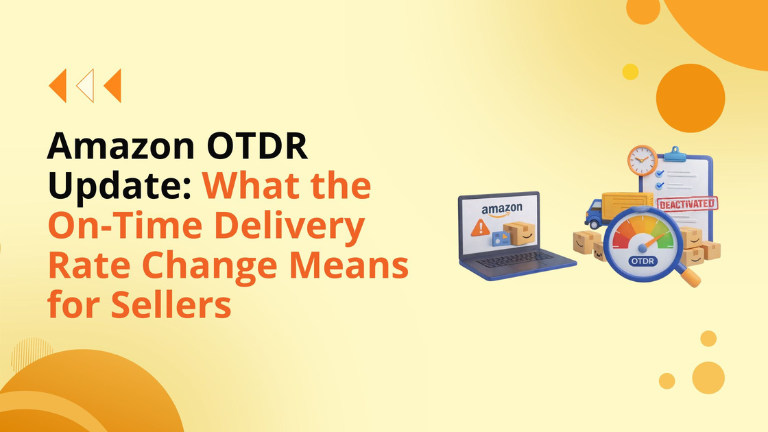
One of the latest operational changes involves the Amazon On-Time Delivery Rate (OTDR) update, which directly affects sellers using seller-fulfilled shipping models.
Previously, poor delivery performance could result in broad penalties affecting multiple listings across a seller’s catalog. With this update, Amazon now focuses on listing-level enforcement, meaning that only the products contributing to late deliveries may be deactivated.
While this change introduces more targeted enforcement, it also increases the importance of closely monitoring shipping performance metrics.
For Amazon sellers, especially those using Fulfilled by Merchant (FBM) or Seller Fulfilled Prime, shipping reliability is now a critical operational metric that directly affects listing visibility and revenue.
We explore how the Amazon OTDR update affects sellers, why shipping performance is becoming a strategic advantage, and how businesses can optimize their fulfillment processes to remain competitive.
Contents
Understanding Amazon On-Time Delivery Rate (OTDR)
The Amazon On-Time Delivery Rate (OTDR) measures the percentage of seller-fulfilled shipments delivered on or before the estimated delivery date promised to customers.
The metric applies specifically to tracked seller-fulfilled shipments, making accurate tracking and carrier performance essential.
OTDR is calculated using the following formula:
Packages delivered by estimated date ÷ total tracked shipments
Key requirements include:
- Tracking must be confirmed within 48 hours of shipment
- Only tracked shipments are included in OTDR calculations
- Packages delivered after the estimated delivery date negatively affect OTDR
Maintaining strong OTDR performance helps ensure that delivery promises match actual customer experiences.
Why Amazon Introduced This OTDR Update
Amazon’s marketplace relies heavily on customer trust and delivery reliability.
Shipping delays can lead to:
- Negative customer experiences
- Increased refund requests
- Lower seller ratings
To address this, Amazon adjusted its enforcement model to focus on listing-specific shipping performance rather than penalizing entire catalogs.
This change allows sellers to:
- Identify problem SKUs more easily
- Isolate operational issues
- Maintain performance across the rest of their catalog
However, sellers must still maintain an OTDR above 90% to avoid enforcement actions.
Operational Implications for Amazon Sellers
The OTDR update introduces several operational considerations for sellers managing fulfillment processes.
Shipping Metrics Now Affect Listing Visibility
Shipping reliability is becoming increasingly tied to product performance.
Listings with repeated delivery delays may lose visibility if Amazon deactivates them due to poor OTDR.
Carrier Selection Matters More
Sellers must regularly review carrier performance to ensure delivery timelines remain accurate.
Reliable carriers and accurate transit times help maintain strong OTDR performance.
Handling Time Accuracy Is Critical
Incorrect handling time settings can lead to unrealistic delivery estimates, increasing the risk of late shipments.
Sellers should adjust handling times based on actual fulfillment capacity.
Automation Tools Reduce Risk
Amazon encourages sellers to adopt tools designed to improve shipping accuracy, including:
- Shipping Settings Automation
- Automated Handling Time
- Amazon Buy Shipping labels
- Veeqo fulfillment software
These tools help sellers maintain consistent delivery performance.
How Big Internet Ecommerce Can Help
At Big Internet Ecommerce, we help Amazon sellers optimize their operational performance and protect their listings from avoidable risks.
Our team assists brands in improving shipping performance through structured operational analysis.
Shipping Performance Analysis
We analyze delivery performance metrics to identify listings that may be at risk of OTDR violations.
Fulfillment Strategy Planning
We help sellers determine the most effective fulfillment model for their business, including:
- Fulfillment by Amazon (FBA)
- Fulfilled by Merchant (FBM)
- Seller Fulfilled Prime
- Hybrid fulfillment strategies
Learn more about our Amazon growth services.
Automation Implementation
Our team helps sellers implement shipping automation tools that improve reliability and reduce manual errors.
Operational Monitoring
We monitor seller performance metrics through Account Health dashboards to help prevent shipping issues before they affect listings.
The Amazon On-Time Delivery Rate update highlights how operational performance directly affects seller success on the platform.
Shipping reliability is no longer just a backend metric — it is now closely tied to listing visibility, customer experience, and marketplace trust.
Amazon sellers who actively monitor their shipping performance, optimize fulfillment strategies, and adopt automation tools will be better positioned to maintain strong account health and protect their product listings.
As Amazon continues to refine its operational standards, sellers who treat logistics and fulfillment as strategic priorities will gain a significant competitive advantage.
If you want help optimizing your Amazon fulfillment strategy and improving operational performance, schedule a strategy call with our team.
Follow Big Internet Ecommerce (BIE) on Instagram & LinkedIn to stay updated with the latest trends in Amazon selling.