Amazon sellers are entering a new pricing reality.
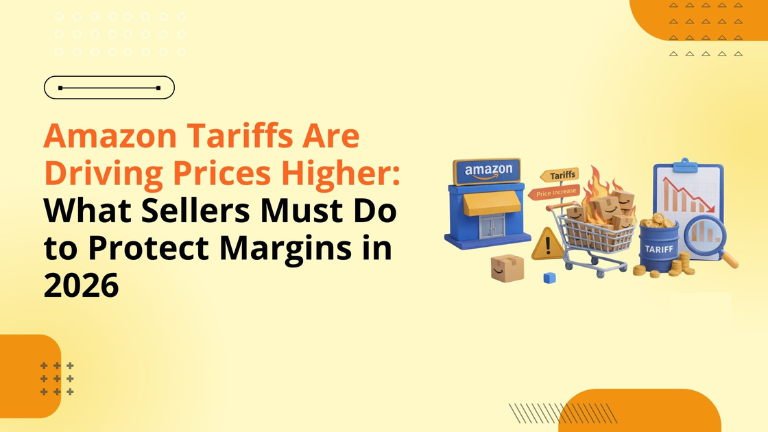
According to Amazon, tariffs are now visibly influencing product prices — not in theory, but at checkout. With pre-tariff inventory exhausted, sellers must now decide how to protect margins without destroying demand.
This blog breaks down:
- What Amazon tariffs really mean for sellers
- Why pricing alone won’t save you
- How to adapt your Amazon strategy for 2026
Contents
How Amazon Tariffs Are Affecting Seller Pricing
Tariffs have raised over $200 billion in U.S. Treasury revenue, with studies showing 96% of the cost passed to consumers.
For Amazon sellers:
- Import costs rise first
- Margins compress next
- Conversion suffers if pricing isn’t justified
Why Price Increases Hurt Some Sellers More Than Others
When prices rise, shoppers become more selective.
Listings with:
- Weak hero images
- Unclear differentiation
- Generic bullets
- High TACOS
…lose disproportionately.
This is why conversion optimization becomes a pricing defense strategy, not a marketing luxury.
What Winning Sellers Are Doing Differently
Smart sellers aren’t asking: “Should I raise prices?”
They’re asking:
- Which SKUs deserve margin protection?
- Can my hero image justify this price in 2 seconds?
- Is my CVR strong enough to survive demand sensitivity?
This shift separates operators from survivors.
How Big Internet Ecommerce Helps Sellers Adapt
At Big Internet Ecommerce, we help sellers:
- Diagnose SKU-level profitability risks
- Improve CTR & CVR to support price changes
- Reduce TACOS before margins collapse
- Build listings that sell confidence — not discounts
We focus on defensive growth, not reactive pricing.
Tariffs are here.
The sellers who prepare will scale — the rest will bleed slowly.
Schedule a strategy call with our Amazon experts.
Follow Big Internet Ecommerce (BIE) on Instagram & LinkedIn to stay updated with the latest trends in Amazon selling.