October 13, 2026
Amazon Business Deals: How Sellers Can Use Exclusive B2B Discounts to Reach Business Buyers
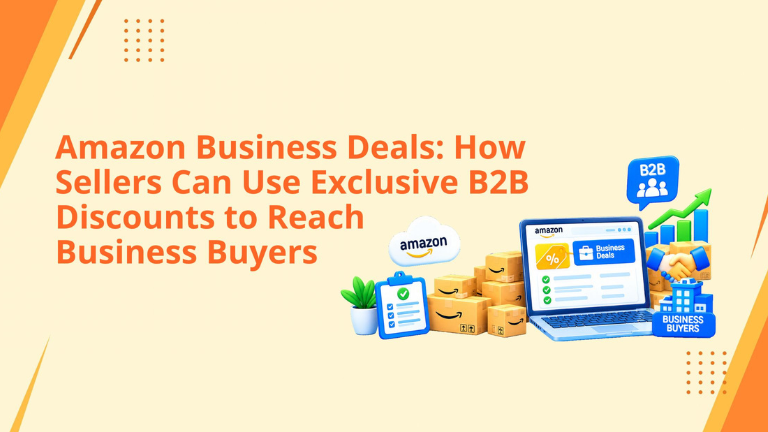
Amazon has introduced Amazon Business Deals, giving eligible sellers a new way to create exclusive, limited-time promotions for business customers.
For Amazon sellers, this update matters because B2B buyers do not always shop like regular consumers. A household shopper may buy one item for personal use. A business buyer may purchase for a team, office, facility, school, clinic, workshop, restaurant, warehouse, or recurring operational need. That difference can change how sellers think about pricing, promotions, inventory, product positioning, and repeat purchase potential.
Amazon Business Deals allows sellers to create business-to-business discounts for durations ranging from one hour to 30 days. Sellers can choose between Fixed Price or Percent Off promotions. Amazon states that there are no additional fees to use Amazon Business Deals.
For sellers with products that fit business use cases, this can become a valuable promotional tool.
Amazon Business Deals are exclusive promotional offers created for Amazon Business customers.
These are not standard consumer-facing discounts. They are designed for registered business buyers shopping through Amazon Business. Sellers can create limited-time offers and choose how long the deal should run, from a short one-hour promotion to a longer 30-day campaign.
The deal type can be set as either a Fixed Price promotion or a Percent Off promotion. This gives sellers flexibility depending on the product, margin, deal strategy, and target buyer.
For example, a seller may use a Percent Off deal to create a clear discount during a shopping event. Another seller may prefer Fixed Price if the goal is to create a simple procurement-friendly offer for business customers.
Amazon Business is built for organizations and professional buyers. These buyers may include small businesses, enterprise teams, schools, government groups, healthcare organizations, nonprofits, service providers, and procurement departments.
That makes Amazon Business Deals important because it gives sellers a way to speak directly to a different buying audience.
Business buyers may care about practical value. They may look for consistent supply, reliable delivery, reorder convenience, competitive pricing, invoice-friendly purchasing, and products that solve operational needs. If a seller’s product fits that pattern, an exclusive B2B deal may help increase visibility and encourage trial or repeat purchase.
Amazon states that sellers can reach over 11 million registered business organizations globally through Amazon Business. That makes the opportunity meaningful, especially for sellers with products that businesses may buy repeatedly or in higher quantities.
Amazon Business Deals allow sellers to create limited-time offers for business customers.
The seller chooses the deal duration, which can range from one hour to 30 days. The seller also chooses whether the discount is a Fixed Price offer or Percent Off promotion.
During major shopping events such as Prime Big Deal Days, Black Friday, and Cyber Monday, Amazon says Business Deals may receive enhanced visibility through dedicated email and push notification campaigns.
The word “may” is important. Enhanced visibility is not guaranteed for every deal. Sellers should still plan the deal carefully and make sure the product is eligible, priced properly, stocked adequately, and positioned well for business customers.
Not every product will qualify for Amazon Business Deals.
Amazon states that eligible products must have a 3.5+ star rating, be in new condition, and meet minimum discount requirements.
For regular Business Deals, the minimum discount is at least 10% off. For High Velocity Event deals, such as Prime Big Deal Days, Black Friday, and Cyber Monday, the minimum discount is at least 15% off.
These requirements matter because sellers should not build a deal plan around products that cannot qualify. Before planning the promotion, sellers should check rating, condition, discount ability, inventory level, and margin.
A product with weak reviews, poor availability, or tight margins may not be the best fit for a Business Deal.
The best products for Amazon Business Deals are usually products that business buyers can understand quickly and may need repeatedly.
This can include workplace supplies, office products, cleaning items, breakroom supplies, tools, maintenance products, electronics accessories, packaging materials, health and wellness supplies, restaurant supplies, industrial products, and other operational essentials.
However, the category alone is not enough. Sellers should ask whether the product solves a business problem.
A good B2B candidate may have one or more of these qualities:
If the product only works as a one-time consumer purchase, Amazon Business Deals may still be useful, but the opportunity may be smaller.
Business buyers often shop with a different mindset.
A consumer may be attracted by emotion, design, convenience, or personal benefit. A business buyer may focus more on function, value, reliability, reorder ease, team usage, and cost control.
That means sellers should not rely only on regular consumer messaging. If the product has a business use case, the listing should make that use case easy to understand.
For example, a cleaning product may speak to households, but it may also be useful for offices, workshops, schools, warehouses, or service businesses. A food item may be positioned for personal use, but it may also be relevant for office breakrooms, hospitality, or bulk pantry stocking. A tool may be useful for homeowners, but also for technicians, trades, and small business teams.
Sellers should review their listing content and ask: “Would a business buyer immediately understand why this product fits their need?”
Amazon says Business Deals may receive enhanced visibility during major shopping events through dedicated email and push notification campaigns.
This is important because business buyers may also shop during high-traffic retail periods. Black Friday and Cyber Monday are not only consumer events. Businesses may use these windows to stock up, replace equipment, buy supplies, or take advantage of seasonal discounts.
High Velocity Event deals require at least a 15% discount, so sellers need to plan margins carefully.
A strong event deal should not only chase visibility. It should have a business reason. Sellers should consider whether the product has enough inventory, whether the discount can support profitable volume, and whether the listing is strong enough to convert increased traffic.
Sellers should begin with margin.
A deal may increase traffic, but traffic without profit is not enough. Sellers should calculate the discounted price, Amazon fees, fulfillment cost, advertising cost, and expected margin before creating the promotion.
Next, review inventory. If the deal performs well, the seller should have enough stock to support increased demand. Running out of stock during or after a promotion can hurt momentum.
Then review listing quality. Business buyers still need clear titles, strong bullet points, accurate images, A+ Content, product specifications, and trust signals. A weak listing can waste a strong deal placement.
Finally, check review quality. Since products must have at least a 3.5-star rating, sellers should also review the reason behind the rating. If reviews mention quality issues, sizing problems, missing parts, poor packaging, or unclear instructions, a deal may drive more attention to unresolved problems.
Amazon Business Deals should be planned as part of a broader B2B growth strategy.
Sellers should identify which products have business demand, create deal calendars around peak periods, align inventory with expected demand, and review whether PPC campaigns should support the deal.
For some products, the deal may work best as a test. A short deal can help sellers understand whether business buyers respond. For other products, a longer 30-day deal may make sense if the product has recurring B2B use and enough inventory.
Sellers should also review business pricing, quantity discounts, Brand Analytics, conversion rate, and repeat purchase behavior where available. Business Deals can be more effective when they are connected to real demand signals.
We help Amazon sellers and D2C brands grow through PPC management, Amazon SEO, listing optimization, A+ Content, catalog health, account support, and marketplace strategy.
From our perspective, Amazon Business Deals are useful because they give sellers another path to reach buyers with commercial intent. But sellers should not treat this as a simple discount button.
A good B2B promotion should connect pricing, inventory, margin, listing content, reviews, and advertising. If the product has business demand, strong reviews, healthy margin, and enough stock, a Business Deal may help sellers reach a valuable buyer segment.
If the product has weak reviews, unclear positioning, poor inventory planning, or low margin, the seller should fix those issues first.
1. What are Amazon Business Deals?
Amazon Business Deals are exclusive limited-time promotions for registered Amazon Business customers.
2. How long can Amazon Business Deals run?
Sellers can create deals that run from one hour to 30 days.
3. What discount is required?
Regular Business Deals require at least 10% off. High Velocity Event deals require at least 15% off.
4. Which products are eligible?
Products must have a 3.5+ star rating, be in new condition, and meet Amazon’s deal requirements.
5. Are Amazon Business Deals available globally?
Amazon says Business Deals are available across the US, Canada, UK, Germany, France, Italy, Spain, Japan, Mexico, and Australia.
Amazon Business Deals give sellers a new way to create exclusive B2B promotions for registered business customers.
The opportunity is clear. Sellers can run limited-time deals, choose Fixed Price or Percent Off promotions, and potentially gain additional visibility during major shopping events. Amazon Business also gives sellers access to a large global base of registered business organizations.
But the best results will likely come from planning. Sellers should choose the right products, check eligibility, protect margin, prepare inventory, strengthen listings, and align the deal with real business-buyer intent.
For Amazon sellers with B2B-friendly products, Amazon Business Deals may become a strong addition to the promotional calendar.
We can help sellers review catalog fit, Amazon Business opportunities, listing quality, PPC strategy, deal planning, and SKU-level profitability before launching promotions.
Schedule a strategy call with our team.
Follow Big Internet Ecommerce (BIE) on Instagram & LinkedIn to stay updated with the latest trends in Amazon selling.
Fill out the form and our experts will get back
to you within 24 hours.
.webp)
.webp)
.webp)
We respect your privacy. Your information is safe with us.