September 16, 2026
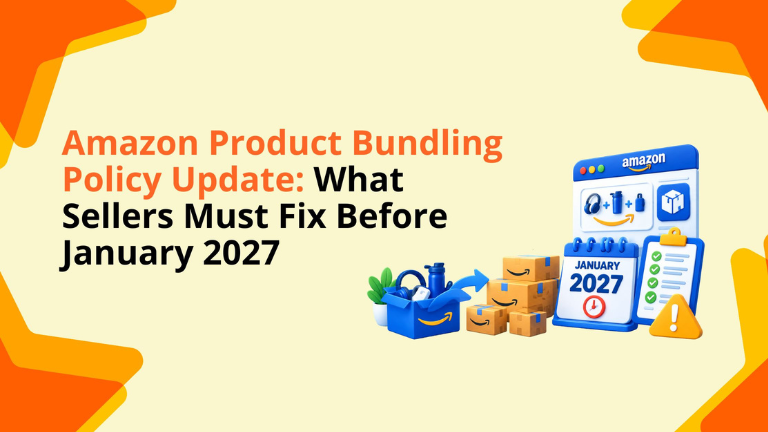
Amazon Product Bundling Policy Update: What Sellers Must Fix Before January 2027
Product bundles have long been a smart way for Amazon sellers to increase order value, create more convenient offers, and help customers buy complementary products together. A well-built bundle can make shopping easier, improve perceived value, and give sellers a stronger offer than selling each product separately.
But starting January 11, 2027, Amazon is tightening the rules around product bundles. The main change is clear: most physical product bundles listed as a single ASIN must be packaged by the original manufacturer or brand, unless the bundle qualifies for an exception.
For sellers, this is not a small backend update. It can affect active bundle ASINs, FBA inventory, Account Health, product listings, advertising campaigns, and overall catalog strategy. Sellers should review the official Product Bundling Policy in Amazon Seller Central and take action before the enforcement date.
Effective January 11, 2027, Amazon is updating its product bundling policy so that most hard-kit product bundles must be original manufacturer or brand packaged.
A hard-kit bundle is a physical bundle sold as one product under a single ASIN. It usually includes two or more complementary products packaged together and sold as one unit. Under the updated policy, Amazon expects most of these physical bundles to come as a valid product configuration from the original brand or manufacturer.
This means sellers should be careful about creating their own physical bundles by buying separate products, combining them, repackaging them, and listing them as a single ASIN. Unless an exception applies, that type of bundle may become noncompliant after the January 11 deadline.
Amazon’s goal is to protect customers and sellers by improving authenticity, safety, and trust. When a customer buys a bundle, they should receive a reliable, accurate, and properly represented product configuration.
This update matters because product bundles often sit at the intersection of catalog compliance, brand authorization, inventory planning, and PPC performance.
If a bundle becomes noncompliant after January 11, Amazon may deactivate the listing. The issue may also appear as a listing violation in the Account Health dashboard. Sellers may receive email notifications, but waiting for a warning can be risky.
A deactivated bundle ASIN can create several business problems. Sales may stop immediately. PPC campaigns may lose momentum. FBA inventory may become stranded or require removal. Organic ranking may decline. Customers may lose access to a popular offer. If the ASIN was part of a broader promotional strategy, that strategy may also need to be rebuilt.
For Amazon sellers managing large catalogs, this update should be treated as a proactive catalog audit priority.
Amazon is not removing all product bundles. Instead, it is narrowing how certain physical bundles can be created and listed.
Bundles that may still be permitted include authorized repackaged products, gifting bundles, camera bundles, virtual bundles, and certain category-specific bundles.
Authorized repackaged products may be allowed when the seller has a valid letter of authorization from the brand owner or manufacturer. This letter should give permission to reconfigure and repackage products with all other included brands for sale in Amazon stores.
Bundles listed in gifting browse nodes may also be exempt from the original manufacturer packaging requirement, provided the bundle clearly fits the gifting category and intent.
Camera product type bundles may also have an exception. These bundles often include a camera with compatible accessories, creating a convenient photography kit for customers.
Virtual bundles are also treated differently because the products are not physically packaged together. Brand owners and authorized resellers may use Amazon’s Virtual Bundles tool to combine products from their catalog into one offer without physically repackaging them.
A virtual bundle allows eligible sellers to group two to five products from their catalog and sell them together as one offer. The products are not packed together before purchase. Instead, Amazon treats them as a combined customer offer while the individual components remain separate in inventory.
Virtual bundles can help customers discover products that naturally work together. For example, a brand may combine a shampoo and conditioner, a camera and accessory, or a kitchen tool and refill pack.
The available quantity for a virtual bundle is based on the component with the lowest available inventory. If one product has 20 units and another has 30 units, the virtual bundle can only sell up to 20 units.
Once created, a virtual bundle becomes its own SKU. Sellers can edit the title, description, bullets, images, and price, but they cannot change the products included in that bundle. If the products need to change, a new bundle may be required.
A letter of authorization can become very important under the updated bundling rules.
If a seller wants to reconfigure and repackage branded products, Amazon may require documentation showing that the brand owner or manufacturer has granted permission. This is especially important when the bundle includes products from one or more protected brands.
A strong letter of authorization should clearly identify the licensor, licensee, granted rights, geographic scope, and term of authorization. It should also be issued by the company that owns or controls the intellectual property rights.
Amazon may reject weak or unrelated documents. Invoices, receipts, purchase orders, packing slips, distribution rights, and reseller agreements may not be enough if they do not specifically authorize the use of intellectual property or repackaging rights.
Sellers should also ensure the document is properly formatted. A letter on company letterhead, signed by an authorized representative, is usually stronger than informal communication. In some cases, an email from the brand owner’s official company domain may also be acceptable if it includes the required details.
While the policy creates stricter requirements for many hard-kit bundles, Amazon is also removing some previous restrictions.
Sellers may now be able to create bundles in Books, Music, Video, DVD, and Video Game categories. Amazon is also allowing certain bundles with secondary generic products, service plans, and gift cards.
For Consumables, bundles with multiple brands may be possible when sellers have proper letters of authorization.
This matters because some sellers may need to shift from informal repackaged bundles to cleaner, more compliant bundle strategies. Instead of seeing the update only as a restriction, sellers can use it as a reason to rebuild bundle offers with stronger documentation, better product logic, clearer images, and more compliant listing content.
The first step is to identify every bundle ASIN in your catalog. Include active listings, inactive listings, FBA inventory, FBM listings, seasonal bundles, older bundles, and bundles used only during promotions.
Next, separate physical hard-kit bundles from virtual bundles. Hard-kit bundles need closer review because they are physically packaged together as one product.
For each hard-kit bundle, ask whether the bundle is packaged by the original manufacturer or brand. If the answer is yes, confirm that the listing content, images, product identifier, and included items accurately match that official configuration.
If the answer is no, check whether the bundle fits an exception. Does it qualify as a gifting browse node bundle? Is it a camera product type bundle? Do you have proper authorization from all relevant brands or manufacturers? Is it better suited as a virtual bundle instead of a physical bundle?
If the bundle does not meet the updated requirements, plan your next step before January 11.
If you have FBA inventory tied to bundles that may become noncompliant, review your sell-through timeline immediately.
Amazon has stated that sellers can choose to sell noncompliant inventory before the January 11 deadline. However, if inventory remains after the enforcement date and the listing is deactivated, sellers may need to create removal orders.
A removal order can return inventory to your business, manufacturer, warehouse, or another approved recipient. Sellers may also have options such as recycling, disposal, or liquidation depending on the inventory condition and Amazon’s available programs.
The key is not to wait until the listing is already deactivated. Removal processing can take time, and delays may increase during peak periods.
Amazon bundle listings should be clear and accurate. The title should include the word “Bundle” and follow Amazon’s standard product title rules.
The description should state that the product is a bundle and identify all included items. The first bullet should clearly say the bundle includes a specific number of items and name the products included.
The main image should show every product included in the bundle and should not show products that are not included. This is important because misleading images can create customer confusion, returns, complaints, and listing risk.
A bundle should not be used to make the offer look bigger than it is. It should help the customer understand the real value and convenience of buying those items together.
Amazon sellers should not treat this as only a compliance change. Bundle listings often have their own keywords, ranking history, ad campaigns, reviews, conversion data, and sales velocity.
If a bundle ASIN is deactivated, PPC performance can be disrupted. Campaigns may stop serving, budgets may shift inefficiently, and sales momentum may be lost. If the bundle was ranking for important keywords, organic visibility may also decline.
Before removing or restructuring bundles, sellers should review keyword rankings, sales data, inventory levels, campaign structure, and profitability. In some cases, moving from a physical bundle to a virtual bundle may be a better path. In other cases, sellers may need to create a new compliant offer with improved listing content and a stronger launch strategy.
At Big Internet Commerce, Amazon growth is never only about ads. Strong growth depends on the full system: PPC, SEO, listing content, A+ Content, catalog health, inventory planning, account health, and compliance.
We help Amazon sellers and D2C brands identify bottlenecks, scale PPC, optimize listings, improve creative assets, and review backend catalog issues. The agency positions itself as an Amazon growth partner for brands that are launching or already selling, with experience across advertising, SEO, creative, catalog, and account management.
For bundle sellers, this policy update is a chance to clean up risky ASINs before they create bigger problems. A compliant catalog is easier to advertise, easier to scale, and safer to grow.
Amazon sellers should take action before January 11, 2027.
Start with a bundle audit. Identify every physical bundle and confirm whether it is manufacturer or brand packaged. Then collect letters of authorization where needed. Review virtual bundle opportunities for products that do not need to be physically packaged together. Check FBA inventory and create a sell-through or removal plan for risky ASINs.
Also review listing content. Make sure titles, bullets, descriptions, and images clearly communicate what is included in each bundle.
Finally, connect this compliance review with your growth strategy. If a bundle ASIN drives important revenue, do not simply delete it without a plan. Review replacement offers, keyword targeting, PPC campaigns, inventory status, and launch timing.
Amazon is updating its product bundling policy so that most physical bundles listed as a single ASIN must be packaged by the original manufacturer or brand starting January 11, 2027.
Yes, but the bundle must meet Amazon’s updated requirements. Some bundles may still be allowed, including virtual bundles, gifting bundles, camera bundles, and authorized repackaged bundles.
Amazon may deactivate the listing and show the issue as a listing violation in the Account Health dashboard.
A letter of authorization is documentation from a brand owner or manufacturer granting permission to use intellectual property, reconfigure products, or repackage products for sale, depending on the scope of the agreement.
Yes. Virtual bundles are not physically packaged together, so they do not need to be original manufacturer packaged in the same way as hard-kit bundles.
We can help sellers review bundle ASINs, catalog risks, listing structure, PPC impact, and account health gaps before the January 11 enforcement date.
Amazon’s updated product bundling policy creates a clear deadline for sellers. By January 11, 2027, most physical product bundles listed as a single ASIN must be packaged by the original manufacturer or brand unless an exception applies.
Sellers who act early can reduce the risk of listing deactivation, protect FBA inventory, preserve advertising momentum, and create stronger bundle offers for customers.
The best next step is simple: audit your bundle catalog now, organize your authorization documents, and rebuild any risky offers before Amazon enforcement begins.
Schedule a strategy call with our team.
Follow Big Internet Ecommerce (BIE) on Instagram & LinkedIn to stay updated with the latest trends in Amazon selling.
Fill out the form and our experts will get back
to you within 24 hours.
.webp)
.webp)
.webp)
We respect your privacy. Your information is safe with us.