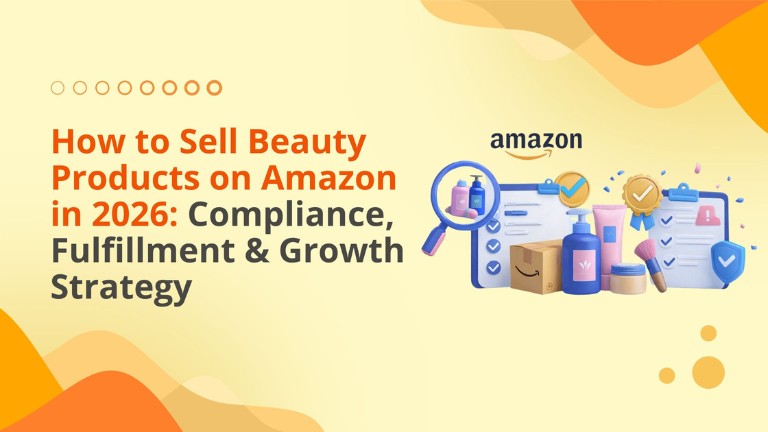
If you want to sell beauty products on Amazon, you are entering one of the largest and most competitive categories in Ecommerce.
According to industry reports, the global beauty market exceeds $500 billion annually and continues to grow through direct-to-consumer and marketplace channels.
Amazon offers powerful tools for beauty sellers — but also enforces strict compliance standards, especially under FDA guidelines and the Modernization of Cosmetics Regulation Act (MoCRA).
This guide explains how to launch and scale a beauty brand on Amazon while staying compliant and profitable.
Contents
Why Sell Beauty Products on Amazon?
Amazon provides:
- Access to millions of customers
- Brand Registry protection
- A+ Content
- Custom Brand Stores
- Sponsored Ads
- Subscribe & Save
- FBA logistics
You can explore Amazon seller growth solutions here.
Beauty is particularly strong because:
- Many products are consumable
- Repeat purchase rate is high
- Brand loyalty drives LTV
- Reviews heavily influence conversion
Step 1: Choose Your Business Model
You can:
- Launch your own private label beauty brand
- Become an authorized reseller
- Collaborate with established brands
- Sell handmade beauty via Amazon Handmade
Each model affects:
- Margin structure
- Compliance responsibility
- Brand control
Step 2: Approval & Documentation
Many beauty SKUs require approval.
You may need:
- Manufacturer invoices (minimum 10 units)
- Brand authorization letters
- GMP certificate
- Certificate of Analysis
- MoCRA documentation
- Product photos with ingredient list and batch codes
Under MoCRA, cosmetic manufacturers must:
- Register facilities with the FDA
- Maintain adverse event reporting
- Ensure ingredient transparency
More details on MoCRA can be found via FDA regulatory updates.
Beauty sellers must treat compliance as a core operational pillar.
Step 3: Dangerous Goods Identification
Products containing:
- Alcohol
- Aerosols
- Essential oils
- Flammable ingredients
May be classified as dangerous goods.
Examples include:
- Perfume
- Nail polish
- Hairspray
- Spray deodorants
If using FBA, enrollment in the FBA Dangerous Goods Program may be required.
Incorrect classification can lead to inventory rejection.
Fulfillment Strategy
FBA
Best for scale and Prime eligibility.
Does not accept multi-box shipments.
Requires DG approval if applicable.
FBM
Greater flexibility.
Seller handles compliance and shipping.
Suitable for specialized SKUs.
AWD
Bulk storage solution.
Does not accept dangerous goods.
Choosing the wrong model impacts:
- Fees
- Storage
- Shipping speed
- Profit margin
Marketing Strategy for Beauty Brands
Beauty is visual and trust-driven.
Winning brands leverage:
Brand Registry
Protect IP and unlock A+.
A+ Content
Show ingredients, texture, usage, benefits.
Product Videos
Demonstrate application and results.
Sponsored Ads
Sponsored Products for high intent.
Sponsored Brands for awareness.
Display for retargeting.
Vine Reviews
Generate early review traction.
Subscribe & Save
Drive recurring revenue.
Beauty customers often subscribe for replenishable items like moisturizers and serums, increasing lifetime value.
Risks to Avoid
- Non-compliant ingredient labeling
- Missing expiration or PAO symbols
- Incomplete MoCRA documentation
- Poor dangerous goods classification
- Launching without review strategy
Beauty success requires compliance + conversion optimization.
To sell beauty products on Amazon successfully in 2026, sellers must balance:
- Regulatory compliance
- Fulfillment strategy
- Conversion optimization
- Advertising efficiency
- Brand-building
Beauty is high-margin and high-repeat — but only for structured sellers.
If you want help launching or scaling your beauty brand on Amazon.
Schedule a Strategy Call with us today!
Follow Big Internet Ecommerce (BIE) on Instagram & LinkedIn to stay updated with the latest trends in Amazon selling.