Big Internet Seller Services Inc provides e-commerce Services

Get your first Product Photoshoot for FREE! Learn More

Shopify

Shopify AI shopping agents

Shopify Prepares for AI Shopping Agents: How This Change Will Impact Amazon Sellers

The e-commerce landscape is rapidly evolving with the introduction of AI shopping agents. Shopify is preparing its platform for this shift, and the implications for Amazon sellers are profound. AI-powered assistants will soon take the reins of consumer shopping decisions, automating product discovery, comparisons, and purchases. As a result, sellers need to optimize their product listings and ad strategies to maintain visibility and drive sales. We’ll explore the rise of AI shopping agents, how Shopify is adapting to this shift, and why Amazon sellers must understand these changes. We’ll also dive into practical strategies to ensure your business remains competitive in an AI-driven world. What Does This Mean for Sellers? AI shopping agents are no longer a futuristic concept—they’re becoming a reality. Shopify has announced its preparation for AI-driven shopping assistants through its Sidekick AI platform, which will act as personal shoppers for consumers. These AI agents will have the ability to make purchasing decisions based on shoppers’ preferences and previous shopping history, making personalization a core part of the buying journey. For Amazon sellers, this means the platform is no longer just competing with other sellers—it’s now competing with AI agents that might prioritize certain products over others. As these AI assistants grow in sophistication, their ability to influence product discovery and consumer behavior will be a game-changer for sellers. Key Changes with Shopify’s Move Toward AI Shopping Agents AI Shopping Agents’ Role AI agents will help consumers navigate online stores, providing product recommendations based on their previous purchases, interests, and preferences. These agents will likely reduce reliance on traditional search engines and increase the importance of personalized recommendations. If your products aren’t optimized for AI agents, they might get lost in the shuffle. AI-Powered Product Discovery The development of Shopify’s Sidekick AI assistant means merchants must optimize product data so that AI agents can better discover and recommend their products. If your listings aren’t up to date or aren’t rich in detail, they may not be picked up by AI agents, leaving your product visibility significantly reduced. Shift in Shopper Behavior Consumers will no longer need to browse through a wide range of options manually. Instead, AI agents will handle the product comparison, selecting the best matches for each consumer. This personalized experience will create both opportunities and challenges for sellers: those who embrace it will see a rise in sales, while others may struggle to stand out in the AI-driven marketplace. Why This Matters for Amazon Sellers As Shopify prepares for AI shopping agents, Amazon sellers need to understand the growing role of these systems in e-commerce. Here are some reasons why Amazon sellers should take notice: Increased Competition While Amazon remains a dominant player in e-commerce, platforms like Shopify are positioning themselves as central hubs for AI agents, which could lead to more cross-platform competition. As AI shopping assistants gain influence on Shopify, they may also impact how products are discovered on Amazon. Sellers must ensure their product listings are AI-optimized to stay competitive. Rising Importance of Product Data AI shopping agents will rely on structured, detailed product data to make purchasing decisions. This shift underscores the importance of well-optimized listings on Amazon and Shopify. Sellers will need to ensure their product descriptions, images, pricing, and features are clearly communicated to AI agents to improve visibility. Personalization Becomes Key As AI agents take over consumer decisions, personalized shopping will become the norm. This change impacts how sellers need to position their products. Tailored marketing and personalized experiences will be essential to success. Understanding customer data and behavior patterns will be key for building relationships and securing sales. Cross-Platform Strategies Sellers on Amazon should be aware of the cross-platform nature of AI shopping agents. These agents will likely work across multiple marketplaces like Shopify and Amazon, meaning sellers will need to adopt cross-channel strategies. Amazon sellers will need to monitor changes in how products are discovered and purchased on multiple platforms. How Big Internet Ecommerce Can Help At Big Internet Ecommerce, we specialize in helping Amazon sellers navigate new e-commerce trends and AI-driven shifts. Here’s how we can help you optimize your business in response to AI shopping agents: Product Data Optimization We help you optimize your product listings with rich, AI-friendly data that can be easily picked up by AI shopping agents across platforms like Amazon and Shopify. PPC and Ad Strategy Adjustments With the rise of AI, traditional PPC strategies may need to be re-evaluated. Our team works with you to adjust your ad strategies to ensure your products remain visible and well-targeted, even as AI agents become more prevalent. Cross-Platform Strategy Development We help Amazon sellers expand their reach beyond Amazon by developing cross-platform selling strategies. Whether you’re considering selling on Shopify or integrating AI-optimized listings, we can guide your strategy. AI Integration We help sellers integrate AI-driven tools and technologies to remain competitive. From AI-enhanced listings to advanced ad targeting strategies, we ensure your business stays ahead of the curve. Ready to stay ahead of the AI shopping agent revolution and optimize your business for the future of e-commerce?  Schedule a call with us today and learn how we can help you stay competitive in the evolving marketplace. Follow Big Internet Ecommerce (BIE) on Instagram & LinkedIn to stay updated with the latest trends in Amazon selling.

Shopify Prepares for AI Shopping Agents: How This Change Will Impact Amazon Sellers Read More »
Amazon and Shopify U.S. e-commerce market share

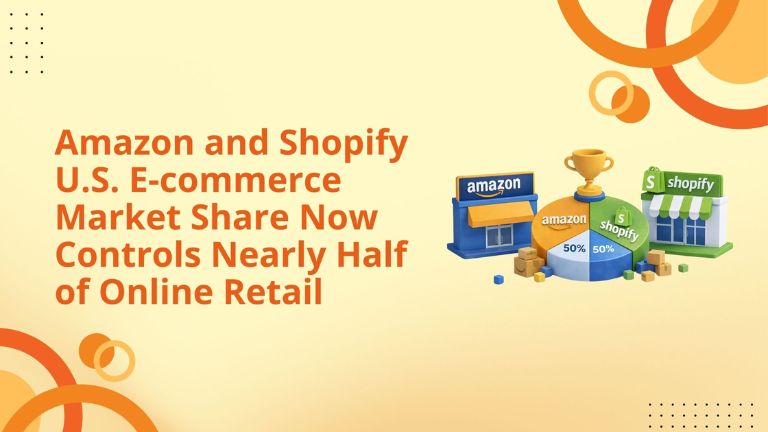
Amazon and Shopify U.S. E-commerce Market Share Now Controls Nearly Half of Online Retail

The structure of online retail is rapidly consolidating around a few dominant platforms. Recent industry data shows that Amazon and Shopify U.S. e-commerce market share now accounts for 49.7% of all online retail sales in the United States, representing nearly half of the $1.2 trillion e-commerce economy. Amazon alone generated approximately $440 billion in revenue in 2025, while Shopify merchants collectively represent 14% of the market through millions of storefronts. This dramatic rise signals a major shift in how digital commerce is structured. Sellers must now think strategically about where they build their business and how they distribute operations across platforms. Understanding the roles of both Amazon and Shopify is essential for brands aiming to scale in the modern e-commerce ecosystem. Amazon and Shopify U.S. E-commerce Market Share Dominance According to research from Marketplace Pulse, the combined market share of Amazon and Shopify has grown significantly in recent years. In 2021, these platforms accounted for approximately 43% of U.S. e-commerce sales. By 2025–2026, that number has increased to 49.7%. This means nearly half of all online retail purchases in the United States now happen either: On Amazon On Shopify-powered stores Amazon dominates marketplace commerce, while Shopify powers the infrastructure behind millions of independent brands. U.S. E-commerce Market Share Breakdown Current estimates place the market distribution as follows: Amazon – 35.7% Shopify – 14% Walmart – 6.4% Apple – 3.6% eBay – 3% Amazon remains the largest single platform in the e-commerce ecosystem. The company receives over 2.8 billion visits annually, making it one of the most visited retail websites in the world. This massive traffic volume reinforces Amazon’s role as the primary discovery platform for online shoppers. Amazon’s Role in the E-commerce Ecosystem Amazon operates a centralized marketplace where customers search for products directly on the platform. Key advantages include: Massive buyer traffic Integrated fulfillment infrastructure (FBA) Built-in trust and credibility Advanced advertising systems For many brands, Amazon represents the fastest way to reach high-intent shoppers. Sellers interested in improving their marketplace strategy can explore our Amazon growth services.  Shopify’s Growth in the Direct-to-Consumer Market While Amazon dominates marketplace commerce, Shopify powers the infrastructure behind direct-to-consumer brands. Key Shopify statistics include: Nearly 7 million active stores globally Merchants operating across 235 countries Over $490 billion in economic activity The Shopify ecosystem enables brands to control: Customer relationships Branding and design Marketing campaigns First-party data The Shopify App Store also plays a major role in the platform’s growth, with more than 25 million installed apps enhancing merchant capabilities. According to Shopify statistics compiled by Josh Howarth, the platform controls approximately 20% of the e-commerce platform market. Why Sellers Must Understand This Market Structure The increasing dominance of Amazon and Shopify changes how sellers should approach growth. Platform strategy is now critical. Many brands mistakenly view the decision as: Amazon vs Shopify. However, the most successful companies leverage both platforms. Amazon provides customer acquisition through marketplace discovery, while Shopify builds long-term brand value and customer retention. Strategic Opportunities for Sellers Sellers can leverage the strengths of both platforms through a structured strategy. Amazon Best for: Product discovery High-intent search traffic Marketplace scale Shopify Best for: Brand building Customer ownership Repeat purchases By integrating both channels, brands can create a balanced growth model that combines marketplace exposure with direct-to-consumer control. The Future of E-commerce Platforms Industry projections suggest that online retail will continue expanding rapidly. Global e-commerce sales are expected to reach: $6.3 trillion in 2024 $7.9 trillion by 2027 As this growth continues, Amazon’s massive infrastructure and Shopify’s merchant ecosystem will likely remain dominant forces shaping the future of online commerce. Sellers who understand how these platforms interact will be better positioned to scale their brands in an increasingly competitive market. The rise of Amazon and Shopify U.S. e-commerce market share to nearly 50% signals a major shift in the structure of online retail. Amazon leads product discovery through marketplace traffic, while Shopify empowers brands with direct-to-consumer control. Rather than choosing one platform over the other, successful sellers increasingly build strategies that leverage the strengths of both ecosystems. For brands seeking long-term growth, understanding how to navigate these platforms effectively is becoming a critical competitive advantage. If you want help building a scalable Amazon growth strategy or integrating your marketplace and DTC channels: Schedule a strategy call.  Follow Big Internet Ecommerce (BIE) on Instagram & LinkedIn to stay updated with the latest trends in Amazon selling.

Amazon and Shopify U.S. E-commerce Market Share Now Controls Nearly Half of Online Retail Read More »

Shopify ChatGPT instant checkout fee

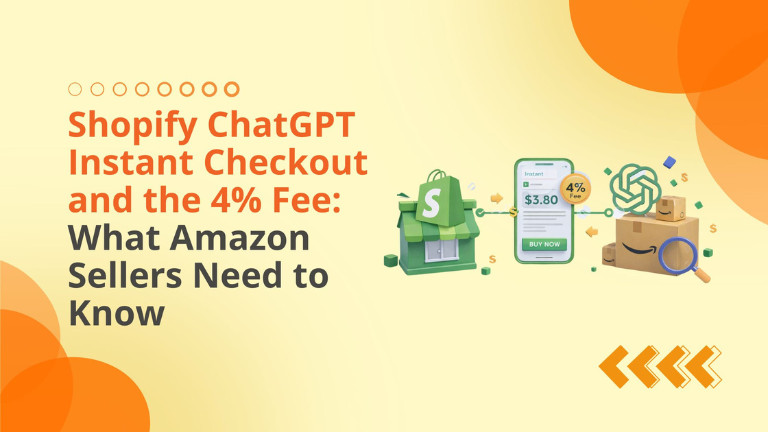
Shopify ChatGPT Instant Checkout and the 4% Fee: What Amazon Sellers Need to Know

AI-powered shopping has officially moved from discovery to transaction. With Shopify and OpenAI enabling instant checkout directly inside ChatGPT, sellers can now close sales without customers ever visiting a product page. As of January 26, this frictionless experience comes with a 4% transaction fee, fundamentally changing the economics of AI-driven commerce. For Amazon sellers, this development isn’t about abandoning marketplaces—it’s about understanding how AI checkout fits into a broader, margin-conscious growth strategy. What Is Shopify ChatGPT Instant Checkout? Shopify ChatGPT Instant Checkout allows customers to complete purchases directly within ChatGPT using OpenAI’s Agentic Commerce Protocol. Orders flow into Shopify as normal, while merchants retain customer data, fulfillment control, and post-purchase relationships. Unlike Amazon, this model does not provide built-in traffic. Discovery happens conversationally, driven by AI responses rather than ads or search rankings. Breaking Down the 4% Fee The 4% ChatGPT checkout fee is charged in addition to: Shopify Payments (≈2.9% + $0.30) Fulfillment costs Shipping and returns Any off-platform marketing costs Compared to Amazon’s referral fees (typically 8–15%), this can appear attractive—but only if conversion volume offsets the lack of demand infrastructure. Why This Matters for Amazon Sellers Amazon sellers already operate in a world of rising fees and tightening margins. AI checkout introduces: A lower-fee but lower-volume channel Higher dependency on accurate product data No algorithmic demand guarantees Full ownership of customer relationships This makes AI checkout best suited for incremental revenue, not core sales replacement. Operational Readiness Is Non-Negotiable AI agents rely on structured, accurate data. Sellers must ensure: Clean product titles and descriptions Accurate pricing and inventory feeds Reliable fulfillment and shipping SLAs Consistent brand trust signals Without this foundation, AI-driven checkout simply won’t convert. How Big Internet Ecommerce Helps Sellers Navigate AI Commerce At Big Internet Ecommerce, we help Amazon sellers evaluate emerging channels through a profit-first lens. Our services include: Channel-level margin analysis AI-readiness audits for product catalogs Amazon + DTC + AI growth strategy alignment Operational risk assessment before adoption For industry context on AI commerce economics, see this analysis from OpenAI ecosystem coverage by TechCrunch. Shopify ChatGPT Instant Checkout isn’t “expensive” or “cheap.” It’s a new economic model. Amazon sellers who treat AI checkout as a conversion experiment—with strict margin discipline—stand to benefit. Those who chase hype without math will feel the cost quickly. Thinking about adding AI checkout to your sales mix? Schedule a strategy call with our team. Follow Big Internet Ecommerce (BIE) on Instagram & LinkedIn to stay updated with the latest trends in Amazon selling.

Shopify ChatGPT Instant Checkout and the 4% Fee: What Amazon Sellers Need to Know Read More »

AI in E-commerce

Unlocking the Future of E-Commerce: How Amazon Sellers Can Adapt to Shopify’s AI-Powered Shopping

In the fast-evolving world of e-commerce, staying ahead of the competition is crucial. Shopify’s recent AI-driven initiatives—especially its AI-powered shopping tools—are shaping the future of retail. As an Amazon seller, understanding and adapting to these changes is key to ensuring your business thrives in an increasingly automated shopping environment. What is Shopify’s AI Strategy? Shopify has introduced AI tools that are changing the way customers interact with products across its platform. Tools like Shopify Catalog for AI agents and Universal Cart are designed to optimize shopping experiences, allowing customers to buy products from multiple Shopify stores through a seamless, AI-driven checkout process. Amazon sellers must adapt by optimizing their product data for AI search and improving fulfillment efficiency to meet the demands of the new AI-powered commerce. Amazon’s AI and Cross-Platform Shopping With Buy with Prime and Amazon’s AI initiatives, e-commerce is becoming more interconnected. Sellers must not only be present on Amazon but also be ready for the seamless experience offered by platforms like Shopify. Make sure your products are ready for AI-powered recommendations and cross-platform shopping. Learn more about optimizing your product listings to stay competitive. What Can Amazon Sellers Do? Optimize Your Product Data: Ensure your product details are clear, accurate, and optimized for AI systems. Leverage Fast Fulfillment: With Amazon’s global reach, ensure you offer fast, reliable shipping to meet the new AI-driven expectations. Use AI Tools: Utilize Amazon’s Brand Analytics to gain insights into customer behavior and adjust your strategy accordingly. Shopify’s AI integration is transforming e-commerce, and Amazon sellers need to stay proactive. By optimizing product data, leveraging fast fulfillment methods, and preparing for the AI-powered shopping revolution, sellers can thrive in the future of retail. Schedule a call with our team to learn more about optimizing your Amazon strategy for AI-driven shopping. Follow BIE on Instagram & LinkedIn to stay updated with the trends.

Unlocking the Future of E-Commerce: How Amazon Sellers Can Adapt to Shopify’s AI-Powered Shopping Read More »

Big_Internet_Ecommerce_Shopify_Product_Listing_And_Optimization_Services

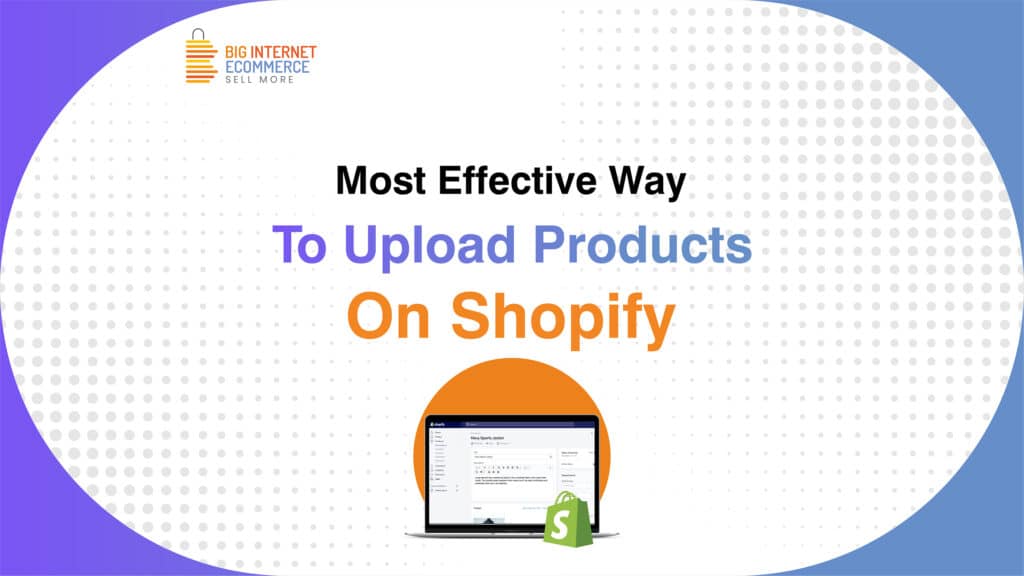
Most effective way to upload products on Shopify

For many business owners, opening a Shopify store is the first step toward success online. It is quick and simple to start making online sales using Shopify’s user-friendly website building environment. With templates, you can not only build a gorgeous brand image but also have access to a wealth of useful add-ons and plugins from the Shopify shop. How to Upload Products on Shopify effectively? According to your requirements, you can add or alter the product information. The methods that demonstrate how to add products on Shopify efficiently are shown below: Step 1: Go to the navigation bar on the left after logging into Shopify admin. Select “Products” from the menu in the bar. Select the option that says “All Products” from the list. Step 2: Simply click the “Add Product” button on the right top of the product page. Step 3: Enter the product’s title and any further information. You are now prepared to begin adding content to your product page. Details about your product will comprise items like: Product Title Description Product Type Vendor Step 4: On the right top, select the “Save” button. How to Add Products on Shopify POS  From the Products screen in the Shopify POS, you can add new products. Other sales channels won’t display the products you create here until you change the settings in Shopify. For Shopify POS items to be created, an internet connection is required. Click the + button and select Add product to add a new product here. You can enter information about the product, such as its price, title, and inventory status, in the add product window. Keep in mind that you must hit the picture option and choose an image from your files if you want to add a product image. The front-facing camera on your POS system can also be used at that time to take a picture of the product. Tap on Save product when you’re ready to make this one item available for checkout. As a result, the item will show up on the Shopify website’s products page as well as the POS’s checkout screen. As an admin with Shopify, you can open a product from the Products page and make changes or delete it. Direct product deletion or editing is not possible in Shopify. With the information mentioned above, you now know how to add products on Shopify POS as well as how to upload products on Shopify. To learn more about how this can be done visit the Big Internet Ecommerce website right away.

Most effective way to upload products on Shopify Read More »

Big_Internet_Ecommerce_Shopify_Product_Listing_And_Optimization_Services

Top 5 methods to make your Shopify listings more interactive

Getting your website in front of potential customers is the key to driving them to your Shopify store. Your e-commerce site traffic will increase the more exposure your website receives, whether it be through social media platforms or search engines. Shopify listings help you increase traffic for your online store. How to Make Shopify Listing more Interactive and Get More Traffic? Increasing the amount of traffic to your online store is essential for business expansion. If your website is adequately conversion-optimized, a surge in visitors could translate into more clients and sales. The adoption of Shopify listing templates can increase traffic. 5 methods to make Shopify listing more interactive and to get more traffic are: 1. Run paid social media advertising campaigns You may design highly targeted campaigns that provide unique advertisements to the customers most likely to click through and buy your products using paid social media marketing. 2. Utilize SEO to Make Your Store More Discoverable You want your store to appear among the top results for customers searching for your products online, especially as the first organic Google result receives one-third of all clicks. That coveted top spot is essential for driving consistent, targeted website traffic to your online store. The process of optimizing your website for search engines, also known as SEO, increases the likelihood that it will appear higher in search results for pertinent keywords. 3. Utilize Influencer Marketing to Reach New Audiences Building relationships with influencers is the practice of using influencer marketing to expose new audiences to your online store. Utilizing the trust that they have already built with their audiences, you can use influencer marketing to capitalize on the creativity and reach of relevant influencers in your industry. 4. Utilize Content Marketing to Attract Customers You may organically draw customers to your online store by producing engaging, informative, and fascinating content. There are several ways for your company to enter the world of content and draw in new customers, from podcasts and videos to guides and ebooks. 5. Encourage Excitement with Giveaways and Contests You can easily increase traffic to your store by offering enticing prizes in exchange for participants in viral contests, giveaways, and sweepstakes. Prizes and incentives are effective ways to entice both current and potential customers to visit your company. This can encourage potential buyers to look at the Shopify listing products. You may increase the number of people who view and engage with your Shopify listing by using the advice and techniques in this article. For the best expert assistance to increase traffic, go to Big Internet Ecommerce right away.

Top 5 methods to make your Shopify listings more interactive Read More »

Big_Internet_Ecommerce_Shopify_Product_Listing_And_Optimization_Services

How to optimize your products the right way on Shopify?

Your product page demands a lot of your attention if you manage an online store. There are numerous factors to take into account, but there are also many chances to give your clients a wonderful buying experience. In this article, we’ll look at some of the areas you can concentrate on Shopify product page optimization for your e-commerce product pages to increase conversions, improve the shopping experience, and convert more browsers into customers. Tips for Shopify Product Page Optimization The tips mentioned below give out the details on how to optimize a Shopify store and product pages. Draw up a plan for your product page’s components The first step in creating an e-commerce page that is optimized for conversions is to include the components that successful e-commerce pages frequently use. Display product images prominently Customers can more quickly and easily find the product they’re looking for with the aid of product photographs than they do with written descriptions. Display shipping details in a simple manner Making the delivery details clearly visible can have a big impact on consumers’ purchasing decisions. Include more information Customers are unable to physically test the goods or ask questions of a salesperson, therefore you must take all reasonable steps to inform them and address any questions they may have. It is also important for Shopify search engine optimization. Include a prominent call to action The obvious call to action present on the product pages is another characteristic of website design. Make your image metadata better Too many online retailers fall short with their product photographs. Keyword stuffing is discouraged since metadata is crucial for accessibility (and also ineffective). Include a variety of photographs Given the significance of your product photography, it’s crucial to provide a selection of distinct images of your product. A single additional image can say more than a thousand words. Put a white background on the photographs of your products The process of bringing in fresh things, taking photos, and editing happens more quickly when the background is constant. Any successful eCommerce company now requires that all of its product photos have a white backdrop (or at least a consistent one). The most crucial page in any online business is your product page. Most of your users that arrive from social media platforms, blogs, or landing pages enter at this point. And that’s also where a decision to buy is made. You are more likely to lose the sale if there are any errors or unclear information on your product page. 

How to optimize your products the right way on Shopify? Read More »

Big_Internet_Ecommerce_Shopify_New_Website_Development

The easiest Way to Get Your eCommerce Journey Started with Shopify

Starting an eCommerce business is difficult and requires numerous processes and decisions to be made at the proper moment. Shopify is an all-in-one eCommerce platform. Setting up eCommerce with Shopify is highly preferred owing to its user friendly approach. What’s more, it’s ideal for merchants who are just starting with an online business. The Main Reason Why to Set up eCommerce with Shopify Shopify is far less expensive than hiring someone to construct the store for you. Not to mention that it is more dependable in the long run. You may write your product descriptions with Shopify, and these will appear when customers search for these keywords on Google (and other search engines). How to Set up eCommerce on Shopify? There is a reason why Shopify is such a well-liked website builder. The ease with which you can launch your first internet store is possibly the main factor. It is easy to start an eCommerce website with Shopify. Signup with Shopify All you have to do to begin utilizing Shopify is create an account. Go to Shopify’s website and select the Get Started link. Enter the store name, password, and email address of your choice. After clicking Next, describe yourself to Shopify by mentioning your sales goals and whether you’re already selling. When finished, click the Enter My Store button. You are prompted to provide personal data on the following page, including your name, address, and phone number, which are all necessary to set up currencies and tax rates. Add a Product to Your Shopify Store The software will take you right to the admin screen for your new website once you have signed up for Shopify correctly. You can begin personalizing your store and adding products for your consumers to look through here. Customize Your Shopify Website’s Look Return to the main dashboard and click the Customize Your Site’s Look button. You must modify everything in this area, including the colors and logos. Setup Your Domain on Shopify It’s time to choose a domain so that your website may become official and go online after you’ve chosen your template and customized it to your taste. Return to the dashboard and select the Add a Domain option. This prompts you to choose whether you wish to transfer or register a new domain. Select the domain you want to buy and follow the on-screen instructions. You must also make clear the Shopify payment option you want to use. Make Your Payment Processor Active Toggle the Payments tab to the left of the dashboard. You can choose from dozens of payment processors in this location. With the aid of FabOnGo, you may build an e-commerce website supported by robust technologies that assist you in locating clients.

The easiest Way to Get Your eCommerce Journey Started with Shopify Read More »

Shopify Optimization Services: The Key to eCommerce Success

In today’s competitive eCommerce world, having a Shopify store is just the first step toward growing your business. The real challenge lies in optimizing your Shopify store for speed, SEO, and overall performance. Let’s dive into what Shopify optimization really means and explore the benefits of enhancing your store for better conversions, higher search rankings, and an improved customer experience.  What is Shopify Optimization?  Shopify optimization refers to the process of improving various aspects of your online store, such as speed, SEO (Search Engine Optimization), user experience, and mobile responsiveness. By fine-tuning your store’s performance, you create a more seamless shopping experience that can drive sales and boost your search engine visibility.   The goal of optimization is to ensure your store runs smoothly and is easily discoverable by potential customers. It includes a wide range of techniques from technical improvements like image compression and page speed enhancements to strategic optimizations like keyword research and content creation.  Why is Shopify Optimization Crucial for eCommerce?  In eCommerce, speed, usability, and discoverability are critical. A well-optimized Shopify store does more than just load fast—it provides a great user experience, increases your visibility in search engines, and ultimately drives conversions. Here’s why optimization is essential:  Better User Experience (UX): Slow websites frustrate users. Research shows that 53% of users abandon a page if it takes more than 3 seconds to load. Optimizing your store ensures customers can browse and buy without interruptions.  Higher Conversions: A fast, optimized store makes it easier for customers to navigate and purchase, directly improving your sales and reducing cart abandonment rates.  Improved SEO: Google prioritizes websites that offer great UX and fast load times. Optimization improves your store’s SEO rankings, which helps attract organic traffic and increases your store’s visibility. Scalability: A fully optimized store can handle high traffic volumes without slowing down or crashing, which is vital for handling big sales events or product launches.  What are Shopify SEO Services? Shopify SEO services focus on optimizing your store for search engines like Google. This involves fine-tuning both on-page and off-page factors to ensure your store ranks higher in search engine results. Here’s a breakdown of the key SEO services for Shopify:  Keyword Research: Understanding what your customers are searching for is crucial. Tools like Semrush and Ahrefs can help identify high-value, relevant keywords that will drive organic traffic to your store.  On-Page Optimization: This includes optimizing your product pages, meta titles, meta descriptions, image alt tags, and content to incorporate relevant keywords. Well-optimized pages ensure search engines understand your content and rank it higher for relevant searches.  Technical SEO: Ensuring your Shopify store is technically sound is key. This means having clean code, a fast-loading website, a responsive design, and optimized URLs. Shopify SEO services can also address issues like duplicate content or broken links. Backlink Building: SEO services often include strategies for acquiring backlinks from reputable websites. This boosts your site’s authority and helps improve your ranking in search results. Content Creation: Maintaining a blog and publishing high-quality content related to your products helps keep your site fresh and drives organic traffic. Your blog can target specific keywords and give users a reason to stay on your site longer. What Does Optimization Mean in eCommerce?  In the context of eCommerce, optimization is about creating a store that is efficient, user-friendly, and discoverable. Here are the three key types of optimization that impact eCommerce success:  Speed OptimizationSpeed optimization involves making sure your Shopify store loads as quickly as possible. This includes reducing the size of images, minimizing code, using faster hosting services, and eliminating unnecessary apps. A fast-loading site not only improves user experience but also helps with SEO rankings. Google prioritizes fast sites in search results, so a slow-loading store can hurt both user engagement and visibility. Conversion Rate Optimization (CRO)CRO is about increasing the percentage of visitors who complete a desired action, like making a purchase or signing up for a newsletter. This involves optimizing elements such as product descriptions, checkout processes, and calls to action. CRO techniques include A/B testing, improving site navigation, and adding trust signals like customer reviews and testimonials.  SEO OptimizationSEO optimization ensures your store ranks well in search engines. This requires keyword research, optimizing product pages, building backlinks, and ensuring your site is technically sound. With the right SEO strategies, your store will be easier to find, attracting more visitors and driving sales.  How Shopify Speed Optimization Drives Results Now that you understand the importance of speed optimization, let’s explore some strategies you can implement to improve your Shopify store’s speed:  Optimize Images: Large images can slow down your site. Use tools like TinyPNG or Shopify’s built-in image compression features to reduce file sizes without compromising quality. Remove Unnecessary Apps: Every app you install adds extra code to your site, which can slow it down. Remove apps that you’re not using, and make sure any remaining apps are optimized for speed. Minimize Code: Compress your CSS, JavaScript, and HTML files. By minifying your code, you reduce the file sizes and speed up your site. Use System Fonts: Fancy web fonts can take time to load. Stick with system fonts like Arial or Helvetica to improve load times. Leverage Browser Caching: Enable browser caching so that returning visitors don’t have to reload the entire site from scratch. This improves load times for repeat customers. Optimize for Mobile: Mobile traffic is on the rise, and optimizing your site for mobile devices ensures a smooth experience across different screen sizes. Additional Tips to Improve Your Shopify Store’s Performance  Use a Content Delivery Network (CDN): A CDN like Cloudflare can speed up your website by caching content and delivering it from servers located closer to your customers. Host Videos Externally: Uploading large video files directly to your Shopify store can slow it down. Use external platforms like YouTube or Vimeo to host videos and embed them in your store. Keep the Theme Lightweight: Choose a lightweight Shopify theme designed for speed. Avoid themes with

Shopify Optimization Services: The Key to eCommerce Success Read More »

Scroll to Top