
Big Internet Seller Services Inc provides e-commerce Services

Get your first Product Photoshoot for FREE! Learn More

Amazon SEO

Alexa for Shopping

Rufus is Dead: How Alexa for Shopping is Transforming Amazon Ads Forever

Amazon has retired Rufus and introduced Alexa for Shopping, a fully agentic AI that doesn’t just answer questions—it automatically buys for your customers. This marks a dramatic shift in how Amazon sellers must approach advertising, visibility, and customer engagement. Gone are the days of relying solely on keywords and the search results grid.  Success now depends on being the product the AI recommends and ensuring that your brand signals are optimized across reviews, catalog completeness, pricing, fulfillment, and trust. The End of Traditional Search-Based Ads Alexa for Shopping removes the classic product grid, meaning: Sponsored Product Ads lose traditional impressions. Conquest campaigns targeting new customers are less effective. Optimization must now focus on intent and trust, not just search term rankings. For sellers, this means a fundamental reset of Amazon advertising strategy. Visibility is now determined by AI-assessed signals, which can prioritize loyal customers, recurring purchases, and brands with consistent performance. Key Signals That Determine AI Recommendations Review Sentiment – Positive reviews now carry even more weight in being recommended. Catalog Completeness – Detailed product listings improve chances of AI recommendation. Pricing Consistency – Stable and fair pricing is rewarded. Fulfillment Reliability – Products delivered on time with accurate tracking maintain preference. Trust Infrastructure – Brands with established credibility will be prioritized. These signals emphasize operational excellence and long-term brand trust over traditional ad placement strategies. Implications for Sellers Incumbency Becomes Harder to Disrupt: Alexa for Shopping favors brands that customers have purchased before. New entrants face a higher barrier to recommendation. Repeat Purchase Categories Are Prioritized: Consumables, household staples, and subscription products benefit first from automated reordering. Advertising Strategy Needs a Complete Reset: Campaigns targeting discovery and conquest are less effective; optimization must focus on retention, repeat purchases, and intent alignment. Automated Reorders Change Buying Behavior: Customers may receive items automatically based on previous patterns, limiting competitor interventions. Intent-Driven Optimization is Key: Being visible to the AI depends on signals, not keywords—reviews, catalog completeness, fulfillment, and trust now dominate. How Sellers Can Adapt Boost Reviews and Social Proof: Encourage high-quality feedback and maintain positive sentiment. Ensure Catalog Completeness: Update images, descriptions, and A+ content. Maintain Pricing Consistency: Avoid frequent fluctuation to stay preferred by the AI. Focus on Repeat Purchase Products: Optimize inventory and fulfillment for high-turnover, recurring items. Work With Expert Agencies: Strategic guidance ensures your listings and operations align with agentic AI requirements. How Big Internet Ecommerce Can Help We help sellers stay ahead of Amazon’s AI evolution: Review optimization and content strategy for AI visibility Inventory management to support automated reorder workflows Operational guidance for fulfillment reliability Personalized strategy for repeat purchase categories PPC & listing alignment for intent-driven performance The retirement of Rufus and the introduction of Alexa for Shopping signals a new era of agentic AI-driven commerce.  Sellers must pivot from keyword-driven campaigns to intent-driven optimization, ensuring that their brand is consistently recommended by the AI.  Early adopters of these strategies will capture market share, increase repeat purchase revenue, and maintain long-term profitability. Adapt your Amazon strategy for agentic AI today and ensure your brand stays recommended. Schedule a strategy call with our team. Follow Big Internet Ecommerce (BIE) on Instagram & LinkedIn to stay updated with the latest trends in Amazon selling.

Rufus is Dead: How Alexa for Shopping is Transforming Amazon Ads Forever Read More »
Amazon ad payment policy

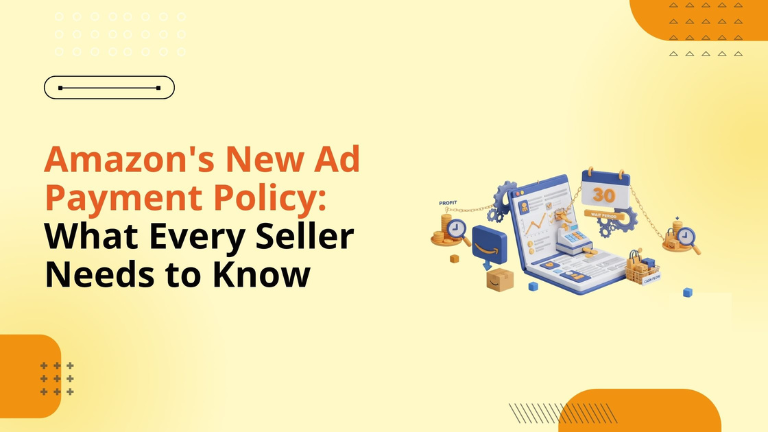
Amazon’s New Ad Payment Policy: What Every Seller Needs to Know

Amazon’s new ad payment policy is shaking things up for sellers.  Amazon will automatically deduct ad costs directly from your retail proceeds before disbursements are made. This change removes the flexibility sellers had when using credit cards for ad payments, which could lead to tighter cash flow management and fewer opportunities to reinvest in inventory or scale ad spend.  We’ll explore how this new policy impacts your business and what steps you should take to adapt. How the New Payment System Works The key change is that Amazon now requires ad costs to be paid directly from retail proceeds before you receive your disbursement.  Previously, many sellers relied on credit cards to pay for ads, which allowed them to better manage their cash flow.  With this new system, you must ensure that you have enough funds available in your retail proceeds to cover your ad costs.  If your earnings fall short, credit cards will be used as a backup, but the shift to direct deductions will affect how and when you allocate funds. Why This Matters for Sellers This policy has significant implications for Amazon sellers. Here’s why: Less Flexibility with Ad Spend Without credit cards, sellers have less control over when and how they allocate funds for advertising. This could disrupt short-term planning and make it harder to scale ads during peak demand periods. Tighter Cash Flow The new payment system could place a strain on sellers’ cash flow. As Amazon deducts ad costs before disbursements, it becomes harder to reinvest earnings into inventory, promotions, or other aspects of the business. Impact on Profitability Managing profitability becomes more complex. Sellers will need to adjust ad budgets to ensure that campaigns remain cost-effective and that cash flow doesn’t dry up. How to Adapt to This Change With the new ad payment system in place, here are some strategies you can implement to keep your business running smoothly: Rework Your Ad Budgets You’ll need to revisit your ad budgets to ensure that you have enough room for automatic deductions. Consider setting aside funds specifically for ad spend to avoid any interruptions in your campaigns. Prioritize High-Performing Campaigns With tighter cash flow, focus on the ad campaigns that bring in the highest returns. By honing in on high-converting campaigns, you can ensure that your ad spend remains efficient and profitable. Optimize Cash Flow Management It’s more important than ever to monitor your cash flow closely. Make sure you’re forecasting effectively and planning ahead for any unexpected changes in ad spend or disbursement timing. Track Spending and Adjust Regularly Keep an eye on your PPC performance and adjust your ad spend in real-time. Amazon’s new policy could change how quickly you can scale campaigns, so being proactive about adjustments will be crucial. Leverage Big Internet Ecommerce to Stay Ahead At Big Internet Ecommerce, we understand the challenges that come with these new changes. Our team specializes in helping Amazon sellers adjust their strategies to stay ahead of policy updates like these. We offer the following services: PPC Strategy Optimization We’ll help you rework your PPC strategy to ensure you’re not over-spending, while still capturing high-quality traffic and maximizing your ROI. Cash Flow Management Our experts will help you fine-tune your cash flow management system to account for Amazon’s new ad payment policy, ensuring you can still invest in inventory and scale efficiently. Inventory and Replenishment Strategy We’ll ensure your inventory levels align with your ad spend, helping you avoid stockouts or excess inventory. Comprehensive Financial Analysis Big Internet Ecommerce can help you analyze your P&L on a per-SKU basis, ensuring that every dollar is working for your business. Amazon’s new ad payment policy may be a challenge, but with the right strategies in place, you can manage your ad spend and cash flow effectively.  It’s important to adjust your PPC and inventory strategies now to minimize the impact of the policy change. Sellers who take a proactive approach will be better positioned for long-term success. Want to optimize your Amazon strategy to stay ahead of policy changes?  Schedule a strategy call with our team. Follow Big Internet Ecommerce (BIE) on Instagram & LinkedIn to stay updated with the latest trends in Amazon selling.

Amazon’s New Ad Payment Policy: What Every Seller Needs to Know Read More »

Human oversight in Amazon AI advertising

The Hybrid PPC Playbook: Why Human Oversight Wins in Amazon AI Advertising

Amazon advertising has entered the era of full automation. From Rufus-guided search to automated bidding, AI is no longer optional—it is the engine of the marketplace. However, as more sellers lean on “Black Box” automation, a critical gap is forming. Effective 2026, the most successful brands aren’t the ones with the best AI; they are the ones with the best Human Oversight. This guide explains: Why AI efficiency often leads to strategic fragility The 5 context gaps AI cannot close A “Hybrid Playbook” for 2026 PPC management How to use AI for discovery without losing brand control Disclaimer: This guide provides operational strategy for Amazon sellers and does not guarantee specific financial returns. Results vary based on category and spend. Why “Set and Forget” is a Growth Killer AI optimizes for what is measurable, not necessarily what is valuable. A bidding algorithm might lower your ACOS by cutting spend on a high-intent keyword that isn’t converting this week—ignoring the fact that that keyword is essential for your long-term organic ranking. The Hybrid Strategy: 4 Steps to Better Control 1. Use AI for Discovery, Humans for Selection Let AI run your “Auto” and “Broad” campaigns to harvest data. But the moment a keyword shows promise, a human should move it into a manual “Exact” campaign for protected scaling. 2. Apply Pricing Logic to Competitor Targeting AI might suggest you target a top-selling competitor. A human realizes that competitor just dropped their price by 30%. Human oversight prevents you from wasting spend on a fight you can’t win. 3. Manage the “Honeymoon Period” Manually New launches lack the historical data AI needs to function. Strategic human intervention is required to “force-feed” the algorithm the right signals during the first 30 days. 4. Assign Clear Roles to Campaign Types Don’t let AI mix your “Defensive” (Protecting your brand) and “Offensive” (Stealing market share) budgets. Clear structural boundaries are a human responsibility. How Big Internet Ecommerce Protects Your Brand We specialize in the “Human Layer” of Amazon Advertising. PPC Performance Audits: We find where your AI is overspending on “junk” traffic. Inventory-Linked Bidding: We sync your ad spend with your real-time stock levels. Brand Voice Protection: Ensuring your AI-generated copy actually sounds like you. Ready to stop being a slave to the algorithm? Schedule a strategy call with our team. Follow Big Internet Ecommerce (BIE) on Instagram & LinkedIn to stay updated with the latest trends in Amazon selling.

The Hybrid PPC Playbook: Why Human Oversight Wins in Amazon AI Advertising Read More »

TikTok Shop strategy for Amazon sellers

TikTok Shop Hits $4.9B in Q1 2026: Why Amazon Sellers Must Take Multi-Channel Commerce Seriously

TikTok Shop has officially crossed into mainstream ecommerce territory. In Q1 2026: TikTok Shop generated $4.9 billion in US sales Consumer spending grew 46% YoY But the biggest shift wasn’t revenue. It was demographics. The fastest-growing buyer group is now shoppers aged 45+. This changes how Amazon sellers should think about TikTok Shop moving forward. Why This Matters for Amazon Sellers  1. TikTok Shop Is No Longer “Youth Commerce” The original assumption: TikTok = Gen Z impulse buying The new reality: Older shoppers Higher spending power Replenishable purchasing behavior This makes TikTok Shop highly relevant for: Beauty brands Supplements Household goods Wellness Home products 2. Discovery Commerce Is Replacing Search Commerce Amazon works through intent-based search. TikTok works through algorithmic discovery. Consumers now discover products through: Creators Videos Recommendations Before ever searching for them. 3. Multi-Channel Commerce Is Becoming Standard The future is not Amazon-only growth. It’s: Amazon Walmart TikTok Shop Shopify Connected together. 4. Margins Must Be Tracked Differently Every channel compresses profit differently: Platform Margin Pressure Amazon TACoS + FBA fees Walmart Price competition TikTok Shop Affiliate commissions Without unified reporting scaling becomes dangerous. How Sellers Should Adapt  1. Start With Selected SKUs Focus on: Replenishables Mid-ticket products Creator-friendly products 2. Build Creator Systems Affiliate-driven growth is core to TikTok Shop. 3. Track SKU-Level Profitability Don’t rely on platform ROAS alone. 4. Sync Inventory Across Channels Prevent stock conflicts. 5. Optimize for Discovery TikTok requires: Storytelling Hooks Creator-style content How Big Internet Ecommerce Helps We help sellers: Launch TikTok Shop Strategically Build Multi-Channel Systems Optimize Creator Commerce Improve Cross-Platform Profitability Scale Beyond Amazon TikTok Shop is no longer a side platform. It’s becoming a major commerce ecosystem. And the biggest insight? Older buyers are now driving growth. The brands that adapt early: Gain cheaper acquisition Diversify revenue Build stronger long-term brands Want to expand beyond Amazon and build a scalable multi-channel brand? Schedule a strategy call with our team. Follow Big Internet Ecommerce (BIE) on Instagram & LinkedIn to stay updated with the latest trends in Amazon selling.

TikTok Shop Hits $4.9B in Q1 2026: Why Amazon Sellers Must Take Multi-Channel Commerce Seriously Read More »

Amazon AI infrastructure impact sellers

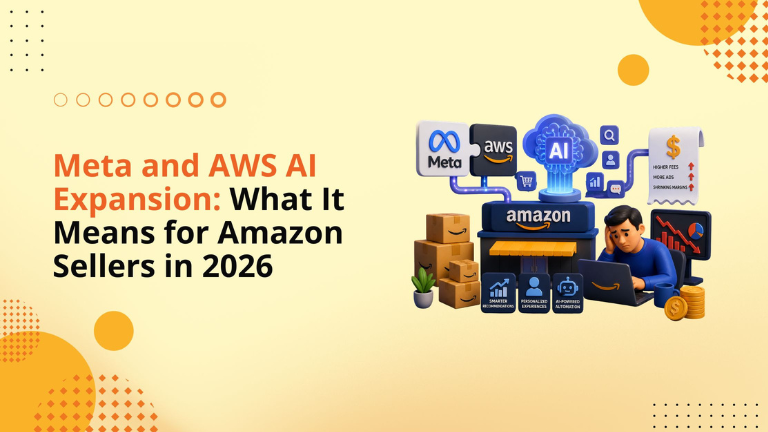
Meta and AWS AI Expansion: What It Means for Amazon Sellers in 2026

The ecommerce landscape is changing rapidly. Behind the scenes, major companies like Meta and Amazon are investing heavily in AI infrastructure. The latest Meta + AWS partnership highlights this shift. What Happened? Meta is deploying: Tens of millions of AWS Graviton cores To power agentic AI workloads These systems handle: Reasoning Automation Large-scale decision making Why This Matters  1. AI Is Becoming the Core System Amazon is moving toward AI-driven commerce. 2. Sellers Are Funding This Shift Through: Ad costs FBA fees Platform charges 3. Listings Must Be AI-Readable Structured content is critical. 4. Buying Behavior Is Changing AI influences: Discovery Selection Purchase How Sellers Should Adapt  1. Optimize for AI, Not Just Keywords Clear, structured listings. 2. Focus on Profit, Not Just Revenue Track real margins. 3. Adjust PPC Strategy Move beyond last-click attribution. 4. Improve Data Quality Better inputs → better AI outputs 5. Diversify Channels Reduce Amazon dependency. How Big Internet Ecommerce Helps We help sellers: Optimize for AI-driven systems Improve profitability Adjust PPC strategy Build multi-channel growth Scale sustainably Amazon is evolving. From marketplace → AI platform Sellers who adapt: Stay competitive Protect margins Scale faster Want to future-proof your Amazon business? Schedule a strategy call with our team. Follow Big Internet Ecommerce (BIE) on Instagram & LinkedIn to stay updated with the latest trends in Amazon selling.

Meta and AWS AI Expansion: What It Means for Amazon Sellers in 2026 Read More »

Amazon ad payment policy 2026

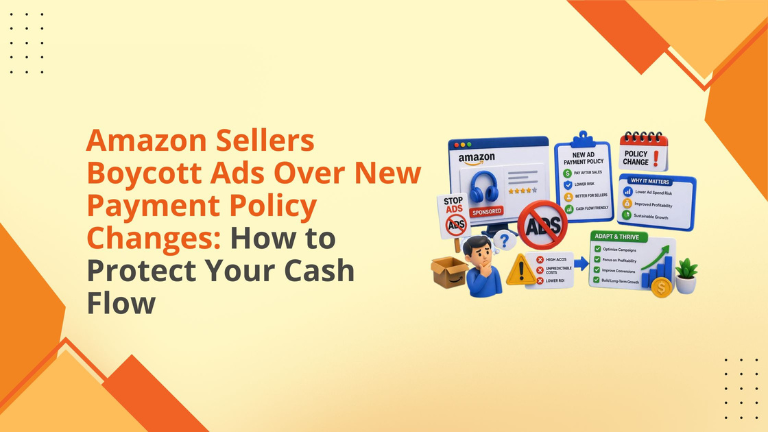
Amazon Sellers Boycott Ads Over New Payment Policy Changes: How to Protect Your Cash Flow

Amazon’s new ad payment policy has sent shockwaves through the seller community. For years, advertising has been essential to success on Amazon. But the new policy, which automatically deducts ad costs from retail proceeds, is shaking up how sellers manage cash flow, inventory, and ad spend. What’s Changed in Amazon’s Ad Payment Policy? Effective April 15, 2026, the policy change means: Ad spend will be deducted before payouts Credit cards will only be used as backup when proceeds are insufficient This shift tightens cash flow for sellers, forcing a rethink in how to structure ad spending. Why Does This Matter for Sellers? 1. Immediate Cash Flow Disruption Without upfront flexibility: Sellers lose the ability to time ads according to revenue cycles. 2. Increased Pressure on Margins 3.5% fuel surcharge Faster payout timelines 3. Impact on Operational Flexibility Fewer options to manage working capital, inventory, and ads simultaneously. 4. Reduced Control Over Advertising Budgets Manual spend adjustments are harder to execute efficiently. How to Adapt to Amazon’s New Ad Payment System 1. Rebuild Ad Spend Strategy We help sellers: Prioritize high-ROI campaigns Maintain flexibility through better budgeting 2. Cash Flow Management We advise on how to: Balance cash flow with ad costs Plan for seasonal shifts 3. Inventory + Advertising Sync Optimize: Replenishment schedules Campaign budgets 4. Data-Driven Ad Adjustments We help sellers analyze: What campaigns need scaling What spend needs reducing How Big Internet Ecommerce Helps We specialize in: Cash flow optimization Ad spend prioritization Inventory syncing with ad budgets We’ll help you adjust and protect your margins. Amazon’s new ad payment system isn’t just a minor update. It’s forcing sellers to rethink their entire ad strategy. But the sellers who adapt quickly? They’ll still thrive. If you need to adjust your ad spend strategy and protect your business. Schedule a strategy call with our team. Follow Big Internet Ecommerce (BIE) on Instagram & LinkedIn to stay updated with the latest trends in Amazon selling.

Amazon Sellers Boycott Ads Over New Payment Policy Changes: How to Protect Your Cash Flow Read More »

Amazon Ads payment changes 2026

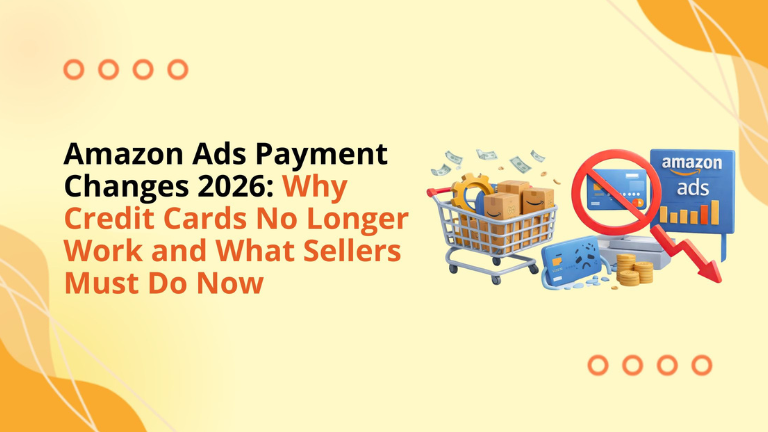
Amazon Ads Payment Changes 2026: Why Credit Cards No Longer Work and What Sellers Must Do Now

Amazon has quietly introduced one of the most impactful changes to its advertising ecosystem in years — and most sellers haven’t fully understood the consequences yet. Starting April 15, 2026, Amazon Ads will no longer rely on credit cards as the primary payment method. Instead, ad spend will be automatically deducted from seller payouts. At first glance, this may seem like a simple operational update. In reality, it fundamentally changes: Cash flow management Scaling strategies Profitability models What’s changing, why it matters, and how you should adapt immediately. What Exactly Changed? Amazon Ads will now: Deduct ad spend directly from seller revenue Remove credit card billing cycles Use credit cards only as backup Automate all payments No manual payments required No billing cycle advantage No reward-based benefits This aligns ad spend directly with sales performance — but at a cost to sellers The Hidden Impact: Cash Flow Collapse  Previously, sellers benefited from: Amazon payout delay (~30 days) Credit card billing cycle (~30 days) Total: ~60 days of working capital Now? That buffer is completely gone Why This Matters This impacts: Inventory reinvestment cycles Ad scaling decisions Supplier payments Business liquidity Even profitable sellers may struggle if cash flow isn’t managed tightly. The Real Cost: Lost Rewards & Profit Leakage Let’s quantify it: Monthly Ad Spend Annual Cashback Lost (2%) $10,000 $2,400 $50,000 $12,000 $100,000 $24,000 This is pure margin erosion. Why Amazon Made This Move Amazon Ads generated billions in revenue. By removing credit card payments: They eliminate 1.5–2.5% interchange fees They get paid immediately They improve internal margins This is a business optimization for Amazon — not for sellers How Sellers Should Adapt  1. Shift to Profit-Based PPC Stop scaling based on spend — start scaling based on: TACOS Contribution margin Net profitability 2. Tighten Keyword & Campaign Structure Eliminate: Wasted spend Irrelevant traffic Low CVR keywords 3. Forecast Cash Flow Weekly Track: Ad spend vs revenue Payout timing Inventory needs 4. Reduce Dependency on Broad Campaigns Focus on: High intent keywords Branded defense Product targeting 5. Optimize CTR & CVR Better creatives = lower CPC pressure Better listings = higher conversion This is where most sellers win or lose. How Big Internet Ecommerce Helps At Big Internet Ecommerce, we: Rebuild PPC systems for profitability Align ads with cash flow cycles Improve CTR → CVR → ranking loop Reduce wasted spend drastically We don’t just manage ads. We build scalable systems. This isn’t just a payment update. It’s a fundamental shift in how Amazon businesses operate. Sellers who adapt will: Scale profitably Control cash flow Dominate rankings Sellers who don’t… will feel it in margins very quickly. Want help restructuring your Amazon Ads strategy before this impacts your business? Schedule a strategy call with our team. Follow Big Internet Ecommerce (BIE) on Instagram & LinkedIn to stay updated with the latest trends in Amazon selling.

Amazon Ads Payment Changes 2026: Why Credit Cards No Longer Work and What Sellers Must Do Now Read More »

Amazon Prime Day 2026

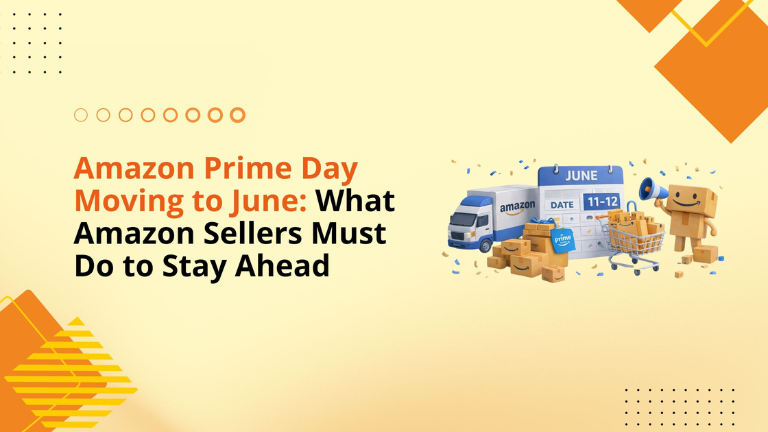
Amazon Prime Day Moving to June: What Amazon Sellers Must Do to Stay Ahead

Amazon Prime Day has always been one of the most critical events in the e-commerce calendar. For Amazon sellers, it’s not just a sale — it’s: A ranking accelerator A revenue spike driver A long-term brand visibility moment Now, reports suggest that Amazon Prime Day 2026 may shift from its traditional July timing to June. At first glance, this might seem like a minor scheduling update. In reality, it is a fundamental shift in seller strategy timelines. Because Prime Day success is not built during the event… It is built weeks before it. And with this change, that preparation window just got significantly shorter. What Changed in Amazon Prime Day 2026 Historically: Prime Day = Mid July Prep starts = Late May / June Now: Prime Day = Late June (expected) Prep must start = April / May Additionally: Event duration increased to multi-day (up to 4 days) Competition is higher than ever Ad costs spike faster Why This Shift Is a Big Deal for Amazon Sellers 1. Ranking Windows Are Now Earlier Amazon ranking works based on: Sales velocity Conversion rate Keyword relevance To win Prime Day: You must rank BEFORE the event With an earlier event: → Ranking must begin earlier 2. Inventory Planning Is Now High Risk FBA timelines include: Manufacturing Shipping Check-in Any delay means: Missing Prime Day Losing ranking Losing momentum 3. PPC Costs Will Spike Faster Prime Day leads to: Increased competition Higher bids Aggressive targeting If you start late: → You pay MORE for LESS visibility 4. Listing Optimization Becomes Non-Negotiable Traffic during Prime Day is: → Massive → Highly competitive If your listing doesn’t convert: → You waste the opportunity Prime Day Strategy Framework (Step-by-Step) Phase 1: Preparation (60–45 Days Before) Finalize inventory Optimize listings Start keyword research Phase 2: Ranking (45–15 Days Before) Launch PPC campaigns Push keyword indexing Improve CTR & CVR Phase 3: Scaling (15 Days Before) Increase bids Focus on converting keywords Optimize placements Phase 4: Prime Day Execution Aggressive ads Monitor ACOS Capture maximum sales How Big Internet Ecommerce Can Help At Big Internet Ecommerce, we specialize in Prime Day scaling strategies: 1. Ranking Strategy We build keyword ranking BEFORE the event. 2. Listing Optimization We optimize for: CTR Conversion Mobile experience 3. PPC Scaling We structure campaigns to: Reduce CPC Maximize visibility Improve ROAS 4. Inventory Planning We ensure: No stockouts Proper demand forecasting Amazon Prime Day moving to June is not just a calendar shift. It is a strategy shift. Sellers who: Prepare earlier Rank earlier Optimize earlier Will dominate. Those who don’t… Will miss the biggest revenue opportunity of the year. Want to build a winning Prime Day strategy before your competitors? Schedule a call now.  Follow Big Internet Ecommerce (BIE) on Instagram & LinkedIn to stay updated with the latest trends in Amazon selling.

Amazon Prime Day Moving to June: What Amazon Sellers Must Do to Stay Ahead Read More »

Amazon Shop Direct

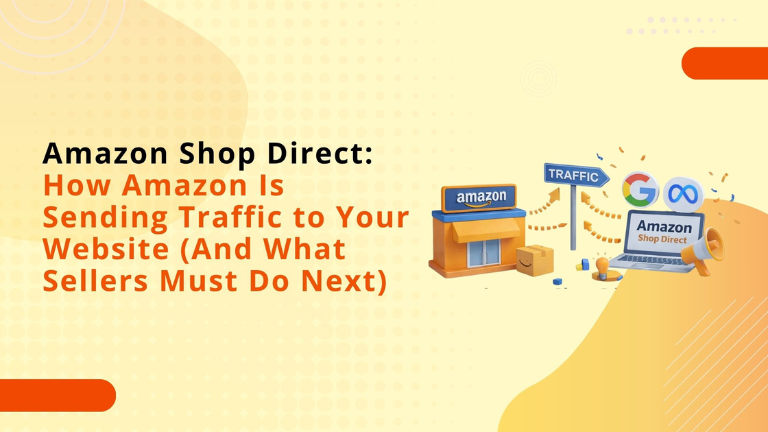
Amazon Shop Direct: How Amazon Is Sending Traffic to Your Website (And What Sellers Must Do Next)

Amazon has long operated as a closed ecosystem, where sellers compete for visibility, drive traffic to their listings, and complete transactions entirely within the platform. That model is now evolving. With the rollout of Amazon Shop Direct, Amazon is introducing a new system where products can appear in search results without traditional listings, and in many cases, customers are redirected to merchant websites to complete purchases. This marks a significant shift in how sellers acquire traffic, control customer relationships, and optimize conversions. For Amazon sellers, this is not just an update — it is a fundamental change in the e-commerce model. What is Amazon Shop Direct? Amazon Shop Direct is a system that allows: Product discovery on Amazon Product data pulled via third-party feeds Checkout happening either: On the merchant website Or through Amazon’s AI-assisted checkout This is powered by: AI-driven product discovery Real-time product feed integrations External merchant catalogs How Amazon Shop Direct Changes the Seller Model 1. From Listing-Based to Data-Based Visibility Previously: → Rankings determined visibility Now: → Structured data + feeds determine visibility This means: Attributes matter more Backend data matters more Feed quality matters more 2. Amazon Becomes a Discovery Engine Amazon is no longer just: → A transaction platform It is becoming: → A product discovery engine Similar to: Google Shopping Meta ads TikTok Shop 3. Dual Funnel Commerce (Amazon + Website) Sellers now operate in two funnels: Funnel 1: Amazon → Amazon checkout Funnel 2: Amazon → Website → Checkout This creates a hybrid commerce model. Why This is a Huge Opportunity for Amazon Sellers 1. Customer Ownership Selling off Amazon means: You capture emails You control retargeting You build brand equity 2. Lower Dependency on Rankings New sellers can now: Bypass ranking barriers Gain visibility faster 3. Higher Lifetime Value (LTV) DTC customers = repeat purchases Amazon customers = one-time transactions 4. Diversified Risk You are no longer 100% dependent on: Amazon algorithm Account health Listing suppression The Hidden Challenge Most Sellers Will Face 1. Website Conversion Rate Amazon converts at ~10–20% Most Shopify stores convert at ~1–3% Without optimization: → You lose the advantage 2. Feed Optimization Complexity Tools like: Feedonomics Salsify Require: Clean data Structured catalogs Real-time sync 3. Tracking & Attribution Gaps You must now track: Cross-platform conversions External attribution Funnel performance Strategic Framework for Sellers (What You Should Do Now) Step 1: Build Hybrid Strategy Amazon = trust + volume Website = ownership + LTV Step 2: Optimize Product Data Focus on: Titles Attributes Structured data Step 3: Upgrade Website Funnel Improve: Landing pages Checkout Speed Step 4: Implement Tracking Systems Use: Attribution tools Analytics dashboards Step 5: Prepare for AI Discovery Optimize for: Machine-readable data Context relevance How Big Internet Ecommerce Can Help At Big Internet Ecommerce, we help sellers transition into this next phase of Amazon commerce: Amazon + DTC Strategy We design hybrid growth systems combining both channels. Feed & Data Optimization We structure your catalog for AI discovery. Conversion Optimization We turn traffic into revenue across platforms. Advanced Tracking We build attribution systems for cross-channel visibility. Amazon Shop Direct is not just a feature. It is a shift in how e-commerce works. Sellers who: Adapt early Build hybrid strategies Optimize for AI Will dominate the next phase of Amazon growth. Others will struggle to keep visibility. If you want to future-proof your Amazon business and build a hybrid growth system. Schedule a call today.  Follow Big Internet Ecommerce (BIE) on Instagram & LinkedIn to stay updated with the latest trends in Amazon selling.

Amazon Shop Direct: How Amazon Is Sending Traffic to Your Website (And What Sellers Must Do Next) Read More »

Scroll to Top