Big Internet Seller Services Inc provides e-commerce Services

Get your first Product Photoshoot for FREE! Learn More

April 2026

Amazon listing price policy 2026

Amazon Listing Price Policy 2026: How Sellers Can Maintain Conversions Without Discounts

Amazon has introduced a major update to its pricing policies that is set to reshape how sellers compete and convert. For years, sellers relied on: Inflated list prices Strike-through discounts Perceived savings But now: Amazon requires proof of pricing This means the traditional “discount-driven conversion” model is being replaced. What Changed in Amazon Pricing Policy? Amazon now requires: List prices backed by actual sales data Or verified external retailer pricing Invalid pricing: Will not show discounts ill lose strike-through display Why Amazon Made This Change  Amazon’s goal: Increase customer trust Because misleading pricing: Reduces credibility Hurts buyer experience Impact on Amazon Sellers 1. Lower Conversion for Weak Listings No discount = no urgency 2. Pricing Becomes Transparent You must compete fairly 3. Buy Box Risk Increases Amazon compares pricing across: Time Platforms Competitors 4. Profit Strategy Becomes Critical Margins + pricing + conversion must align How to Adapt  1. Shift to Value-Based Selling Focus on: Benefits Differentiation Outcomes 2. Improve Listing Conversion Your listing must now: Convince instantly 3. Use Legit Offer Strategies Instead of fake discounts: Coupons Bundles Subscribe & Save 4. Monitor Pricing Consistency Across all channels 5. Optimize for Trust Reviews, proof, positioning How Big Internet Ecommerce Helps We help sellers: Rebuild Pricing Strategy Improve Conversion Without Discounts Optimize Listings for Trust Align PPC with Profitability Build Scalable Growth Systems This update removes shortcuts.  Only real strategy wins now. Sellers who: Adapt fast Improve conversion Build value Will dominate. Want to protect your conversions and scale despite this change? Schedule a strategy call with our team. Follow Big Internet Ecommerce (BIE) on Instagram & LinkedIn to stay updated with the latest trends in Amazon selling.

Amazon Listing Price Policy 2026: How Sellers Can Maintain Conversions Without Discounts Read More »

Amazon fuel surcharge 2026

Amazon Fuel and Logistics Surcharge 2026: How Sellers Can Protect Margins and Stay Profitable

Amazon sellers in 2026 are facing a new reality: Rising costs are no longer temporary Profitability is getting harder to maintain The latest update? Amazon Fuel & Logistics Surcharge While it may seem like a minor percentage increase, its impact on your business can be significant — especially at scale. What is the Amazon Fuel & Logistics Surcharge? Amazon has introduced a 3.5% surcharge on fulfillment fees due to rising fuel and logistics costs Key Details: Starts April 17, 2026 (FBA US & Canada) Extends May 2, 2026 (MCF & Buy with Prime) Average impact: $0.17 per unit (US) Applies to all product categories Why This Is Happening  The surcharge is driven by: Rising oil prices Supply chain disruptions Global logistics instability Events like the Strait of Hormuz disruption have caused: Shipping delays Higher fuel costs Increased freight rates How This Impacts Amazon Sellers 1. Margin Compression Your fulfillment cost increases → profit decreases 2. SKU-Level Profit Risk Some products may: Become unprofitable overnight 3. Increased Pricing Pressure Raising price may hurt: Conversion rates 4. Scaling Becomes Harder Less margin = less room for ads & growth Which Products Are Most Affected? Low-priced items Bulky products High-volume SKUs What Sellers Should Do Immediately 1. Recalculate Margins Add 3.5% to fulfillment fees 2. Identify At-Risk SKUs Focus on: Low margin High shipping cost 3. Adjust Pricing Strategically Not blindly — carefully 4. Optimize PPC Spend Cut waste → improve efficiency 5. Improve Conversion Rates Better listings = higher profit per click How Big Internet Ecommerce Helps Sellers Adapt We help sellers: Analyze SKU-Level Profitability Optimize Pricing Without Killing Conversion Rebuild PPC for Efficiency Improve Listing Conversion Build Scalable Profit Systems We don’t just react to changes. We build strategies that win despite them. This surcharge is not just another fee. It’s a shift in how Amazon businesses operate. Sellers who: Analyze quickly Adapt strategically Optimize systems We will survive and scale. Want to protect your margins and scale profitably in 2026? Schedule a strategy call with our team. Follow Big Internet Ecommerce (BIE) on Instagram & LinkedIn to stay updated with the latest trends in Amazon selling.

Amazon Fuel and Logistics Surcharge 2026: How Sellers Can Protect Margins and Stay Profitable Read More »

Amazon Featured Offer Buy Box strategy

How to Win the Amazon Featured Offer (Buy Box) and Maximize Your Sales in 2026

If you’re selling on Amazon, there is one element that determines whether you succeed or struggle: The Featured Offer (Buy Box). This is the most crucial placement on your product page — and the key to achieving consistent sales versus missed opportunities. What is the Amazon Featured Offer? The Featured Offer (Buy Box) is the section on a product page where customers can: Click “Buy Now” Click “Add to Cart” Amazon highlights the most competitive offer to simplify purchasing decisions How Amazon Selects the Buy Box  Amazon evaluates multiple factors: 1. Competitive Pricing Your price must align with: Amazon marketplace External competitors 2. Shipping Speed & Cost Fast, reliable, and preferably free shipping increases eligibility 3. Seller Performance Metrics Includes: Order defect rate Cancellation rate Late shipments 4. Inventory Availability Out of stock = automatic disqualification 5. Customer Experience Amazon prioritizes: Accurate listings Authentic products Good feedback Why Winning the Buy Box is Critical 1. Majority of Sales Happen Here Most customers never scroll. 2. Higher Conversion Rates Simplified decision-making = faster purchase 3. Ranking Advantage More sales = better organic ranking 4. PPC Efficiency Ads perform better when Buy Box is active Common Mistakes Sellers Make Competing only on price Ignoring account health Running out of stock Poor fulfillment strategy How to Consistently Win the Buy Box  1. Build a Smart Pricing Strategy Not lowest — most competitive 2. Use FBA or Fast Fulfillment Prime advantage improves Buy Box chances 3. Maintain Strong Account Health Monitor metrics regularly 4. Keep Inventory Stable Avoid stockouts at all costs 5. Optimize Listings for Conversion Higher conversion = stronger Buy Box position How Big Internet Ecommerce Helps You Win We go beyond surface-level fixes. Pricing + Margin Strategy PPC + Conversion Alignment Inventory Planning Listing Optimization Account Health Monitoring We build systems that: Increase Buy Box ownership Improve profitability Scale sales predictably The Buy Box is not just a feature. It’s your revenue engine. Winning it consistently is what separates: Scalable brands Struggling sellers Want to consistently win the Buy Box and scale your Amazon sales? Schedule a strategy call with our team. Follow Big Internet Ecommerce (BIE) on Instagram & LinkedIn to stay updated with the latest trends in Amazon selling.

How to Win the Amazon Featured Offer (Buy Box) and Maximize Your Sales in 2026 Read More »

What is retail business Amazon sellers

What is Retail? A Complete Guide for Amazon Sellers to Build Scalable Ecommerce Businesses

If you’re selling on Amazon, you’re already part of one of the largest industries in the world: Retail But here’s the problem… Most Amazon sellers don’t think like retailers. They think like: Product sellers Ad managers And that’s why they struggle to scale. Retail is much bigger than that. It’s about: Customer experience Systems Strategy Long-term growth We’ll break down what retail really means — and how you can use it to scale your Amazon business. What is Retail? Retail is the process of selling goods or services directly to consumers for personal use Retailers act as: The final step between product and customer This includes: Physical stores Ecommerce platforms Hybrid businesses Amazon is one of the largest ecommerce retail platforms in the world. Types of Retail (Modern Context) 1. Ecommerce Retail Amazon sellers fall into this category. 2. Brick-and-Mortar Traditional stores. 3. Multichannel Retail Online + offline integration. 4. Service Retail Selling experiences (salons, restaurants). How Retail Businesses Actually Work  Retail isn’t just selling. It involves: 1. Sourcing & Inventory Finding products + managing stock. 2. Pricing Strategy Balancing: Competitiveness Profitability 3. Customer Experience For Amazon: Listing quality = experience 4. Marketing Driving traffic via: Ads Content SEO 5. Customer Retention Repeat customers = profit Why Retail Thinking is Critical for Amazon Sellers 1. Amazon is Not a Marketplace — It’s a Retail Ecosystem You compete on: Visibility Conversion Trust 2. Listings Replace Physical Stores Your: Images Copy A+ content = store experience 3. Data Drives Everything Amazon gives: CTR CVR Search data But most sellers don’t use it effectively. 4. Customer Retention Drives Growth Retail success = repeat customers How Amazon Sellers Can Apply Retail Strategy  1. Build Conversion-Focused Listings Not just pretty images… Clear communication wins 2. Optimize Pricing Strategically Not cheapest — smartest 3. Align Ads with Profitability Not spend → profit 4. Improve Customer Experience From click → delivery → review 5. Build a Brand (Not Just Listings) How Big Internet Ecommerce Helps Sellers Win We help Amazon sellers: Build Retail-Level Systems Optimize Listings for Conversion Structure PPC for Profitability Improve Customer Journey Scale Predictably We don’t just manage accounts. We build retail businesses on Amazon Retail is not just selling. It’s strategy It’s systems It’s customer-first thinking And Amazon is one of the most competitive retail environments in the world. The sellers who win are not: The ones who guess but the ones who build systems Want to turn your Amazon business into a scalable retail system? Schedule a strategy call with our team. Follow Big Internet Ecommerce (BIE) on Instagram & LinkedIn to stay updated with the latest trends in Amazon selling.

What is Retail? A Complete Guide for Amazon Sellers to Build Scalable Ecommerce Businesses Read More »

Content marketing for Amazon sellers

How Content Marketing Drives Sales for Amazon Sellers in 2026

Selling on Amazon in 2026 isn’t just about listing products and running ads. To truly succeed, you need a content marketing strategy that can attract, engage, and convert customers in the long term. Content marketing is one of the most effective ways to: Increase organic traffic Boost conversion rates Build customer loyalty We’ll explain why content marketing is so essential for Amazon sellers and how you can leverage it to grow your sales. What Is Content Marketing for Amazon Sellers? Content marketing involves creating valuable content that engages customers and answers their questions at each stage of their journey. This content includes: Product Videos How-to Guides Customer Testimonials Blog Posts Social Media Content The goal is to educate your customers, establish your brand as an authority, and drive organic traffic to your listings. Why Content Marketing Is Crucial for Amazon Sellers  1. Improve Visibility and SEO With Amazon’s algorithm heavily favoring relevant content, creating well-optimized content helps improve your visibility in search results and drives organic traffic to your listings. 2. Build Trust and Credibility Customers are more likely to purchase from brands they trust. Through educational content, you can build credibility and provide value to your customers, increasing their likelihood to buy. 3. Drive Conversions Content like product demos, reviews, and how-to guides not only educates customers but also nudges them to convert. When your content aligns with what your customers are searching for, they are more likely to trust your product. 4. Foster Customer Loyalty Content marketing helps you stay in touch with your customers and build a relationship. With regular, value-driven content like emails and social media updates, you can keep customers engaged, encouraging them to return for future purchases. How to Implement Content Marketing for Amazon 1. Create High-Quality, SEO-Optimized Content Focus on providing value to your customers. Create blog posts, product guides, and FAQs that answer common questions. Optimize for SEO by including high-converting keywords that your audience is searching for. 2. Utilize Video Content Video content, like product demos, unboxing videos, and how-to videos, can greatly enhance customer trust and conversion rates. Amazon shoppers are 1.81 times more likely to purchase a product that has video content. 3. Engage with Customers on Social Media Use social media platforms to share content, promote your products, and engage with your audience. By offering exclusive discounts, tips, and behind-the-scenes content, you build a loyal customer base. 4. Measure and Adjust Use analytics tools to measure the success of your content marketing efforts. Track metrics like click-through rates, conversion rates, and engagement to understand what content works and what needs to be adjusted. How Big Internet Ecommerce Can Help At Big Internet Ecommerce, we help Amazon sellers develop and implement content marketing strategies that work. From creating SEO-optimized content to producing engaging videos and managing social media campaigns, we ensure that every piece of content adds value and drives sales. Ready to take your Amazon sales to the next level with content marketing?  Schedule a call today and let’s build a strategy that works for your brand! Follow Big Internet Ecommerce (BIE) on Instagram & LinkedIn to stay updated with the latest trends in Amazon selling.

How Content Marketing Drives Sales for Amazon Sellers in 2026 Read More »

Private Label products Amazon

Private Label Products: Your Guide to Building a Profitable Brand on Amazon

Private label products represents an incredible opportunity for Amazon sellers who want to build their own brands and control their profit margins. Unlike reselling national brands, private label allow you to create a unique product with your own label, packaging, and pricing. If you’re looking to scale your business on Amazon and stand out from the competition, private label products are the way to go. But how do you get started, and what do you need to know to succeed? Private label products, from what they are and how to find the right products to how to sell them on Amazon and scale your business successfully. What Are Private Label Products? Private label products are manufactured by a third-party manufacturer but sold under a retailer’s brand name. In the case of Amazon, private label products are items that sellers design, develop, and market under their own name, often with a unique packaging and branding. Why Private Label Products Matter for Amazon Sellers 1. Higher Profit Margins By bypassing the middleman and working directly with manufacturers, private label sellers enjoy higher profit margins compared to reselling national brands. 2. Brand Loyalty & Differentiation When customers trust your private label product, they’ll continue to purchase from you, reducing the need to chase new customers constantly. 3. Control Over Product & Pricing As a private label seller, you have full control over the product’s design, quality, and pricing, allowing you to stay competitive and responsive to market trends. 4. Scalable Business Model Private label products are easily scalable. As your business grows, you can expand your product line, increase inventory, and optimize pricing strategies. How to Get Started with Private Label Products  1. Choose the Right Product Conduct research to find products with strong demand and low competition. Amazon’s Product Opportunity Explorer can help you identify profitable categories and unmet customer needs. 2. Find a Manufacturer Once you’ve chosen your product, work with a contract manufacturer to bring it to life. Be sure to request samples to ensure the quality meets your standards. 3. Create Your Brand & Packaging Invest in professional branding and packaging that conveys your product’s quality and appeals to your target audience. 4. Optimize Your Listing Your product listing is crucial for conversion. Focus on clear, persuasive copy, high-quality images, and accurate descriptions. 5. Market Your Private Label Product Once your product is live, leverage Amazon Ads, customer reviews, and social media to drive traffic and increase sales. How Big Internet Ecommerce Helps At Big Internet Ecommerce, we specialize in helping sellers succeed with private label products on Amazon. From product research to branding, marketing, and scaling, we provide end-to-end support to ensure your private label brand thrives. Ready to launch your private label products on Amazon?  Schedule a call with us today and take your business to the next level! Follow Big Internet Ecommerce (BIE) on Instagram & LinkedIn to stay updated with the latest trends in Amazon selling.

Private Label Products: Your Guide to Building a Profitable Brand on Amazon Read More »

Non durable products Amazon

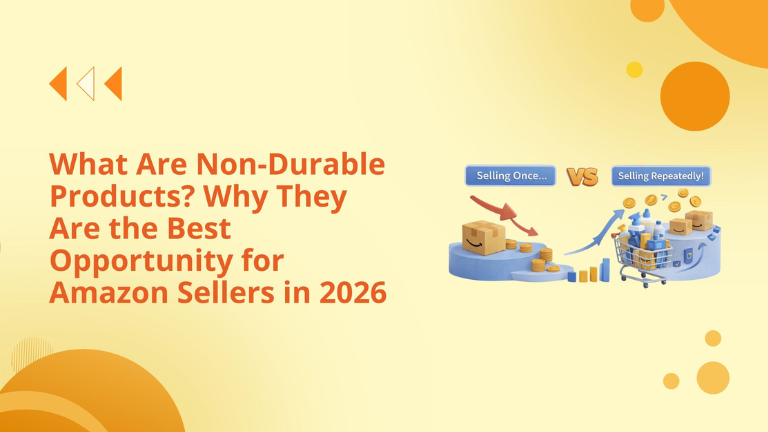
What Are Non-Durable Products? Why They Are the Best Opportunity for Amazon Sellers in 2026

If you’re building an Amazon business in 2026, your success will largely depend on one key decision: What type of product you sell? While many sellers focus on trends, pricing, or competition… The smartest sellers focus on product type. And one category stands out above the rest: Non-durable products These are the products that: Customers use daily Run out of And reorder repeatedly Understanding this concept can completely change your Amazon growth strategy. What Are Non-Durable Products? A non-durable product is any item that is consumed quickly or used up within a short period of time. These products typically: Have short lifespans Are purchased frequently Are relatively low cost Are used immediately Common Examples Food & beverages Personal care (toothpaste, shampoo) Cleaning supplies Supplements Paper products These products form the foundation of everyday consumption. Non-Durable vs Durable Products Factor Non-Durable Durable Lifespan Short Long Purchase Frequency High Low Price Low High Strategy Repeat sales One-time sale Why Non-Durable Products Are Powerful for Amazon Sellers  1. Repeat Purchase Behavior Customers come back automatically. This increases: Lifetime value Brand loyalty Predictability 2. Strong Demand Stability Even during economic downturns: Essentials continue to sell 3. Ideal for Subscription Models Amazon’s Subscribe & Save exists because of non-durable products. 4. Better Ad Economics With repeat purchases: You can afford higher CAC You recover costs faster 5. Brand Building Advantage Non-durable categories are: Brand-driven Loyalty-driven Retention-driven Challenges Sellers Must Consider Strong competition Need for differentiation Customer trust requirements Margin management How to Succeed Selling Non-Durable Products  1. Choose the Right Product Focus on: High usage frequency Strong demand Differentiation opportunity 2. Optimize for Conversion Your listing must: Clearly communicate benefits Build trust instantly Pass the 2-second test 3. Focus on Retention Think beyond first sale: How will customers come back? 4. Leverage Subscribe & Save Automate revenue wherever possible. 5. Build Brand Loyalty Because repeat purchases depend on trust. How Big Internet Ecommerce Helps You Win At Big Internet Ecommerce, we help you: Identify High-Potential Non-Durable Products Build High-Converting Listings Optimize for Repeat Purchases Scale Ads Profitably Build Long-Term Brand Systems We don’t just help you launch… We help you build a predictable, scalable Amazon business Non-durable products are not just another category. They are the foundation of scalable Amazon brands. If you want: Repeat revenue Higher LTV Predictable growth This is the model to focus on. Want to build a repeat-revenue Amazon brand? Schedule a strategy call with our team. Follow Big Internet Ecommerce (BIE) on Instagram & LinkedIn to stay updated with the latest trends in Amazon selling.

What Are Non-Durable Products? Why They Are the Best Opportunity for Amazon Sellers in 2026 Read More »

Sell health products on Amazon

How to Sell Health and Personal Care Products on Amazon (2026 Complete Guide)

The Health & Personal Care category on Amazon is one of the most profitable — and one of the most regulated. From supplements and skincare to medical supplies and wellness products, millions of customers shop this category daily. But here’s the reality: This is NOT a beginner-friendly category if you don’t understand compliance Amazon enforces strict rules because these products impact health If you’re planning to sell in this space, you need a clear strategy. Why Sell Health & Personal Care Products on Amazon? 1. Massive Demand Customers continuously buy: Vitamins Supplements Hygiene products Wellness items High repeat purchase behavior 2. B2C + B2B Opportunity Through Amazon Business, you can also sell to: Hospitals Clinics Healthcare providers 3. Strong Brand Potential Health brands can build: Subscriptions Loyalty Long-term revenue Step-by-Step: How to Start Selling  Step 1: Choose Your Business Model You can: Resell products Create your own brand Step 2: Create Seller Account Use Seller Central to: Manage listings Run ads Track inventory Step 3: Get Category Approval You may need: Invoices Product images FDA documentation Safety certifications Compliance Requirements  This is where most sellers fail. Restricted Products Include: Supplements OTC drugs Medical devices You May Need: cGMP certification FDA registration Certificate of Analysis 510(k) clearance (devices) Listing Rules You CANNOT say: Cures disease Treats condition You CAN say: Supports wellness Promotes health Fulfillment Strategy (FBA vs FBM) FBA Advantages: Prime shipping Automated fulfillment Better conversion FBM Advantages: Control over logistics Suitable for restricted products Key Challenges Sellers Face Approval delays Compliance issues Listing suppression Low conversion due to lack of trust How to Succeed in This Category (BOFU) 1. Focus on Compliance First Without approval, nothing moves. 2. Build Trust-Driven Listings Use: Clean design Certifications Clear benefits 3. Optimize for Conversion Health category depends heavily on: Credibility Clarity Emotional trust 4. Use Subscribe & Save Great for: Supplements Consumables 5. Manage Inventory Carefully Expiration + compliance = critical How Big Internet Ecommerce Helps You Win We don’t just help you “launch”. We help you: Get Approved Faster Build High-Converting Listings Stay Fully Compliant Scale PPC Safely Build Long-Term Brand Growth Selling health products on Amazon is: Highly profitable Highly scalable Highly regulated The sellers who win are not the ones who rush — They are the ones who build it correctly from day one. Want help launching or scaling your health brand on Amazon? Schedule a strategy call with our team. Follow Big Internet Ecommerce (BIE) on Instagram & LinkedIn to stay updated with the latest trends in Amazon selling.

How to Sell Health and Personal Care Products on Amazon (2026 Complete Guide) Read More »

Amazon Ads payment changes 2026

Amazon Ads Payment Changes 2026: Why Credit Cards No Longer Work and What Sellers Must Do Now

Amazon has quietly introduced one of the most impactful changes to its advertising ecosystem in years — and most sellers haven’t fully understood the consequences yet. Starting April 15, 2026, Amazon Ads will no longer rely on credit cards as the primary payment method. Instead, ad spend will be automatically deducted from seller payouts. At first glance, this may seem like a simple operational update. In reality, it fundamentally changes: Cash flow management Scaling strategies Profitability models What’s changing, why it matters, and how you should adapt immediately. What Exactly Changed? Amazon Ads will now: Deduct ad spend directly from seller revenue Remove credit card billing cycles Use credit cards only as backup Automate all payments No manual payments required No billing cycle advantage No reward-based benefits This aligns ad spend directly with sales performance — but at a cost to sellers The Hidden Impact: Cash Flow Collapse  Previously, sellers benefited from: Amazon payout delay (~30 days) Credit card billing cycle (~30 days) Total: ~60 days of working capital Now? That buffer is completely gone Why This Matters This impacts: Inventory reinvestment cycles Ad scaling decisions Supplier payments Business liquidity Even profitable sellers may struggle if cash flow isn’t managed tightly. The Real Cost: Lost Rewards & Profit Leakage Let’s quantify it: Monthly Ad Spend Annual Cashback Lost (2%) $10,000 $2,400 $50,000 $12,000 $100,000 $24,000 This is pure margin erosion. Why Amazon Made This Move Amazon Ads generated billions in revenue. By removing credit card payments: They eliminate 1.5–2.5% interchange fees They get paid immediately They improve internal margins This is a business optimization for Amazon — not for sellers How Sellers Should Adapt  1. Shift to Profit-Based PPC Stop scaling based on spend — start scaling based on: TACOS Contribution margin Net profitability 2. Tighten Keyword & Campaign Structure Eliminate: Wasted spend Irrelevant traffic Low CVR keywords 3. Forecast Cash Flow Weekly Track: Ad spend vs revenue Payout timing Inventory needs 4. Reduce Dependency on Broad Campaigns Focus on: High intent keywords Branded defense Product targeting 5. Optimize CTR & CVR Better creatives = lower CPC pressure Better listings = higher conversion This is where most sellers win or lose. How Big Internet Ecommerce Helps At Big Internet Ecommerce, we: Rebuild PPC systems for profitability Align ads with cash flow cycles Improve CTR → CVR → ranking loop Reduce wasted spend drastically We don’t just manage ads. We build scalable systems. This isn’t just a payment update. It’s a fundamental shift in how Amazon businesses operate. Sellers who adapt will: Scale profitably Control cash flow Dominate rankings Sellers who don’t… will feel it in margins very quickly. Want help restructuring your Amazon Ads strategy before this impacts your business? Schedule a strategy call with our team. Follow Big Internet Ecommerce (BIE) on Instagram & LinkedIn to stay updated with the latest trends in Amazon selling.

Amazon Ads Payment Changes 2026: Why Credit Cards No Longer Work and What Sellers Must Do Now Read More »

Scroll to Top