Big Internet Seller Services Inc provides e-commerce Services

Get your first Product Photoshoot for FREE! Learn More

Amazon Ads

Amazon vs Perplexity AI Dispute

The AI Shopper is Here. Your Sponsored Ad Strategy is Obsolete.

The legal fight between Amazon and Perplexity AI is the most important e-commerce story of the year. Not because of the lawsuit, but because it signals a complication for the ad-supported marketplace as we know it. Amazon issued a cease-and-desist, accusing Perplexity of “computer fraud” for using an AI “agent” to shop on its site, violating its “no robots” policy. Perplexity fired back with a blog post titled “Bullying is Not Innovation”, claiming Amazon’s real motive is protecting its multi-billion-dollar ad-revenue stream. They’re right. Perplexity’s “Comet” agent shops for the user, meaning it can compare products on their actual merits (price, shipping, reviews) and completely bypass the sponsored product listings that Amazon’s entire profit model is built on. This isn’t a future problem. This is a “right now” problem. Between third-party agents like Perplexity and Amazon’s own “Rufus” AI, the AI shopper is already here. For brands, this marks a fundamental shift. Your “SEO” strategy is dead. You now need an “AEO” (Agent Engine Optimization) strategy. The AEO Playbook: How to Sell to a Robot An AI agent likely doesn’t “browse.” It evaluates. It doesn’t get “influenced.” It calculates. To win, your strategy must shift from bids to data. Your Listing is a Data File, Not a Story An AI agent won’t be moved by your emotional brand story video. It will parse the structured data in your listing’s backend. Old Way (SEO): Stuffing keywords into your title. New Way (AEO): Ensuring your title, bullets, and backend fields contain “hyper-clean,” machine-readable data. Is the “material type” exact? Is the “item dimension” perfect? If not, the AI can’t rank you. Logistics is Your New Ad Bid You can’t pay an AI to put you at the top. You earn the top spot by being the best logistical choice. Old Way (Ads): Bidding 20% higher for top-of-search. New Way (AEO): Modeling your FBA/AWD inbound plan to guarantee the fastest and most reliable shipping promise. The AI will see your 1-day shipping vs. a competitor’s 3-day shipping, and the choice will be made. Unit Economics Are Your New Creative An AI is the ultimate unit-economic shopper. It will be programmed to find the best value. Old Way (Creative): A/B testing lifestyle images. New Way (AEO): A/B testing your price. The agent will compare your CVR, review score, and price against all competitors. Your “creative” is now the raw math of your offer. KPI Dashboard to Run Every Week Data Health Score: Is your backend 100% complete and accurate? Shipping Velocity: What is your average “click-to-door” time vs. competitors? CVR-to-Price Ratio: Is your conversion rate optimized for your price point? Return Rate: An AI will see a high return rate as a “bad product” signal. Where Big Internet Ecommerce (BIE) Fits In Your ad agency is built for an obsolete model. They are built to influence humans. We are built to optimize for agents. AEO (Agent Engine Optimization) Audit: We are the first agency to move from SEO to AEO. We run a full audit of your listings to make them “hyper-clean” and machine-readable, ensuring AI agents (including Amazon’s Rufus) pick your product. Unit Economics Lab: We build the FBA/AWD logistics models that make you the fastest choice. We model your pricing and promotions to make you the best value. We make your ASIN the logical, algorithmic winner. Data-First CVR Sprints: We stop guessing with lifestyle photos and start testing data. We optimize the core, structured data that AI agents use to make decisions. Get your “AEO Readiness” audit to see if your brand is prepared to sell to the new AI shopper. Book a 20-min session with Big Internet Ecommerce today! Follow Big Internet Ecommerce (BIE) on Instagram & LinkedIn to stay updated with the latest trends in Amazon selling.

The AI Shopper is Here. Your Sponsored Ad Strategy is Obsolete. Read More »

Amazon Bazaar Global Expansion

Brand vs. Bazaar: Why Amazon’s New Platform Is Good News for Premium Sellers

You’ve seen the news: Amazon is rolling out “Amazon Bazaar” globally, launching a new, standalone app in over a dozen markets to directly combat low-cost giants like Temu and Shein. On the surface, it looks like more competition. But for serious brands, it’s the opposite. This is the “Great Bifurcation”—Amazon is strategically splitting the marketplace, and this is good news for you. What Is Amazon Bazaar? Amazon Bazaar is a separate, app-based marketplace focused on unbranded, ultra-low-cost goods. Price Point: The items are almost all under $10, with some as low as $2. In India, the cap is around ₹600. Categories: Fashion, home goods, lifestyle, and accessories. The Model: It’s built to win the price war. It features a 0% referral fee for sellers in some markets and uses a slower, low-cost fulfillment network (deliveries can take two weeks), not premium FBA. This isn’t an “Amazon.com” experience. This is a Temu-killer. Why This Is Good News: The “Premium Brand” Moat Amazon’s move clarifies the entire ecosystem. It effectively quarantines the “race to the bottom” to a separate platform. This leaves the main Amazon.com platform to do what it does best: sell trusted brands at a premium. For years, you’ve had to fight for the Buy Box against generic, unbranded sellers. Now, Amazon is building them their own sandbox to play in. This frees you to stop competing on price and start competing on value. Here’s your new playbook. Logistics = Your Primary Weapon Bazaar’s weakness is velocity. Their deliveries are slow. Your Prime Badge is now your single greatest differentiator. It is a promise of trust and 1-2 day speed. Your Move: Double down on FBA and AWD. Your “storage as strategy” (using AWD as a buffer for FBA) is what ensures you are always in-stock with the Prime Badge, making you the clear choice over a 2-week-wait from Bazaar. Brand = Your CVR Lever Bazaar is explicitly for “unbranded” or “generic” products. This means they cannot use the brand-building tools that you can. Your Move: Your Brand Story and Premium A+ Content are no longer “nice-to-haves.” They are your core CVR-driving defense. They are how you justify your price point, build trust, and communicate quality that a generic “Bazaar” listing never can. Trust = Your Justification for Price The Bazaar shopper is hunting for a $2 deal. The Amazon.com shopper is willing to pay $20 for a product they trust will arrive on time and be what they ordered. Your Move: Leverage your reviews. Invest in customer service. Your entire brand presence must communicate reliability. This is what justifies your margin in a post-Bazaar world. KPI Dashboard to Run Every Week CVR Lift from P-A+: Are you proving your brand’s value? Prime-Eligible CVR vs. Non-Prime: Is your velocity winning the click? AOV: Are you successfully bundling and upselling, something Bazaar can’t do? New-to-Brand (NTB) Rate: Are you attracting premium shoppers, not just price-hunters? Where Big Internet Ecommerce (BIE) Fits In We are not an agency for “Bazaar” sellers. We are an agency for premium brands. We don’t build race-to-the-bottom listings; we build brand moats. Brand Story & Creator Ops: We build the Premium A+ and Brand Story assets that lift CVR and make your brand the obvious, trusted choice. Unit Economics Lab: We build the FBA/AWD logistics model that weaponizes your Prime Badge, ensuring your velocity beats the slow-ship competition. Funnel Intelligence: We build the ad funnels (DSP, PMax → Attribution) that find and convert premium shoppers who value quality and trust over the lowest possible price. Get your “Premium Brand Moat” audit to see how you can win in Amazon’s new, bifurcated marketplace. Book a 20-min session with Big Internet Ecommerce today! Follow Big Internet Ecommerce (BIE) on Instagram & LinkedIn to stay updated with the latest trends in Amazon selling.

Brand vs. Bazaar: Why Amazon’s New Platform Is Good News for Premium Sellers Read More »

Google Ads Channel Performance Beta

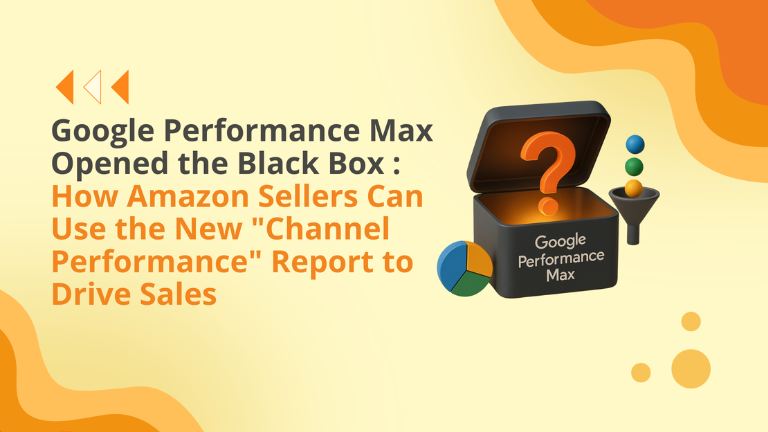
Google Performance Max Opened the Black Box: How Amazon Sellers Can Use the New “Channel Performance” Report to Drive Sales

For years, Google’s Performance Max (PMax) has been a double-edged sword: a powerful automation engine trapped inside a “black box”. You could feed it creative and budgets, but you had almost no visibility into which channels—Search, Shopping, YouTube, or Display—were actually receiving that budget or, more importantly, driving conversions. That frustration is finally ending. Google is rolling out the “Channel Performance (Beta)” report, a new insight tool that shows metrics (cost, conversions, conversion value, etc.) broken down by channel. For Amazon sellers, this isn’t just a new report. It’s the key to building a profitable external traffic machine. Here’s the Big Internet Ecommerce (BIE) playbook. Why This Matters for Amazon Sellers This new Performance Max data, on its own, is just a “nice-to-see” dashboard. It becomes an actionable profit lever only when paired with Amazon Attribution. Running external traffic from Google to Amazon without this combination is a critical mistake. You are flying blind, unable to distinguish between: High-Intent Traffic: A user clicking a “Shopping” ad, ready to buy. Low-Intent Traffic: A user passively seeing a “Display” ad, just browsing. Previously, Performance Max blended this data, and your “Cost per Acquisition” was a meaningless average. Now, you can separate them. The New Strategic Loop: Google Data → Amazon Data → Action This new report unlocks a simple, three-step loop to optimize your external ad spend. Analyze the Performance Max Channel Report: Log in to Google Ads and open your Performance Max campaign. In the “Insights” tab, you’ll find the new “Channel Performance” report. You will immediately see which channels are eating your budget vs. which are driving clicks and conversions. (e.g., You see 60% of spend went to “YouTube” but 90% of conversions came from “Shopping.”) Cross-Reference with Amazon Attribution: This is the step most sellers miss. Now, open your Amazon Attribution dashboard. Look at the campaigns you’ve tagged. You can confirm what Google thinks is a conversion (a click) vs. what Amazon knows is a conversion (an Add to Cart or Purchase). (e.g., You confirm the “Shopping” clicks converted at 12% on your Storefront, while the “YouTube” clicks converted at 0.2%.) Execute: Re-align Assets-to-Channel Now you have proven, actionable intelligence. You must stop feeding Performance Max “one-size-fits-all” creative. For your winning “Shopping” channel: Double down. Feed Performance Max more high-quality product images, titles optimized for your Amazon keywords, and text highlighting price, reviews, or Prime eligibility. For your “YouTube” channel: It’s spending but not converting. This is not a failure; it’s an awareness play. Stop feeding it “Buy Now” assets. Instead, feed it your Brand Story video or a Premium A+ Content-style brand video to warm up the top of your funnel. KPI Dashboard to Run Every Week Performance Max Cost per Channel (Google Data) Performance Max CVR per Channel (Google Data) Amazon CVR per Performance Max Channel (Attribution Data) Amazon ROAS per Performance Max Channel (Attribution Data) Budget % (Awareness Channels) vs. Budget % (Conversion Channels) Where Big Internet Ecommerce (BIE) Fits In We don’t just “run external traffic.” We build the full-funnel intelligence loop that makes it profitable. We implement: Full-Stack Attribution: We connect your Google Ads account to your Amazon Attribution dashboard correctly, ensuring data flows from the first click to the final sale. Asset-to-Channel Mapping: We analyze the new Performance Max data and build the correct creative for the correct channel (e.g., brand-story for YouTube, conversion-focused for Shopping) to maximize your total funnel CVR. SKU-Level Budget Realignment: We shift your Performance Max budget based on this new, combined dataset, funding the Google channels that are proven to drive profitable unit sales on Amazon. Get your “External Traffic Intelligence” audit to see which Google channels are really funding your Amazon growth. Book a 20-min session with Big Internet Ecommerce (BIE) today! Follow Big Internet Ecommerce (BIE) on Instagram & LinkedIn to stay updated with the latest trends in Amazon selling.

Google Performance Max Opened the Black Box: How Amazon Sellers Can Use the New “Channel Performance” Report to Drive Sales Read More »

Amazon seller growth strategy

Amazon’s 25 Years with Sellers: How to Turn the Milestone into Your Next 5 Years of Growth

The headline—25 years and $2.5T+ in seller sales—is impressive. But the real question for operators is: How do we convert that legacy into the next five years of profitable growth? This playbook distills the durable advantages Amazon built for independent sellers and turns them into a 90-day plan you can execute now. The Compounding Advantages Sellers Can Leverage  1) AI-Native Creative & Catalogue Ops Generate and iterate titles, bullets, images, A+ and videos weekly. Use structured testing (one variable at a time) and lock in winners to raise CVR. 2) Funnel Intelligence Beats Guesswork Read the customer journey by ASIN (awareness → consideration → intent → purchase). Pair journey signals with search query insights to fund the exact stage that leaks. 3) Logistics as a Growth Lever Build a breakpoint model for AWD vs FBA vs SIPP vs SPD/LTL/FTL. Compress delivery promises where it matters (category-dependent) to lift CVR and rank velocity. 4) B2B as a Second Flywheel Turn on Business pricing + quantity tiers and badge eligibility. Automate updates so B2B discounts track retail price changes without margin drift. 5) Price Integrity, Story, and Trust Premium A+ + UGC + reviews justify margin as pricing transparency rises. Focus on real value claims and consistent brand cues across images and copy. A 90-Day Execution Plan  Days 1–30: Foundation & Signals AI Listing Sprint: 3–5 ASINs, weekly creatives (titles, main image swap tests, Premium A+ draft). Funnel Snapshot: Identify the stage with biggest leakage per ASIN; set one hypothesis per SKU. Inbound Breakpoints: Model SPD vs LTL vs FTL and AWD vs FBA; set target DOS (6–8 weeks). Days 31–60: Scale What Works Creative Lock-Ins: Promote winners to all placements; produce sponsor-ready video variants. B2B Setup: Business prices + 2–3 quantity tiers; monitor badge eligibility and lift. SIPP/Packaging Audit: Ready-to-ship packaging to reduce fees and damage rates; standardize pallet specs. Days 61–90: Compounding Systems Automation: Pricing rules (incl. B2B), dayparting/budget rules tied to funnel stage. Brand System: Premium A+ deployment + UGC briefs; review velocity plan (compliant). Scorecard: Cost per acquisition, CVR, unit margin, OOS %, lead time variance, B2B mix. Mistakes to Avoid (Save Margin & Time) Treating AI as “set and forget” (it’s a testing engine, not a shortcut). Funding impressions without fixing the funnel stage that’s leaking. Storing long-term in pricey nodes (optimize AWD/FBA mix and cadence). B2B without rules—tiers should be margin-aware and automated. “Discount theatre” instead of value storytelling (Premium A+, reviews, UGC). Where Big Internet Ecommerce (BIE) Fits In At BigInternetEcommerce.com, we operationalize your next 5 years: AI Listing Sprints for rapid creative gains. Funnel Realignment (ASIN-level journey + SQP-informed budgeting). Unit Economics Lab (AWD/FBA/SIPP breakpoints, replen rhythm, fee risk checks). B2B Scaling Kit (business pricing playbook and automation). Brand Story Engine (Premium A+ + UGC briefs that raise CVR). Want our 1-page “Next 5 Years” roadmap tailored to your top 10 ASINs? Book a 20-min working session. Follow Big Internet Ecommerce (BIE) on Instagram & LinkedIn to stay updated with the latest trends in Amazon selling.

Amazon’s 25 Years with Sellers: How to Turn the Milestone into Your Next 5 Years of Growth Read More »

Amazon price history

Amazon’s Native Price Tracking Test: How Sellers Should Adapt (and Win)

Price transparency just took a big step forward. Amazon is testing a Price History view on some product pages, and its AI assistant Rufus already lets some shoppers ask for price history directly in the app. For sellers, this is a shift from claims to proof. In this guide, we’ll show how to protect conversion, margins, and Buy Box eligibility in a world where your last 30 days are one tap away.  What changed (and why it matters) In-app price history: Native visibility increases buyer confidence and exposes inflated anchors. Expect stronger promotion policing and higher standards for “deal” messaging. Policy alignment: Amazon’s Fair Pricing posture and ongoing antitrust scrutiny around discounting and Buy Box mechanics mean credibility is a ranking signal—formal or not. Tooling shift: Shoppers get a simple history; sellers still need deep analytics (long horizons, competitor mapping, API feeds) from third-party tools. The stakes: trust, Buy Box, and compliance Consumer advocates have long flagged inflated reference prices. With native history, shoppers can verify in seconds—and Amazon can better enforce price integrity that influences Buy Box visibility.  Diagnose your exposure Pull 30–90-day price histories for top ASINs; mark true troughs. Check parity: if you’re lower off-Amazon, you may risk Buy Box suppression. Map deal cadence (LD/BD/Coupons/Prime) against real historical lows. Engineer credible deals Build a Deal Calendar aligned to actual troughs (not artificial pre-event spikes). Pair promos with content upgrades—new main image/A+, review velocity—to justify price and defend margin. Set repricing floors & margin guards (automation with human review). Execute and monitor Track conversion + glance views during promos; compare to prior events at similar price positions. Watch Buy Box and Unit Session %; if volatility spikes, re-check parity and delivery promises. Post-event: log your new trough and update the calendar. Pro playbook: 7 steps we run for clients Price Integrity Audit (30–90 days per ASIN). Parity & Buy Box risk scan across channels. Contribution-margin floors integrated into repricing. Event design (LD/BD/Coupons/Prime) anchored to real lows. Creative uplift (images, A+, reviews) to support premium pricing. Competitor tracking (longer-horizon histories, rank correlation).  Post-mortems to refine troughs, elasticities, and timing. Want a done-for-you Price Integrity Audit (free for first 10 SKUs)?  Book a strategy call today. Follow Big Internet Ecommerce (BIE) on Instagram & LinkedIn to stay updated with the latest trends in Amazon selling.

Amazon’s Native Price Tracking Test: How Sellers Should Adapt (and Win) Read More »

Amazon Product Performance Spotlight

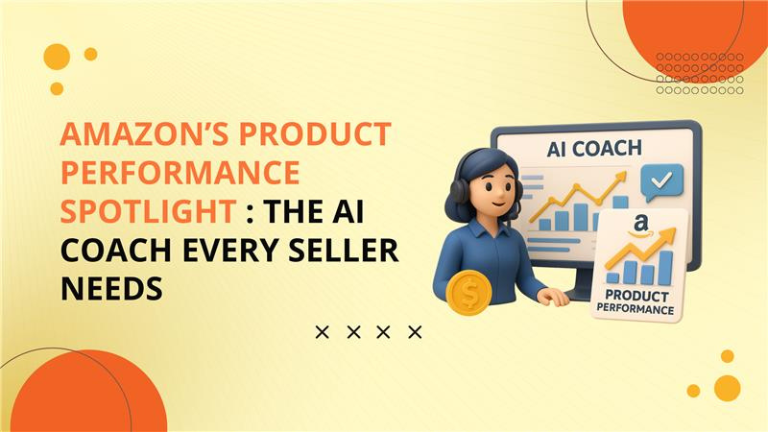
Amazon’s Product Performance Spotlight: The AI Coach Every Seller Needs

For years, Amazon sellers have relied on manual reports to understand why a launch worked — or failed. That changes now. Amazon has introduced Product Performance Spotlight, a new AI-powered dashboard that monitors your listings in real time, benchmarks performance against similar ASINs, and alerts you before problems escalate. It’s designed to be your personal “Amazon coach,” pointing out which SKUs need attention, what’s dragging conversions down, and how to fix it — fast. What Is Product Performance Spotlight? The Spotlight dashboard aggregates operational and advertising data into one AI system that constantly scans for anomalies. It tracks: Inventory health (stock levels, inbound delays) Ad performance trends (spend spikes, underperforming campaigns) Conversion metrics (CTR vs CVR) Category benchmarks (comparison to similar listings) When it detects risk or opportunity, it generates alerts like: “High clicks but low conversions – check image alignment with keyword intent.” These micro-alerts allow sellers to act within 24–48 hours instead of discovering drops in next month’s reports. Why It Matters for Amazon Sellers Real-time insight means proactive growth. Here’s what this tool changes for sellers: Faster recovery: Address issues before rankings or reviews take a hit. Improved ad ROI: Avoid wasted spend on non-converting campaigns. Smarter launches: Track early ASIN behavior to sustain launch momentum. Operational efficiency: Link alerts to your fulfillment and creative teams instantly. Instead of reactive optimization, sellers now get predictive coaching. How Big Internet Ecommerce Helps Sellers Use It Best At BigInternetEcommerce.com, we go beyond alerts — we interpret them. Here’s how we make Product Performance Spotlight work for you: 1. Build an integrated workflow linking Spotlight alerts to your PPC, design, and operations dashboards. 2. Create an Alert Owner Framework — assigning responsibility per SKU. 3. Pair Spotlight data with existing analytics tools like Profit Analytics for end-to-end visibility. 4. Develop weekly SOPs for response and resolution tracking. By doing this, sellers turn AI notifications into profitable actions, not just information. Amazon’s Product Performance Spotlight transforms how sellers manage launches — from guesswork to guided precision. With AI monitoring conversions, ads, and inventory in real time, sellers can respond to issues instantly and protect launch momentum. The key isn’t just using Spotlight — it’s integrating it into your daily workflow. That’s where Big Internet Ecommerce helps you turn data into action and action into growth. Want to integrate Product Performance Spotlight into your Amazon operations? Schedule your strategy call with Big Internet Ecommerce today! Follow Big Internet Ecommerce (BIE) on Instagram & LinkedIn to stay updated with the latest trends in Amazon selling.

Amazon’s Product Performance Spotlight: The AI Coach Every Seller Needs Read More »

Amazon AI Video Generator and Predictive Return Analysis

Amazon’s AI Video Generator & Predictive Return Dashboard: How Vendors Can Save Costs and Stay Ahead

Amazon is doubling down on AI and data-driven automation for its vendors. Two major new tools — the AI Video Generator and Predictive Return Analysis dashboard — aim to make creative production faster and return management smarter. For vendors managing hundreds of ASINs or global campaigns, these innovations offer a powerful mix of speed, savings, and foresight. What’s New for Vendors in 2025–2026 1. AI Video Generator: Fast, Free, and Ad-Ready Amazon’s AI Video Generator lets vendors produce Sponsored Ad videos directly from their product detail pages. Key features include: Automatic content extraction (images, descriptions, logo, CTA) Customizable text, music, and layouts Integration with Sponsored Brands and Product Ads This means no more long production cycles or expensive agency edits — vendors can launch new video campaigns in hours, not weeks. 2. Predictive Return Analysis in Concessions Hub This new dashboard gives vendors a forward-looking view of return-related losses. It aggregates metrics like: Conceded units and concession rate Shipped units Critical review rate per ASIN The system then projects potential losses over the next 30 days, helping vendors act early. For example: If a vendor’s return rate spikes for one ASIN, the dashboard might reveal it’s due to damaged packaging or fulfillment issues. Fixing that upstream prevents future returns and restores margin health. How This Changes Vendor Operations Marketing Efficiency: Video generation now takes minutes, enabling faster product launches and creative testing. Financial Foresight: Predictive dashboards turn return management from reactive to proactive. Cross-Team Visibility: Vendor teams can connect marketing and operations through shared dashboards, improving coordination between ads and inventory. ROI Impact: Less ad production cost + fewer defective returns = stronger bottom line. Big Internet Ecommerce’s Playbook for Smart Vendors At Big Internet Ecommerce (BIE), we help vendors transform these Amazon tools into growth drivers: 1. Integrate the AI Video Generator with creative frameworks that boost CTR. 2. Pair Predictive Return data with Profit Analytics to identify hidden margin leaks. 3. Build vendor dashboards tracking both ad performance and return trends. 4. Optimize ad spend using new Amazon automation tools for Sponsored Ads. Amazon’s latest tools signal a bigger shift: AI and predictive analytics are becoming the backbone of successful Vendor operations. By combining these insights with data-led execution, vendors can produce faster ads, cut costs, and prevent returns before they happen — all while staying ahead in Amazon’s increasingly automated ecosystem. Want to unlock Amazon’s AI tools for your Vendor account? Schedule a strategy call with Big Internet Ecommerce today! Follow Big Internet Ecommerce (BIE) on Instagram & LinkedIn to stay updated with the latest trends in Amazon selling.

Amazon’s AI Video Generator & Predictive Return Dashboard: How Vendors Can Save Costs and Stay Ahead Read More »

2026 Amazon FBA fees

Amazon’s 2026 FBA Fees, LIL & Inbound Defect Charges — and the AI Tools That Can Win Back Your Margin

For many Amazon brands, profitability is decided in the pennies — carton sizes, dim weight, stock days, and ad efficiency. In 2026, Amazon will raise FBA fulfillment fees by an average of $0.08 per unit and adjust several adjacent fees (LIL, inbound, returns). The good news: Amazon also expanded AI-powered Video Generator so you can lift conversion without big creative budgets. This guide turns the policy changes into a concrete playbook — what’s changing, where margin leaks, and how to counter with operations and creative.  What’s changing in 2026 (and when) Fulfillment fees: non-peak fees resume Jan 15, 2026 with average +$0.08; weight/dimensional rules and bulky tiers get sharper. Low-Inventory-Level fee: calculated more precisely at seller-FNSKU; fee scales with days of supply below ~28 and unit size/weight. Inbound defect fees: misrouted/abandoned/deleted shipments consolidated into one higher fee (no stacking), rising materially for standard & bulky goods — accuracy is now a cost center. Returns processing fee: applied to items with higher return rates; billed on a delayed cadence each cycle. Amazon’s own update sums it up: small average increase, but with granular pricing and compliance-linked charges sellers must model carefully.  Where margins leak (and how to plug them) Inventory DOS & LIL Keep 28–45 days of supply at the FNSKU level; raise reorder points on top sellers to avoid per-unit LIL taxes. Build a weekly DOS report that flags SKUs slipping below threshold. Inbound Compliance Create a pre-ship checklist: label format, carton dimensions/weights, routing, ASN accuracy. Minor defects used to cost cents; 2026 rates make sloppiness expensive. Train 3PLs to the new table. Dim Weight & Packaging Re-cartonize to reduce dimensional weight on Large Standard/Small Bulky; explore SIPP certification to lower handling (where eligible). (See Amazon’s placement/handling pages for 2026 changes.) Returns Discipline High-return ASINs deserve PDP fixes (clarity imagery, size guides, compatibility charts), QC checks, and post-purchase guidance to curb the returns processing fee. Creative Leverage (AI Video) Deploy Amazon’s Video Generator: multi-scene, spec-compliant SBV videos built from your images in minutes — a fast path to higher CTR/CVR and lower CPC waste.  14-day BIE action plan Day 1–3: Baseline — export 90-day units, fees, dims, DOS; tag high-return ASINs. Day 4–6: Model — apply 2026 fee tables; simulate LIL/inbound-defect exposure by SKU and route. Day 7–9: Fix Ops — inbound SOP v2, cartonization tweaks, SIPP review, reorder-point updates. Day 10–12: Create — generate 3–6 AI videos for top ASINs; launch SBV A/B. Day 13–14: Measure — compare CTR/CVR/ROAS and fee drag vs. prior; keep only ROI-positive changes. Explore how we operationalize this for brands on BIE’s Amazon growth services. Want us to drop in the 2026 calculator, SOPs, and AI video tests — then prove the lift? Schedule a strategy call Follow Big Internet Ecommerce (BIE) on Instagram & LinkedIn to stay updated with the latest trends in Amazon selling.

Amazon’s 2026 FBA Fees, LIL & Inbound Defect Charges — and the AI Tools That Can Win Back Your Margin Read More »

Amazon AI Product Launch Tools

Amazon AI Tools: Revolutionizing Product Launches and Seller Success

For many Amazon sellers, launching a product is a high-stakes game. Upfront inventory costs, the time required to collect meaningful customer reviews, and the risk of failure all make product launches a challenge. But Amazon’s latest AI-powered tools are designed to remove much of this guesswork, helping sellers launch products faster, smarter, and more efficiently. AI-Powered Opportunity Explorer Amazon’s Opportunity Explorer is now enhanced with AI capabilities to provide sellers with in-depth insights into customer demand. No more sifting through pages of data—Opportunity Explorer now offers clear recommendations on which features matter most to customers, trending product opportunities, and the most appropriate pricing. Key Benefits: Understand what features are driving customer interest Quickly discover niche product opportunities Make informed decisions without spending weeks on research Low Inventory Launches for Risk-Free Testing Sellers no longer need to commit to large amounts of inventory upfront. With regional inventory launches, you can test your product in a select market, allowing you to offer fast delivery without the burden of overstocking. This approach helps minimize financial risk while allowing you to validate your product’s demand quickly. Key Benefits: Test new products with minimal upfront inventory Offer fast shipping speeds to boost customer satisfaction Scale nationwide only after validating market interest Vine Program Upgrades Amazon’s Vine program now allows sellers to enroll products in Vine immediately after they’re shipped to FBA. This enables sellers to start collecting reviews right away, with photos and videos included for added credibility. Vine reviews have historically helped increase new product sales by up to 30%—and with faster access to these reviews, you can enjoy quicker momentum right after launch. Key Benefits: Gain early reviews from trusted Vine Voices Use photos and videos in reviews to boost credibility Increase sales by up to 30% thanks to Vine reviews Shoppable A+ Content A new enhancement to Amazon’s A+ Content now allows sellers to create shoppable content directly within their product listings. With features like interactive carousels and Add to Cart buttons, your customers can shop more easily and quickly. This increase in engagement directly leads to higher conversion rates and a better shopping experience. Key Benefits: Engage customers with interactive A+ content Make your product descriptions directly shoppable Boost conversion rates and customer interaction Real-Time Product Performance Coaching The Product Performance Spotlight feature leverages AI to provide real-time insights into how your product is performing. This helps you track the health of your launch and adjust your strategy based on inventory, advertising, and customer engagement metrics. Key Benefits: Receive real-time alerts on product performance Adjust inventory and ads to maximize momentum Optimize strategies based on actionable insights How Big Internet Ecommerce Can Help At BigInternetEcommerce.com (BIE), we help Amazon sellers take full advantage of these new tools: AI-Powered Insights: Use Opportunity Explorer to identify high-demand products that match customer preferences. Vine Reviews: Leverage the Vine Program to collect high-quality feedback and build credibility faster. Shoppable Content: Optimize A+ content for engagement and drive more conversions with interactive features. Regional Launch Strategies: Start with small inventory tests to minimize risks and scale with confidence. Real-Time Monitoring: Use performance tools to track and adjust campaigns for maximum success. Start launching products faster and smarter with AI-powered tools. Book a call today to learn how Big Internet Ecommerce can help you grow your business with these new strategies. Follow Big Internet Ecommerce (BIE) on Instagram & LinkedIn to stay updated with the latest trends in Amazon selling.

Amazon AI Tools: Revolutionizing Product Launches and Seller Success Read More »

Scroll to Top