Big Internet Seller Services Inc provides e-commerce Services

Get your first Product Photoshoot for FREE! Learn More

seller central

Amazon Shoppable Collections Beta ended

Amazon Shoppable Collections Beta Ended: What Sellers Must Do

Amazon has removed the Shoppable Collections Beta module on February 27, fundamentally reshaping how brand storytelling appears on Product Detail Pages (PDPs). For Amazon sellers, this is not a minor visual adjustment. It represents: A structural shift inside A+ Content Manager Consolidation of storytelling into Brand Story A direct impact on Premium A+ eligibility The introduction of Content Quality Analysis scoring Sellers who adapt quickly can turn this update into a revenue opportunity. Those who ignore it may see weaker PDP engagement and lost cross-sell surface. What Is Changing? The Shoppable Collections module will: Be removed from PDPs Be removed from A+ Content Manager Automatically replaced by Brand Story (if published) Leave a gap if Brand Story is missing Additionally, Amazon is launching a Content Quality Analysis beta that scores A+ pages weekly based on: Readability Information completeness Visual structure Conversion effectiveness This signals that content quality is becoming a measurable performance metric. Shoppable Collections vs Brand Story Shoppable Collections was designed for: Curated SKU discovery Lifestyle-led visuals Video support Lateral browsing Brand Story traditionally focuses on: Brand narrative Founder messaging Linear scroll experience The shift consolidates discovery and storytelling into a single module. Brands must now intentionally design Brand Story to serve both purposes. Why This Matters for Conversion Shoppable Collections encouraged lateral browsing. Customers explored complementary SKUs. This increased: Time on page Cross-sell rate Basket size Without proper Brand Story restructuring, that browsing friction increases. Premium A+ eligibility requires Brand Story published across catalog. Premium A+ has been shown to increase sales up to 20%. Therefore: Brand Story now affects both compliance and revenue. Action Plan for Sellers Step 1: Audit Your Catalog Confirm Brand Story is published across all ASINs. Step 2: Rebuild SKU Architecture Use Brand Story to: Group complementary products Highlight collections Showcase routines Drive basket logic Step 3: Optimize for Content Scoring Improve: Readability Visual clarity Information depth Conversion messaging Step 4: Align With Premium A+ Ensure eligibility requirements are met. Learn more about Amazon growth strategies. Strategic Implications This update reflects Amazon’s broader trend: Consolidation of features. Quality scoring. Performance-based content evaluation. Brands that treat A+ as a strategic funnel asset — not decorative branding — will benefit. The Amazon Shoppable Collections Beta ending is not a loss — it is a consolidation. Brand Story now becomes: Your merchandising surface Your storytelling engine Your cross-sell architecture Your Premium A+ gateway If you want help restructuring your Brand Story before this impacts your PDP performance. Schedule a strategy call with us today! Follow Big Internet Ecommerce (BIE) on Instagram & LinkedIn to stay updated with the latest trends in Amazon selling.

Amazon Shoppable Collections Beta Ended: What Sellers Must Do Read More »
Amazon BSA updates March 4, 2026

Amazon BSA Updates (March 4, 2026): AI & Automation Compliance Guide for Amazon Sellers

Amazon sellers operate in one of the most policy-driven ecosystems in ecommerce. Every update to the Amazon Services Business Solutions Agreement (BSA) carries operational consequences — especially when it affects automation, AI tools, agencies, and third-party integrations. Effective March 4, 2026, Amazon is rolling out significant updates to the Business Solutions Agreement, including the introduction of a new Agent Policy and stricter language surrounding AI usage and automated access to Amazon Services. Sellers who continue using Selling Services after this date automatically accept the revised terms. For sellers relying on repricers, SP-API apps, browser automation, AI-powered workflows, or virtual assistants, this update is not administrative — it is operationally critical. Failure to comply may result in restricted access to services or enforcement actions. This guide explains: What changed in the Amazon BSA How the new Agent Policy affects AI and automation Which tools are most impacted What immediate actions sellers should take How to protect your account while maintaining growth This article is for informational and operational guidance purposes only and does not constitute legal advice. Sellers should consult qualified legal counsel for contractual interpretation. What changed and why sellers should care Amazon announced updates to the Amazon Services Business Solutions Agreement (BSA) effective March 4, 2026, adding a new Agent Policy and tightening rules that affect AI tools and automation systems used by sellers. For sellers, this matters because many day-to-day operations now rely on third-party access: Pricing and repricing tools Inventory and replenishment automation Listing optimization tools Analytics dashboards Agencies/virtual assistants SP-API applications Amazon’s update makes it clear that automated access must follow specific rules — and sellers are responsible for ensuring their tool stack complies. Important (YMYL/Legal): This article is educational and operational in nature and is not legal advice. For legal interpretation, consult qualified counsel. Key requirements in the new Agent Policy Amazon’s notice states that automated software or AI agents that access Amazon Services must: Clearly identify themselves as automated systems Comply with the Agent Policy at all times Cease access if Amazon requests That third requirement is being widely discussed as a “kill switch” operational requirement meaning sellers should have a reliable way to immediately disable automation or revoke access. Amazon also noted updated AI and machine learning restrictions, including limits on using Amazon materials/services for AI development and stronger protection against reverse engineering. Additional structural changes include “Developer Site” terminology being replaced by references to the Solution Provider Portal. What tools are most likely impacted Based on Amazon’s stated focus on automated access + AI usage restrictions, sellers should review: AI tools used inside Seller Central workflows (listing edits, messages, bulk actions) Automation scripts (pricing, inventory, keyword updates, bulk category edits) Browser automation / macros / headless browsing Scraping or reverse-engineering-style data tools Agencies/VAs using shared logins or untracked extensions SP-API apps and third-party integrations tied to your account Seller compliance playbook (action steps) Here’s a practical plan sellers can implement before March 4. 1) Build an “Agent Inventory” list Create a spreadsheet with: Tool/vendor name What it does How it accesses Amazon (login / SP-API / extension / script) Who owns it internally How to disable it immediately 2) Confirm “stop access” controls (kill switch readiness) You should be able to: Revoke app authorization Disable or pause automations Remove permissions or users Rotate credentials quickly 3) Clean user permissions and old vendor access Many enforcement events come from: Old agencies that still have access Secondary users not being monitored Former employees’ credentials Legacy SP-API authorizations 4) Put documentation in place If Amazon ever questions activity, clean internal documentation helps demonstrate operational control and accountability (who did what, what tool did it, and how you stopped it). How Big Internet Ecommerce can help Big Internet Ecommerce helps sellers reduce compliance risk while protecting growth: Full tool + vendor audit (agents, apps, VAs, agencies) Permission cleanup + access mapping Automation design with control layers (pause/disable protocols) Listing and PPC performance protection during tool changes If your current stack is heavy on automation, we can also strengthen your fundamentals so your business isn’t fragile: Amazon Listing Optimization Services Amazon Advertising (PPC) Services Want a seller-safe compliance checklist and tool audit plan before March 4? Schedule a call with us today! Follow Big Internet Ecommerce (BIE) on Instagram & LinkedIn to stay updated with the latest trends in Amazon selling.

Amazon BSA Updates (March 4, 2026): AI & Automation Compliance Guide for Amazon Sellers Read More »

Sell beauty products on Amazon

How to Sell Beauty Products on Amazon in 2026: Compliance, Fulfillment & Growth Strategy

If you want to sell beauty products on Amazon, you are entering one of the largest and most competitive categories in Ecommerce. According to industry reports, the global beauty market exceeds $500 billion annually and continues to grow through direct-to-consumer and marketplace channels. Amazon offers powerful tools for beauty sellers — but also enforces strict compliance standards, especially under FDA guidelines and the Modernization of Cosmetics Regulation Act (MoCRA). This guide explains how to launch and scale a beauty brand on Amazon while staying compliant and profitable. Why Sell Beauty Products on Amazon? Amazon provides: Access to millions of customers Brand Registry protection A+ Content Custom Brand Stores Sponsored Ads Subscribe & Save FBA logistics You can explore Amazon seller growth solutions here. Beauty is particularly strong because: Many products are consumable Repeat purchase rate is high Brand loyalty drives LTV Reviews heavily influence conversion Step 1: Choose Your Business Model  You can: Launch your own private label beauty brand Become an authorized reseller Collaborate with established brands Sell handmade beauty via Amazon Handmade Each model affects: Margin structure Compliance responsibility Brand control Step 2: Approval & Documentation Many beauty SKUs require approval. You may need: Manufacturer invoices (minimum 10 units) Brand authorization letters GMP certificate Certificate of Analysis MoCRA documentation Product photos with ingredient list and batch codes Under MoCRA, cosmetic manufacturers must: Register facilities with the FDA Maintain adverse event reporting Ensure ingredient transparency More details on MoCRA can be found via FDA regulatory updates. Beauty sellers must treat compliance as a core operational pillar. Step 3: Dangerous Goods Identification Products containing: Alcohol Aerosols Essential oils Flammable ingredients May be classified as dangerous goods. Examples include: Perfume Nail polish Hairspray Spray deodorants If using FBA, enrollment in the FBA Dangerous Goods Program may be required. Incorrect classification can lead to inventory rejection. Fulfillment Strategy  FBA Best for scale and Prime eligibility. Does not accept multi-box shipments. Requires DG approval if applicable. FBM Greater flexibility. Seller handles compliance and shipping. Suitable for specialized SKUs. AWD Bulk storage solution. Does not accept dangerous goods. Choosing the wrong model impacts: Fees Storage Shipping speed Profit margin Marketing Strategy for Beauty Brands Beauty is visual and trust-driven. Winning brands leverage: Brand Registry Protect IP and unlock A+. A+ Content Show ingredients, texture, usage, benefits. Product Videos Demonstrate application and results. Sponsored Ads Sponsored Products for high intent. Sponsored Brands for awareness. Display for retargeting. Vine Reviews Generate early review traction. Subscribe & Save Drive recurring revenue. Beauty customers often subscribe for replenishable items like moisturizers and serums, increasing lifetime value. Risks to Avoid Non-compliant ingredient labeling Missing expiration or PAO symbols Incomplete MoCRA documentation Poor dangerous goods classification Launching without review strategy Beauty success requires compliance + conversion optimization. To sell beauty products on Amazon successfully in 2026, sellers must balance: Regulatory compliance Fulfillment strategy Conversion optimization Advertising efficiency Brand-building Beauty is high-margin and high-repeat — but only for structured sellers. If you want help launching or scaling your beauty brand on Amazon. Schedule a Strategy Call with us today! Follow Big Internet Ecommerce (BIE) on Instagram & LinkedIn to stay updated with the latest trends in Amazon selling.

How to Sell Beauty Products on Amazon in 2026: Compliance, Fulfillment & Growth Strategy Read More »

Amazon Creator Connections

Amazon Creator Connections: How Amazon Sellers Can Scale with Performance-Based Influencer Marketing

Amazon sellers face increasing pressure from rising PPC costs, competitive saturation, and algorithm volatility. As Amazon shifts toward a content-commerce ecosystem, tools like Amazon Creator Connections offer a performance-based alternative to traditional influencer marketing. According to industry data, influencer-driven commerce continues to grow rapidly, and Amazon is integrating creators directly into its advertising ecosystem. This article explains how Amazon Creator Connections works, eligibility requirements, strategic benefits, and how sellers can implement it profitably. What Is Amazon Creator Connections? Amazon Creator Connections is a marketplace service that connects brands with Amazon Creators. Brands can: Select eligible products Set bonus commission rates Define campaign duration Allocate a campaign budget Creators (publishers, influencers, deal sites) opt into campaigns and generate content that drives traffic and sales. Brands pay only for qualifying sales. Unlike traditional influencer contracts, compensation is performance-based. More details can be found on Amazon’s official Creator University pages. Who Are Amazon Creators? Amazon Creators include: Publishers Major media groups like: Hearst BuzzFeed Condé Nast Dotdash Meredith These publishers provide large, diversified audience access. Influencers Micro and celebrity creators who share curated product recommendations. They drive: Trust Authentic engagement Conversion intent Deal Sites & Bloggers Examples include Slickdeals and popular niche bloggers. They drive: Targeted traffic High purchase intent audiences Why Amazon Creator Connections Matters for Sellers  1. Pay-for-Performance Model You pay only for qualifying sales. This improves ROAS accountability compared to fixed influencer contracts. 2. External Traffic Boost Amazon’s ranking system benefits from: • Increased traffic • Sales velocity • Traffic diversity Creator-driven traffic supports organic ranking growth. 3. No Additional Service Fees Campaigns are managed inside Amazon Ads. No external agency contracts required. 4. Full Performance Tracking You can monitor: Sales driven Commission paid ROAS Budget utilization From inside Ads Console. Eligibility Requirements Brands must: Have a US advertising account Be registered in Brand Registry Accept program Terms & Conditions Creators must: Participate in Amazon Influencer Program Be Bronze tier or higher in Creator Stars Access is found in: Seller Central → Advertising → Creator Connections Or: Ads Console → Brand Content → Creator Connections Strategic Implementation Framework To maximize profitability: Select high-conversion ASINs Set competitive but sustainable commission rates Allocate controlled initial budgets Monitor ROAS weekly Scale winning products At Big Internet Ecommerce, we help brands integrate Creator Connections into structured growth systems. Learn more about our Amazon growth services here. Risks and Considerations Commission mispricing Promoting low-conversion products Poor content alignment No inventory forecasting Like PPC, it requires data-driven optimization. Amazon Creator Connections represents the evolution of influencer marketing into a measurable, performance-based channel. For Amazon sellers seeking diversified traffic, scalable revenue, and reduced upfront risk, it offers a compelling opportunity. If you want a structured plan to launch and scale Creator campaigns profitably: Schedule a Strategy Call with us today! Follow Big Internet Ecommerce (BIE) on Instagram & LinkedIn to stay updated with the latest trends in Amazon selling.

Amazon Creator Connections: How Amazon Sellers Can Scale with Performance-Based Influencer Marketing Read More »

Niche market for Amazon sellers

What Is a Niche Market and Why It Matters for Amazon Sellers in 2026

Selling on Amazon has never been easier — or more competitive. With millions of active sellers and rising advertising costs, broad positioning is no longer a viable strategy. Sellers who attempt to target everyone often end up competing solely on price. A niche market for Amazon sellers represents a focused, targetable segment within a broader category. Instead of selling generic products, niche-focused sellers serve a defined audience with specific needs. Understanding how to identify and dominate a niche market can dramatically improve profitability, conversion rates, and long-term brand equity. Understanding Niche Markets in the Amazon Ecosystem A niche market is a clearly defined segment of customers who share: Specific needs • Defined demographics • Unique preferences • Purchasing intent For example: Broad market: Fitness accessories Niche market: Resistance bands for postpartum recovery Broad market: Dog food Niche market: Grain-free food for small senior dogs In Amazon’s algorithm-driven ecosystem, specificity improves: Keyword relevance • Click-through rate • Conversion rate • Organic ranking stability According to industry research, highly targeted products often experience stronger conversion performance due to intent matching. Why Niche Markets Matter More in 2026  1. Rising PPC Costs Amazon advertising CPCs have increased significantly over recent years. Broader keywords often have higher competition and lower conversion rates. Niche targeting reduces wasted ad spend. 2. Algorithm Relevance Amazon ranks products based on: • Sales velocity • Conversion rate • Keyword relevance Niche products typically convert at higher rates because they align closely with buyer intent. 3. Brand Authority When you dominate a niche, you build trust. Customers perceive you as a specialist rather than a generic seller. Real-World Niche Examples Eco-friendly pet products • Plus-size athletic wear • Vegan leather accessories • Subscription boxes for hobbyists These brands succeeded by serving underserved segments — not by competing broadly. Amazon sellers can use tools like Product Opportunity Explorer to identify underserved demand segments. You can read more about structured Amazon growth strategies here. How to Identify Your Ideal Niche  Step 1: Analyze Your Data Look at: • Search Query Performance reports • Conversion rate by keyword • Customer reviews What recurring pain points exist? Step 2: Identify Gaps Browse: • Competitor reviews • Amazon Q&A sections • Forums Where are customers dissatisfied? Step 3: Evaluate Profitability A niche must: • Have sufficient demand • Support sustainable margins • Be reachable through PPC Step 4: Validate Before Scaling Test with: • Focused PPC campaigns • Small inventory batches • Listing adjustments Measure performance before fully committing. Benefits and Challenges of Niche Strategy Advantages Less direct competition • Higher perceived value • Stronger customer loyalty • More efficient ad spend Challenges Smaller total market size • Risk of over-specialization • Need for deeper customer understanding The key is balance — focused, but scalable. Trying to sell everything to everyone on Amazon is a race to the bottom. Building a niche-dominant brand is a path to sustainable growth. By identifying underserved segments, aligning your listings with precise buyer intent, and structuring PPC around relevance — you increase both profitability and long-term stability. If you want help identifying and dominating your niche market: Schedule a Strategy Call Here. Follow Big Internet Ecommerce (BIE) on Instagram & LinkedIn to stay updated with the latest trends in Amazon selling.

What Is a Niche Market and Why It Matters for Amazon Sellers in 2026 Read More »

TikTok Shop Amazon integration

TikTok Shop Amazon Integration: What It Means for Amazon Sellers in 2026

The rise of social commerce has fundamentally changed how consumers discover and purchase products. According to recent industry data, approximately 64% of social media users have purchased through social commerce platforms within the past year. With TikTok Shop Amazon integration now live, Amazon sellers have a new opportunity to expand distribution without rebuilding their entire product catalog. This article breaks down how the integration works, what it means strategically, and how sellers can implement it without increasing operational risk. What Is TikTok Shop Amazon Integration? TikTok Shop Amazon integration allows sellers to paste an Amazon product URL into TikTok’s “List with a URL” feature, automatically generating a TikTok listing. The system pulls: Images Product titles Descriptions Brand information Categories This dramatically reduces the friction of cross-platform expansion. How Fulfillment Works Starting February 25 (US), TikTok requires platform-managed fulfillment for orders. Sellers can use: Fulfilled by TikTok Collections by TikTok Amazon Multi-Channel Fulfillment (MCF) With Amazon MCF, orders placed on TikTok can be routed through FBA inventory, and tracking updates automatically sync back. This allows sellers to: Centralize inventory Avoid double warehousing Reduce operational errors Maintain stock visibility For sellers already using Amazon FBA, this integration simplifies expansion. You can learn more about structured Amazon growth systems on our Amazon strategy services page. Strategic Considerations for Sellers  While the integration lowers entry barriers, sellers must evaluate: Margin Impact TikTok fees + fulfillment costs may differ from Amazon referral fees. Algorithm Differences Amazon SEO ≠ TikTok discovery algorithm. Short-form video content plays a significant role in TikTok conversions. Inventory Risk Cross-platform demand spikes can cause stockouts if not forecasted correctly. Branding Control TikTok emphasizes creator-led commerce. Sellers should consider influencer strategy. According to industry reporting from sources like ChannelMAX and eCommerce newsletters (Feb 2026), TikTok’s move signals aggressive market share capture in social commerce. Sellers who structure expansion early may benefit from algorithm momentum. Why Multi-Channel Strategy Matters in 2026 Relying solely on one marketplace increases risk exposure: Policy changes Account suspensions Fee adjustments Rising ad costs A structured multi-channel approach allows: Revenue diversification Better customer acquisition leverage Higher brand visibility Long-term brand equity At Big Internet Ecommerce, we help Amazon sellers build data-driven expansion strategies backed by profitability modeling and operational planning. TikTok Shop Amazon integration removes the technical barrier. It does not remove the strategic requirement. Sellers who expand with structured margin analysis, fulfillment optimization, and algorithm adaptation will outperform those who simply copy listings across platforms. If you want to explore whether TikTok Shop expansion makes financial sense for your brand. Schedule a Strategy Call. Follow Big Internet Ecommerce (BIE) on Instagram & LinkedIn to stay updated with the latest trends in Amazon selling.

TikTok Shop Amazon Integration: What It Means for Amazon Sellers in 2026 Read More »

Amazon surpasses Walmart revenue 2026

The 2026 Retail Re-shuffling: Strategic Implications of Amazon Surpassing Walmart in Total Revenue

For over a decade, the peak of the corporate mountain belonged to a single company in Bentonville, Arkansas. Today, the flag flying at the summit bears the Amazon smile. Following the 2025/2026 financial reporting cycle, Amazon ($716.9 Billion) officially surpassed Walmart ($713.2 Billion) in total annual revenue. It’s a historic milestone. But for third-party sellers, the headline hides the real strategic insights. To plan your 2026 growth, you have to understand how the crown was taken—and how Walmart is fighting back. The Catalyst: How Amazon Won the Crown Amazon didn’t beat Walmart by selling more paper towels and televisions. They won by building an inescapable digital infrastructure. The AWS Engine: Amazon Web Services brought in nearly $129 billion. It accounts for a fraction of total sales but generates over half of Amazon’s operating profit. The Ad Machine: Amazon’s digital advertising revenue sits at a staggering $68+ Billion. If you remove the cloud and the ads, Walmart is still the king of retail. But Amazon has successfully turned its marketplace into a high-margin service business, where third-party sellers pay for fulfillment, visibility, and software. Walmart’s Defense: The 27% Counter-Punch If you think Walmart is fading, look at the data. They are executing one of the most successful digital transformations in history. Omnichannel Mastery: Walmart is leveraging its 4,600+ U.S. stores as e-commerce fulfillment hubs, driving a massive 27% U.S. e-commerce growth rate. The Wealthier Shopper: Historically known as a discount retailer, Walmart reported that the majority of its recent market share gains came from high-income households (earning over $100k annually). Their digital customer base is wealthy and ready to spend. Strategic Takeaways for Sellers The Amazon vs. Walmart dynamic is no longer an “either/or” decision. It is a dual-engine requirement. The Amazon Strategy (Scale & Efficiency) Amazon offers unmatched scale and the seamless FBA network. However, because their revenue growth is increasingly tied to third-party fees and ad revenue, your margins will constantly be under pressure. Success here requires surgical PPC management and flawless inventory flow. The Walmart Strategy (Growth & Arbitrage) Walmart is your “Blue Ocean.” Because the marketplace is highly curated, you face far less saturation. Furthermore, Walmart Connect (their ad platform) generated $6.4 Billion compared to Amazon’s $68 Billion—meaning ad inventory is less competitive and clicks are cheaper. Where Big Internet Ecommerce (BIE) Fits In Transitioning from a single-channel Amazon seller to an Omnichannel brand is difficult. We remove the friction. Authorized Walmart Partnership: We use our API-level clearance to mirror your Amazon catalog directly to Walmart, bypassing the manual errors that plague most new sellers. WFS Integration: We handle the complex inbound routing required to get your products into Walmart Fulfillment Services (WFS), ensuring you win the coveted 2-Day Delivery badge. Blended Ad Strategy: We manage both your Amazon PPC and Walmart Connect budgets, shifting capital to whichever platform is delivering the lowest Customer Acquisition Cost on any given day. Don’t let the battle of the giants crush you. Learn to surf the waves they create. Book a consultation today! Follow Big Internet Ecommerce (BIE) on Instagram & LinkedIn to stay updated with the latest trends in Amazon selling.

The 2026 Retail Re-shuffling: Strategic Implications of Amazon Surpassing Walmart in Total Revenue Read More »

FBA Donations Program, Amazon Seller Donations

Maximizing the Impact of Amazon’s FBA Donations Program: A Complete Guide for Sellers

Amazon’s FBA Donations Program introduced a new feature that allows sellers to access a donation certificate from Good360 to track the impact of their charitable contributions. This move is a win for both sellers and communities, enabling you to contribute to a good cause while also optimizing your inventory. But how can sellers benefit from this new feature, and what should you do to maximize your charitable efforts? In this blog, we’ll cover everything you need to know about the FBA Donations Program and how it can improve your operations while giving back to those in need. What is the FBA Donations Program? The FBA Donations Program is a part of Amazon’s commitment to providing sellers with a range of value recovery channels. The program allows you to donate unsellable inventory, including customer returns or overstock products, to Amazon’s charity partners. By donating products rather than liquidating them or paying storage fees, you not only help others but also reduce operational costs. Amazon has taken this a step further by offering donation certificates through Good360, a nonprofit organization dedicated to channeling donations to those in need. What’s New in the FBA Donations Program? Previously, sellers who donated through the FBA Donations Program had limited visibility into their donations. However, the new certificate feature is designed to offer clarity by reporting the quantity and description of the donated inventory. This certificate will be available annually in Seller Central, making it easier for sellers to track their charitable contributions. Why This Matters for Sellers  1. Transparency and Tax Benefits One of the biggest advantages of the donation certificate is the transparency it offers. The certificate allows you to see exactly what products you donated in the previous year, and more importantly, it can help you claim tax deductions. Donations are often eligible for tax benefits, so having an official certificate ensures you can utilize this opportunity at tax season. 2. Operational Benefits Instead of holding on to products that are not selling, the FBA Donations Program lets you donate products that would otherwise sit in your warehouse, racking up fees. By donating, you get to clear inventory, reduce long-term storage costs, and improve your cash flow. 3. Brand Loyalty and Positive Image Many consumers today value businesses that are socially responsible. Being part of the FBA Donations Program not only supports your brand’s positive image but also helps build customer loyalty. By donating products, you contribute to your community, and customers will see that your business cares about more than just profits. How to Benefit from FBA Donations: Best Practices  1. Set Up Recurring Donations To make the most of this program, it’s essential to set up recurring donations in Seller Central. This will help automate the donation process and ensure you’re consistently contributing to charitable causes. You can set a standard cadence, such as twice a month, to donate products that are unsellable or nearing the end of their lifecycle. 2. Track Your Donations with Your Donation Certificate Once the donation certificates are available, it’s crucial to keep track of the items you’re donating for tax purposes. The certificate will list each product’s quantity and description, making it easier to report donations when filing taxes. 3. Regularly Audit Your Inventory It’s important to conduct regular inventory audits to identify items that can be donated rather than sitting in your warehouse. By tracking inventory levels and product conditions, you can prevent excess stock from accumulating and increase your donation output. How Big Internet Ecommerce (BIE) Can Help Navigating Amazon’s complex FBA Donations Program can be challenging, especially when it comes to understanding the details of inventory management and tax reporting. That’s where Big Internet Ecommerce (BIE) comes in. Here’s how we can support you: 1. Streamlining the Donation Process We can help set up recurring donations so that your inventory is constantly optimized for donation. Our team can work with you to determine which products should be donated and help with setting up donation workflows, saving you time and effort. 2. Optimizing Inventory Management We provides specialized support in inventory management, helping you identify which products should be donated, liquidated, or returned. This way, you can stay on top of your inventory costs while contributing to a worthy cause. 3. Tax Optimization and Reporting Using the donation certificate, we help you incorporate the tax benefits into your financial strategy. We ensure that your donation records are accurately tracked, making tax season less stressful and more profitable. 4. Enhancing Brand Image We can help you market your charitable efforts, building your brand’s positive image. By participating in the FBA Donations Program, your business can highlight its commitment to social causes, which resonates well with today’s conscientious consumers. Want to make the most out of Amazon’s FBA Donations program?  Let us help you set up recurring donations, optimize your inventory, and ensure accurate tax reporting. Book a consultation today! Follow Big Internet Ecommerce (BIE) on Instagram & LinkedIn to stay updated with the latest trends in Amazon selling.

Maximizing the Impact of Amazon’s FBA Donations Program: A Complete Guide for Sellers Read More »

Amazon product photography guidelines

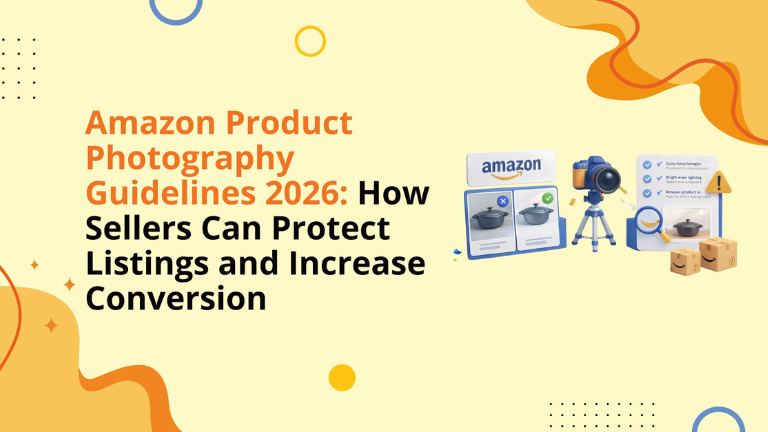
Amazon Product Photography Guidelines 2026: How Sellers Can Protect Listings and Increase Conversion

Amazon has updated and reinforced its Amazon product photography guidelines, and the impact on sellers is significant. With over half of purchase decisions influenced by product images, compliance is no longer optional — it’s strategic. Even brand-registered sellers now face the possibility of having their images replaced if they fail to meet Amazon’s quality standards. Understanding these changes is critical to protecting your brand, increasing conversion rates, and maintaining listing authority. Updated Amazon Product Photography Requirements According to Amazon’s official image policies, the following standards apply: Main Image Requirements: Pure white background (RGB 255,255,255) Product fills 85–100% of frame Minimum 1000px on longest side No text or graphics No lifestyle context No watermarks No promotional badges Secondary Images May Include: Lifestyle photography Feature callouts Size comparisons Detail zoom shots Instruction visuals Why Amazon Can Replace Your Images  Amazon now prioritizes: Highest resolution content Most compliant images Most complete gallery sets If your listing lacks: Full image slot usage Proper resolution Clean hero imagery Amazon may auto-select alternative content. This protects the customer experience — but risks your brand control. The Business Impact of Poor Photography Lower CTR Your hero image directly influences click-through rate. Poor clarity reduces traffic. Lower Conversion Rate Unclear feature representation increases hesitation. Hesitation reduces purchase velocity. Higher Returns When buyers don’t clearly understand product size, color, or materials, returns increase. How Big Internet Ecommerce Builds Conversion-Focused Photography  Unlike generic photography studios, we specialize in Amazon-first visual strategy. Our process: 1. Marketplace Research We study: Top 10 competitors Keyword-driven visual patterns Buyer objections from reviews 2. Hero Image Engineering We design: Mobile-optimized crops High-contrast clarity Conversion-tested layouts 3. Use-Case Photography We create contextual images aligned with buyer intent. 4. Conversion Infographics We translate benefits into visual storytelling compliant with Amazon standards. 5. Ongoing Image Audits We protect listings from suppression and overwrite risk. Learn more about how we help sellers scale profitably. Why Professional Photography Is an Investment, Not an Expense Improving conversion rate from: 8% → 10% On 10,000 monthly visitors means: 200 additional sales. Without increasing ad spend. That is the ROI of visual optimization. Amazon’s product photography guidelines are no longer simple technical rules. They are conversion frameworks. Sellers who treat photography as strategic infrastructure outperform those who treat it as a task. If you want a professional Amazon image audit and conversion strategy. Schedule a call here. Follow Big Internet Ecommerce (BIE) on Instagram & LinkedIn to stay updated with the latest trends in Amazon selling.

Amazon Product Photography Guidelines 2026: How Sellers Can Protect Listings and Increase Conversion Read More »

Scroll to Top